Ukrainian soldier survives two weeks inside Russian dugout after frontline blast and unlikely surrender
“I was a prisoner. But in the end, I came out with a prisoner.”
When Ukrainian corporal Vadym Lietunov ran from the wreckage of his frontline position in late February, he believed he was heading toward safety. Instead, he entered a Russian dugout, beginning nearly two weeks of captivity underground with an enemy soldier who would eventually surrender alongside him.
Lietunov, a 34-year-old serviceman from the southern Ukrainian city of Odesa, had arrived at his frontline post only a day before heavy bombardment began. According to his account, Russian forces subjected the position to repeated attacks for six to seven hours daily using kamikaze drones and mortar fire.He and another Ukrainian soldier, identified as Sasha, spent their days repairing the damaged dugout, putting out fires with bottles of urine and rebuilding protective walls using sacks filled with clay.
“The enemy knew we were there. It was trying to kill us,” Lietunov said while receiving treatment at a rehabilitation center in Odesa after the incident.The attacks intensified when Russian drone operators deployed a Molniya drone carrying an anti-tank mine. One explosion near the dugout entrance left both soldiers concussed.
Several similar strikes followed before another drone dropped a mine directly above their foxhole.The blast destroyed the roof and fatally wounded Sasha, tearing off both of his legs. Lietunov said he tried to pull his fellow soldier free but quickly realized he was dead. Expecting another strike within minutes, he fled the destroyed position wearing only socks and ran toward what he believed was a nearby Ukrainian shelter.
He found a fortified dugout hidden among trees, with a blanket covering the entrance. Shouting for help, he entered and saw a uniformed soldier aiming an automatic rifle at him.“I thought my guys were inside,” Lietunov said. “Then I heard his accent. He was Russian.”The soldier, later identified as Nikita, ordered him into a small underground chamber and assured him he would not be shot because he was unarmed.
On the wall hung a makeshift Christian cross built from wooden planks with the words “save and protect” written across it.Although Nikita initially promised to release him the next morning, he did not. Lietunov said he spent the first days expecting execution at any moment and concluded that survival depended on gaining the trust of his captor.
Drawing on psychology books he had read as a teenager, Lietunov began observing Nikita closely. He described the Russian soldier as a former prisoner and drug addict who had been released from jail to fight in Ukraine. According to Lietunov, Nikita had previously fled combat, been detained, and then returned to the front. His commander, whom he described as Chechen, communicated orders by radio.
Nikita searched Lietunov’s clothes and belongings, reportedly looking for drugs and hidden tracking devices, influenced by Russian state narratives portraying Ukrainian soldiers as drug users fitted with GPS transmitters.The dugout itself reflected the harsh conditions facing frontline troops on both sides. Lietunov said Nikita received only a small daily ration delivered by drone: a packet of porridge, jam, and a bottle of water.
Letters from Russian schoolchildren were pasted on the walls, each carrying nearly identical messages of support.Despite frequently insisting that Russia had the strongest army in the world, Nikita was cold, hungry, and isolated, Lietunov said.He also described his captor as unstable. At times, Nikita would place a gun against his forehead and threaten to kill him. On several occasions, he stopped without explanation.
“He would say, ‘I’m going to kill you right now,’ and then suddenly change his mind,” Lietunov said.To avoid provoking suspicion, Lietunov deliberately presented himself as weak and harmless. He later developed gangrene in one of his toes and, believing he might die there, asked Nikita to shoot him outside so his body could be recovered by Ukrainian forces.Nikita refused, according to Lietunov, fearing exposure to drones and artillery.
Meanwhile, Lietunov’s own brigade, the 118th, assumed he had likely been killed. His commander informed his mother, Mariia, that there was a 95% chance her son would not return. She fainted after hearing the news, he said.His wife, Alesya, remained convinced he was alive. The couple, who have a five-year-old son named Andriy, had already endured years of war since Lietunov joined the military hours after Russia’s full-scale invasion in February 2022.
He had previously served in air defense and participated in operations linked to the liberation of Kherson.Inside the dugout, survival increasingly depended on water and trust. Nikita gave Lietunov one square of chocolate a day and a bottle cap of water. The Russian soldier complained about shortages and said troops were often forced to collect rainwater and even drink urine.
At one point, Nikita suggested surrendering to Ukrainian forces. Lietunov responded by describing the treatment of prisoners under the Geneva Conventions, including food, cigarettes, and regular conditions of detention. He said the subject came up five times.Eventually, when the dugout ran out of water, the two men left together in heavy fog. A Ukrainian drone hovered above them.
Lietunov used the moment to signal his identity, hanging a sign with his call-sign, “Cartman,” and his brigade number beside a tree.Initially, Ukrainian forces believed both men were Russian soldiers and prepared another strike. According to Lietunov, only after commanders checked his social media accounts did they realize the thin figure below was their missing comrade.A drone later dropped a radio, allowing direct communication with his brigade.
Lietunov carefully avoided provoking Nikita, fearing any sudden move could lead to violence. He arranged food deliveries, handing most of his share to the Russian soldier.“He had told me that when he was full, he was kind,” Lietunov said.Russian forces also continued sending supplies. One drone reportedly delivered an explosive device disguised as a log filled with TNT, which Nikita was ordered to place in the forest.
Lietunov said he remained uncertain until the final moment whether Nikita would surrender or kill them both.The standoff ended when thick fog allowed a Ukrainian armored vehicle to approach. Both men climbed into the back and were taken to Ukrainian brigade headquarters.There, Lietunov was reunited with fellow soldiers who had believed him dead. Nikita surrendered without resistance and destroyed his phone before entering custody.
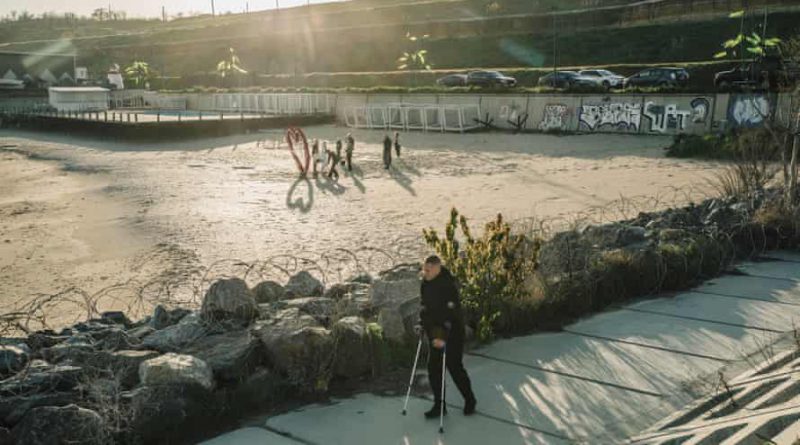
Video recorded at the base showed him calmly stating that he had taken Vadym prisoner.Ukrainian security officers later transferred Nikita for interrogation. Lietunov said he requested that the Russian be treated properly, honoring a promise made during captivity. Officials indicated he could eventually be exchanged for Ukrainian prisoners of war.Now recovering after losing a toe, Lietunov remains on crutches in Odesa, reunited with his family.
“I was a prisoner,” he said. “But in the end, I came out with a prisoner.”