US Gasoline Prices Surge 50% as Iran War Disrupts Global Oil Flows
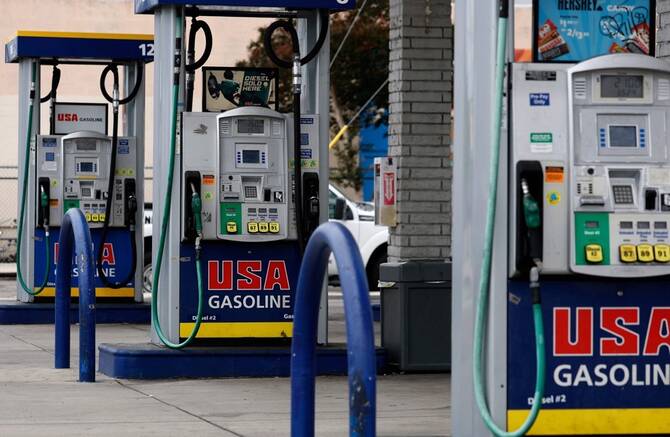
New York— US gasoline prices have risen 50 percent since the onset of the Iran war, with the national average climbing 31 cents over the past week to $4.48 per gallon on Tuesday, as supply disruptions linked to the Strait of Hormuz continue to tighten global energy markets.
The sharp increase reflects a sustained rise in crude oil prices, driven by the effective closure of the Strait of Hormuz, a critical oil transit chokepoint through which roughly a fifth of global oil supply typically flows. Tankers stranded in the region have curtailed deliveries, constraining supply and pushing benchmark oil prices higher.
Market analysts say the price trajectory briefly softened in mid-April amid expectations of a potential ceasefire. “There was optimism that this could mark the beginning of the end of the conflict,” said Rob Smith, director of global fuel retail at S&P Global Energy, noting that crude and gasoline prices temporarily declined before reversing course as hostilities persisted.
Crude oil accounts for the largest share of gasoline costs in the United States, representing about 51 percent of pump prices in 2025, according to the US Energy Information Administration. Taxes contribute roughly 17 percent, while refining, distribution, and marketing costs make up the remainder.
The International Energy Agency has described the disruption linked to the Strait of Hormuz as the largest supply shock in oil market history, with prices reaching as high as $112 per barrel in early April. Analysts note that gasoline prices tend to track crude movements closely, with minimal lag.
Additional upward pressure followed US actions in April to block Iranian oil exports, a move analysts say removed a key supply source from global markets. “Iran had been moving an unusually high amount of oil to global markets, which helped moderate prices,” said Jim Krane, an energy research fellow at Rice University’s Baker Institute, adding that the restrictions intensified price pressures.
Energy markets have remained highly sensitive to geopolitical developments, with fluctuations tied to reports of attacks in the Arabian Gulf or shifts in diplomatic efforts. “The oil market is exquisitely sensitive to what’s coming out of the White House,” said Bob Kleinberg, a research scholar at Columbia University’s Center on Global Energy Policy.
The pace of price increases has echoed previous geopolitical shocks, including a 48-cent weekly rise at the outset of the Iran conflict. However, analysts caution that no near-term relief is likely, as prolonged constraints in the Strait of Hormuz are expected to sustain upward pressure on prices.
Even in the event of a durable resolution, market participants say a return to pre-war pricing levels could take months due to lingering risk premiums associated with shipping through the region and heightened insurance costs for oil transport.