ASEAN Pushes Emergency Energy Coordination as Iran War Jolts Region
Cebu– The Philippines called on Southeast Asian nations on Thursday to strengthen regional crisis coordination and emergency preparedness as the Iran war continues to disrupt energy supplies and strain economies heavily dependent on Middle Eastern oil imports.
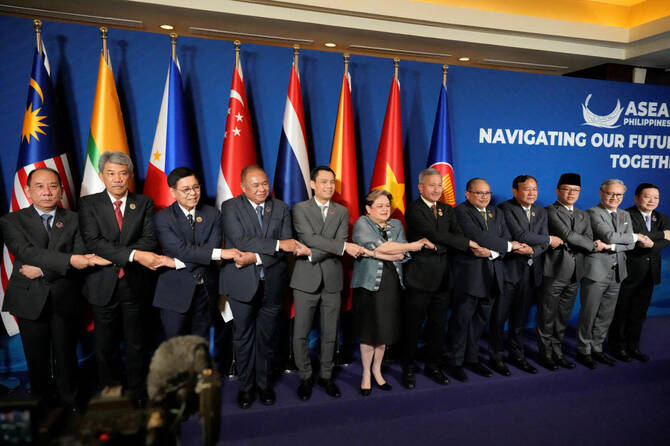
Speaking at an Association of Southeast Asian Nations (ASEAN) foreign ministers’ meeting in Cebu ahead of the bloc’s annual summit, Philippine Foreign Affairs Secretary Theresa Lazaro said the conflict had sharply increased fuel and energy costs across the region after the closure of the Strait of Hormuz following U.S. and Israeli strikes on Iran that began on Feb.
28.“For ASEAN, which imports about 66 percent of its crude oil, this crisis meant a significant increase in fuel and energy cost, which eventually led to higher prices for agricultural inputs, food and basic commodities,” Lazaro said.She added that the conflict had disrupted transportation and tourism sectors while placing millions of Southeast Asian nationals working in the Middle East at risk.
The 11-member ASEAN bloc has emerged among the regions most exposed to the fallout from the conflict due to its heavy reliance on Gulf energy supplies. The Philippines imports more than 90 percent of its crude oil from the Gulf and declared a national energy emergency in March after domestic fuel prices more than doubled.
Vietnam sources roughly 80 percent of its crude imports from the Gulf, while fuel shortages have affected petrol stations in Cambodia, Laos, Myanmar and Thailand in recent months.As ASEAN chair this year, the Philippines has convened special meetings to coordinate a collective response to the crisis.
Lazaro said discussions had highlighted the need to improve “institutional readiness in times of crisis.”Regional leaders gathering in Cebu on Friday are expected to endorse measures aimed at strengthening energy security, including accelerating ratification of the ASEAN Petroleum Security Agreement (APSA), which would establish a coordinated fuel-sharing mechanism during emergencies.
ASEAN members are also seeking to advance the ASEAN power grid initiative, designed to integrate electricity networks across member states, while upgrading trade agreements with China, South Korea and Canada to reduce supply-chain vulnerabilities.The bloc has previously pledged to keep trade routes open and avoid restrictive measures despite mounting pressure on regional economies from rising energy costs and supply disruptions.
Don McLain Gill, a geopolitical analyst at De La Salle University, said ASEAN countries had limited capacity to directly influence the conflict but could mitigate economic damage through closer regional coordination.
“There needs to be a more consolidated approach among Southeast Asian countries to really recognize issues at hand and at the same time, provide a needed mechanism to pool resources, particularly energy resources and to strengthen supply chains,” Gill said.
Diplomats said the summit’s final communique is expected to outline a unified regional response to the Middle East conflict and propose mechanisms for handling future geopolitical and energy-related emergencies.