US Restrictions on Cuban Medical Missions Strain Healthcare Systems Across Latin America
“The US is not proposing anything in return… there is no plan B.”
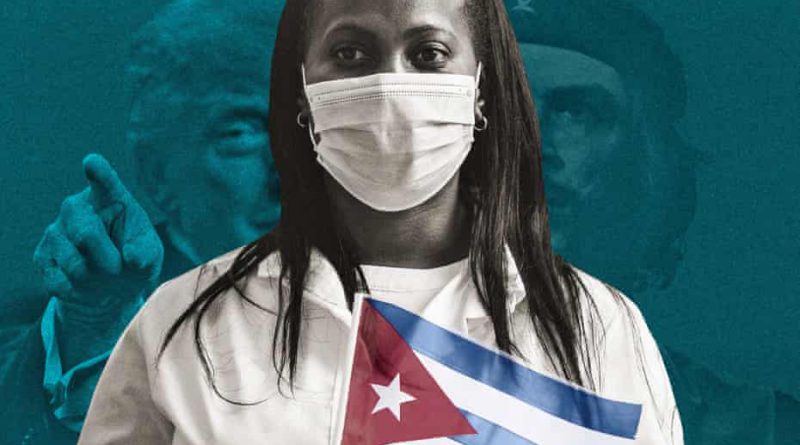
A recent escalation in US policy toward Cuba is disrupting longstanding international medical programmes, with potential consequences for healthcare systems across Latin America and the Caribbean.
The measures, which target the deployment of Cuban doctors abroad, are part of broader economic and diplomatic pressure on Havana, a country that has been under US sanctions for decades.Cuba’s overseas medical missions have historically been a central component of its international engagement and a significant source of revenue.
Since the 1959 revolution, the Cuban government has deployed medical professionals to countries facing shortages, initially responding to crises such as the 1960 earthquake in Chile. Over time, these efforts evolved into formal bilateral agreements, with Cuban doctors providing services in underserved regions across Latin America, the Caribbean, and beyond.
According to Tiago Rogero, South America correspondent for The Guardian, these programmes have become increasingly constrained due to US pressure on host countries. Washington has argued that the arrangements amount to exploitative labour practices, citing the Cuban state’s retention of a portion of doctors’ earnings.
While some testimonies from medical personnel have supported claims of exploitation, Rogero noted that this does not represent the majority view among those involved. Analysts cited in his reporting suggest that financial considerations specifically limiting revenue flows to the Cuban government—are a central factor behind the policy.
The withdrawal of Cuban medical personnel is already affecting healthcare provision in several countries. A number of governments have ended their agreements with Cuba, in some cases under pressure linked to US sanctions mechanisms such as financial restrictions and visa policies. These measures have reduced the availability of healthcare workers in regions that were already facing shortages.
Cuban doctors have played a significant role in filling gaps in national health systems, particularly in remote or low-income areas where local capacity is limited. In countries such as Brazil, they have been deployed to underserved communities, often in roles that domestic practitioners were unwilling or unable to fill.
Their presence has been part of a broader strategy sometimes referred to as “medical diplomacy,” through which Cuba has combined healthcare assistance with international cooperation.Beyond their immediate service delivery, Cuban medical programmes have also included training initiatives for foreign students in Cuban institutions.
This has contributed to building healthcare capacity in partner countries, although such efforts typically require long-term investment before yielding results.The current policy shift is raising concerns among healthcare professionals and development experts about the absence of alternative arrangements.
Rogero reported that non-governmental organisations and local practitioners anticipate a worsening of healthcare access in affected regions. “Most of these countries do not have enough doctors of their own,” he said, adding that the termination of Cuban programmes is not being matched by new support mechanisms.
The policy comes in the context of a broader reduction in US development assistance. The dismantling of the United States Agency for International Development (USAID), which previously funded health and development programmes in Latin America, has further limited available resources.
Observers note that this combination reduced aid and restrictions on third-party assistance—may intensify existing vulnerabilities in public health systems.The geopolitical dimension of the policy is also evident. US sanctions have long been used as a tool of foreign policy toward Cuba, and recent measures, including tighter fuel restrictions, indicate an expansion of pressure.
While the stated rationale focuses on labour conditions within the medical missions, analysts suggest the policy aligns with broader efforts to constrain the Cuban state economically.For recipient countries, the immediate concern remains service continuity. Healthcare systems in parts of Latin America and the Caribbean rely heavily on external support to address shortages in personnel and infrastructure.
The removal of Cuban doctors is expected to disproportionately affect rural and low-income populations, where access to medical care is already limited.Rogero emphasised that the impact will be most acute among vulnerable groups. “How will they cope now without the few doctors they had?” he said, pointing to the lack of contingency planning. In many cases, Cuban medical teams represented the primary or sole source of healthcare provision in certain communities.
The situation underscores the interconnected nature of global health systems and the role of international cooperation in addressing disparities. As policy decisions reshape these arrangements, the consequences are likely to be felt most strongly at the local level, where healthcare access depends on sustained and coordinated support.