Hormuz Strike Deepens Maritime Tensions
Seoul — South Korea said on Sunday that unidentified aircraft struck a South Korean-operated cargo vessel in the Strait of Hormuz earlier this week, intensifying concerns over maritime security in one of the world’s most critical energy shipping lanes amid escalating conflict involving Iran, the United States and Israel.
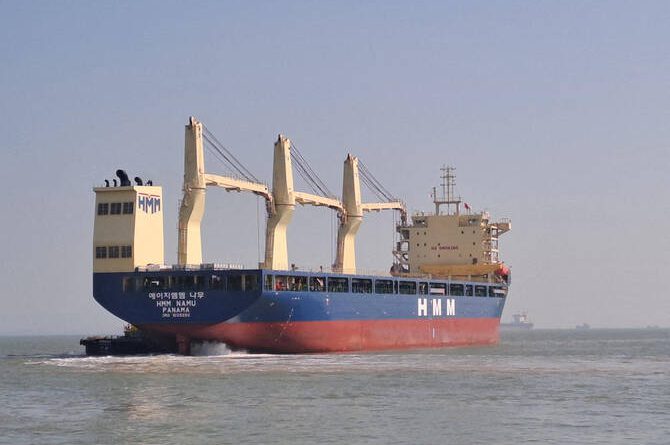
South Korea’s foreign ministry said the Panama-flagged bulk carrier HMM Namu sustained significant damage after being hit twice on Monday while transiting the strategic waterway, which has faced severe disruption since the outbreak of hostilities between Israel, the United States and Iran in late February.
Foreign ministry spokesman Park Il told reporters that “two unidentified aircraft struck the outer plate of the port-side ballast tank at the stern” of the vessel at roughly one-minute intervals, igniting flames and heavy smoke.
Park said investigators had not yet determined the type, origin or size of the aircraft involved, despite CCTV footage capturing the incident. South Korean authorities are conducting further analysis of engine debris and fragments recovered from the vessel.
According to the ministry, the first strike is believed to have ignited a fire in the engine room, while the second impact accelerated the spread of the blaze. Damage to the hull extended approximately five meters across and seven meters inward on the vessel’s port-side stern.
The ship, carrying 24 crew members, later arrived at port in Dubai with visible fire damage.U.S. President Donald Trump said earlier this week that Iran had “taken some shots” at the vessel and urged South Korea to participate in U.S.-led operations intended to restore commercial shipping through the Strait of Hormuz.Iran has denied involvement.
Tehran’s embassy in Seoul issued a statement rejecting what it called allegations linking Iranian forces to the attack and said it “firmly rejects and categorically denies” responsibility.South Korea summoned Iran’s ambassador to seek clarification regarding Tehran’s position and discuss the findings of the preliminary investigation, Park said.
The Strait of Hormuz, through which roughly a fifth of global oil consumption typically passes, has become a focal point of military escalation since the United States and Israel launched coordinated strikes against Iran earlier this year.
Tehran has since responded with attacks across the region and measures that have sharply reduced maritime traffic through the corridor, fueling volatility in global energy markets.
Commercial shipping companies and insurers have increasingly rerouted vessels or suspended operations in the Gulf amid rising security risks and mounting concerns over attacks on tankers and cargo ships.