Cruise Ships Face Persistent Infection Risks Despite Stricter Health Controls, Experts Say
“Ships aren’t dirty, they are just efficient mixing chambers.” — Dr Vikram Niranjan, University of Limerick
Cruise ships remain vulnerable to infectious disease outbreaks despite years of tighter health protocols and upgraded onboard medical systems, with public health experts warning that many of the structural risks tied to maritime travel are difficult to eliminate without fundamentally changing the nature of the industry.
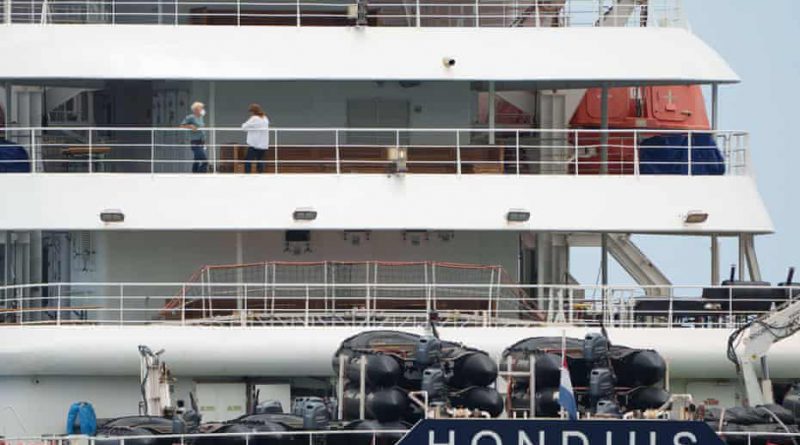
The latest concerns follow the Atlantic expedition of the MV Hondius, where three passengers died from hantavirus and additional cases were reported during the voyage. Separately, authorities are investigating a norovirus outbreak on another cruise ship, adding to a history of onboard incidents involving influenza, E. coli, varicella and Legionnaires’ disease.
Cruise ships became a major focus of global public health scrutiny during the COVID-19 pandemic in 2020, when the Diamond Princess was quarantined off Japan after a coronavirus outbreak spread rapidly among passengers and crew.
More than 700 of the 3,711 people onboard eventually tested positive during the two-week isolation period.Specialists in infectious disease epidemiology say the cruise environment creates conditions that can accelerate the transmission of pathogens through respiratory exposure, contaminated food and shared water systems.
The combination of high passenger density, enclosed indoor spaces and extensive social interaction increases the probability of outbreaks once an infectious agent is introduced onboard.
Dr Charlotte Hammer, an infectious diseases epidemiologist at the University of Cambridge, said cruise ships effectively concentrate people from multiple regions into confined spaces where exposure risks are difficult to control.
“Which means you have people potentially in contact with pathogens that they don’t encounter on the day to day,” Hammer said.Researchers note that cruise passengers often originate from different countries and travel histories, bringing varying levels of immunity and potential exposure to infectious diseases.
Public health experts also point to demographics within the cruise sector, where a substantial proportion of travellers are older adults who may face greater vulnerability to respiratory illnesses and other infections.
David Heymann, professor of infectious disease epidemiology at the London School of Hygiene & Tropical Medicine, said the likelihood of an outbreak depends heavily on whether infected individuals board the vessel and the nature of the pathogen involved.
“Whether or not outbreaks begin on a ship depends on who comes onboard, if any people are infected when they come onboard, and with which pathogen they might be infected,” Heymann said.
Respiratory diseases remain among the most difficult threats to contain in maritime settings. Viruses such as COVID-19 and influenza can spread through aerosols that remain suspended in the air or through respiratory droplets that contaminate nearby surfaces.
Cruise operators have invested in ventilation upgrades and air filtration systems since the pandemic, but epidemiologists say physical limitations inside ships restrict how far such measures can reduce transmission risks.
“You’re not going to have high ceilings on a boat. You are not going to have the airflow of two open windows, just because most cabins do not have windows,” Hammer said.
“So there is, in terms of the sheer engineering of a ship, only so much you can do.”Foodborne illnesses continue to represent another major operational challenge for cruise lines. Norovirus outbreaks, which frequently attract regulatory attention, are commonly linked to contaminated food or surface transmission in communal dining areas.
Hammer said cruise kitchens generally maintain strict hygiene standards but warned that the centralised design of food preparation systems can create vulnerabilities if contamination occurs.“That is sort of the core engineering,” she said.
“You can’t have X number of backup kitchens on a ship because you only have so much space.”Dr Vikram Niranjan, assistant professor in public health at the University of Limerick, said buffet-style dining areas remain a persistent concern because large numbers of passengers use the same serving utensils and occupy crowded spaces over extended periods.
“Ships aren’t dirty, they are just efficient mixing chambers,” Niranjan said.Experts also highlight risks linked to onboard water systems. Legionnaires’ disease, caused by inhaling water droplets contaminated with legionella bacteria, has been associated with cruise ships in previous outbreaks.
Heymann said identifying and containing legionella contamination can be particularly difficult in maritime settings because specialised testing capabilities may not be readily available onboard.
“First of all, you have to show that the organism is in the water, and the ship may not have the means to do that,” he said.Medical response capacity at sea also presents operational constraints during outbreaks, particularly when rare pathogens are involved.
Hantavirus infections, for example, can initially resemble more common viral illnesses, potentially complicating diagnosis in early stages.
Heymann said isolated cases may not immediately trigger suspicion among onboard medical staff because symptoms can overlap with other respiratory or flu-like conditions.
“You would begin to suspect if a lot of people had it. But if you saw just one hantavirus infection, it looks like any other viral infection,” he said.Cruise ships typically operate with limited medical infrastructure compared with land-based hospitals.
While larger vessels often maintain medical centres with ventilators and isolation facilities, experts say these systems are not designed for large-scale outbreaks involving hundreds of passengers.Hammer said ships face unavoidable limitations in laboratory capacity, medical staffing and diagnostic equipment, particularly when confronting uncommon infectious diseases.
“You have limitations in terms of testing, particularly for something that’s a bit rarer,” she said. “You have limitations in terms of medical space, medical professionals.”Niranjan said cruise operators could consider emergency contingency systems such as collapsible isolation cabins that can be deployed during large outbreaks.
However, he acknowledged that substantial redesigns could face financial and spatial constraints.Public health authorities continue to emphasise preventive measures for passengers. Guidance issued by the U.S. Centers for Disease Control and Prevention advises travellers not to board ships while ill, to maintain regular hand hygiene and to remain current on routine vaccinations.
The CDC also recommends destination-specific vaccines or medications where appropriate and advises passengers to report symptoms promptly to onboard medical staff.Niranjan said passengers may also benefit from carrying face masks during travel, particularly in crowded indoor areas.
Industry analysts note that the cruise sector has expanded health surveillance and sanitation protocols since the pandemic, including enhanced cleaning procedures, upgraded ventilation systems and revised isolation policies.
However, epidemiologists say many transmission risks stem from the basic operational structure of cruise travel itself.
Hammer said significant reductions in infection risk would require changes that could undermine the core appeal of cruise holidays.
“You can make it not move any more but that sort of defeats the point,” she said.