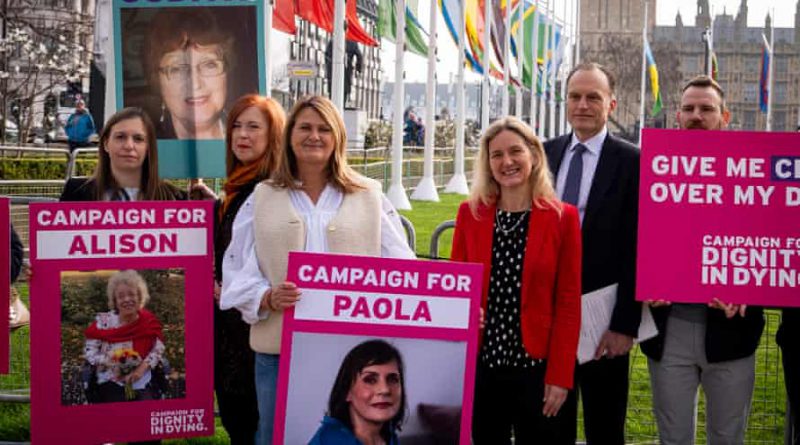
Terminally Ill Britons Join Rankin Campaign Urging Revival of Assisted Dying Bill
“Some might be perfectly content to let nature take its course. It’s their choice. And I want my choice.” — Barbara Shooter
Terminally ill campaigners and British photographer Rankin have launched a renewed push for assisted dying legislation in England and Wales, urging lawmakers to revive a stalled bill that supporters say would give dying people greater control over end-of-life decisions.
The campaign, organised with advocacy group Dignity in Dying, comes ahead of Thursday’s private member’s bill ballot in parliament and follows mounting frustration among supporters after legislation introduced by Labour MP Kim Leadbeater cleared the House of Commons but became delayed in the House of Lords amid a large number of amendments.
Rankin, one of Britain’s best-known photographers and directors, said his involvement in the campaign stemmed from an encounter in late 2023 with Paola Marra, a terminally ill woman who later travelled to the Swiss assisted dying clinic Dignitas.
During a RankinLIVE portrait event in London’s Carnaby Street shortly before Christmas that year, Marra asked the photographer to take what would become her final public image before travelling to Switzerland.“I asked what the occasion was, and she said: ‘I’m going to Dignitas,’” Rankin recalled.
Marra, a former music industry and charity worker, had terminal bowel cancer. The portrait later gained widespread attention after it was released alongside a farewell video following her death at the Swiss clinic in March 2024.
In the image, the 53-year-old gestures defiantly toward the camera while referencing her illness.Rankin said the encounter had a profound impact on him and helped shape his support for assisted dying reform.“It was like a punch to the stomach,” he said.
The latest campaign includes a series of short films featuring terminally ill individuals discussing fears surrounding the end of life and arguing for legal changes that would allow medically assisted dying under regulated circumstances.One of the videos, titled “Time to Back the Bill Again,” features eight participants aged between 19 and 77.
The film opens with one participant saying: “Yep. I’m terminal.”The campaign’s central message urges MPs to resume legislative efforts after the bill’s progress slowed in the Lords. Supporters of the legislation argue that parliament has not completed the democratic process after MPs previously voted in favour of moving the proposal forward.
Rankin said participants in the campaign came from very different backgrounds but shared frustration over the bill’s delay.“They have all got one thing in common: they don’t understand why this bill hasn’t been passed,” he said. “They don’t understand why it’s been stopped.”He added that he believed the proposed law would have allowed people facing terminal illness to make decisions “in a responsible and dignified way.”
The issue of assisted dying remains one of the most divisive ethical debates in British politics. Supporters argue that terminally ill people should have the right to choose the timing and manner of their deaths under strict safeguards, while opponents warn of potential risks involving coercion, vulnerable patients and pressure on medical systems.
Dignity in Dying said polling conducted by Opinium showed continued public support for parliament completing debate on the legislation.
According to the organisation, 69% of respondents said parliament should continue considering the bill until a final decision is reached, while 61% said the government should ensure sufficient parliamentary time for MPs and peers to complete the legislative process.
Barbara Shooter, 69, who appears in the campaign films, said she supported assisted dying after accompanying her late husband Adrian Shooter to Dignitas in 2022. Adrian Shooter, the former chair of Chiltern Railways, had motor neurone disease, which progressively affected his mobility, speech, swallowing and breathing.“It was getting control back,” she said.
“Once he knew he had a day, it was very powerful. He cheered up no end. And he had a calm, peaceful death.”In what she described as a cruel development, Shooter herself was later diagnosed with motor neurone disease.
She said her condition is currently progressing slowly and that she continues to maintain a good quality of life.“I do have my own lines in the sand, but I’m nowhere near those,” she said.
Shooter criticised peers who opposed the legislation and warned that delays risked pushing the issue out of public attention.“Who wants to face horror and pain and awfulness at the end of their life when you know you’re not going to get better?” she said.
“Some might be perfectly content to let nature take its course. It’s their choice. And I want my choice.”Another participant in the campaign, London charity worker Maddie Cowey, 28, was diagnosed at 18 with alveolar soft part sarcoma, a rare and incurable cancer.
She now has more than 30 sarcoma nodules across both lungs and remains dependent on treatment to manage the disease.“Without treatment I would die, basically, and it’s not going to be cured,” Cowey said.She said the unpredictable progression of the illness created ongoing uncertainty about the future.
“It could become aggressive at any time and become uncontrollable and it could happen really quickly,” she said. “Or I could have decades more if they manage to keep it at bay.”Cowey said she had come to terms with the possibility of dying younger than most people but remained fearful about suffering during the final stages of illness.
“Not having an alternative option is really scary,” she said. “Having the alternative of being able to choose how and when it happens would give me a lot of peace and hope.”She said the delay to the legislation had replaced earlier optimism with anxiety.
“I try not to dwell on it day to day because I just want to live my life, but if I let myself think about it, it’s terrifying,” she said. “It feels really unfair and unjust.”Sarah Wootton, chief executive of Dignity in Dying, said the organisation believed terminally ill people continued to face limited and distressing options under current laws.
“Every week, dying people are left with the same cruel options: suffer, travel abroad to die, or act alone,” Wootton said.She accused opponents in the House of Lords of obstructing legislation that had already secured backing in the Commons.
“This is bigger than assisted dying,” she said. “Parliament has unfinished business, and it’s time for MPs to return the bill to Westminster and finish what they started.”