California Expands Whale-Safe Crab Fishing Measures as Marine Heatwaves Shift Migration Patterns
“We will have to continue to be adaptive and science driven in terms of our management to reduce wildlife risk and keep fishermen on the water.”
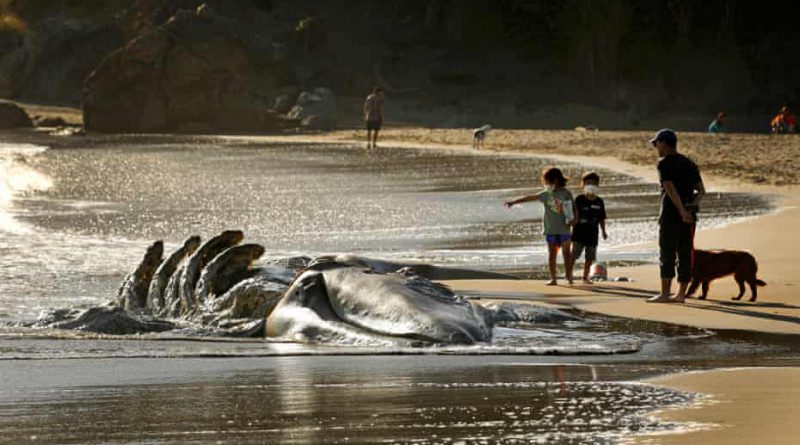
A prolonged marine heatwave off the California coast is altering whale migration and feeding behavior, increasing the risk of entanglements with commercial fishing equipment and accelerating efforts to expand whale-safe fishing technologies across the U.S. west coast.
Scientists say warming offshore waters are shrinking the cold, nutrient-rich zones that sustain krill, anchovies and sardines, key prey species for humpback whales. As those prey populations move closer to shore, whales are increasingly entering areas heavily used by California’s Dungeness crab fleet.
The overlap has intensified concerns over the fishery’s conventional trap system, which relies on vertical lines extending from traps on the seafloor to floating surface buoys. Tens of thousands of such lines can remain in the water during crab season, creating entanglement hazards for whales migrating and feeding along the Pacific coast.
California regulators this spring again imposed restrictions on portions of the commercial crab fishery off central California, temporarily closing areas to traditional gear as whale activity increased near fishing grounds.
Similar closures have become more common in recent years as ocean warming disrupts long-established migration and feeding patterns.Marine biologists say humpback whales face the greatest risk because of their behavior around fishing equipment.“Humpbacks are curious and they’ll scratch their backs on the gear,” said Kathi George, director of cetacean conservation biology at The Marine Mammal Center.
“If they get a line caught on their body, they’ll breach and they’ll roll and end up entangling themselves.”Entangled whales can remain trapped in fishing gear for months, often dragging heavy equipment across long distances.
Researchers say the strain can prevent whales from feeding or diving normally, contributing to exhaustion, infection, starvation and drowning.According to the National Oceanic and Atmospheric Administration, 36 whales were confirmed entangled along the U.S. west coast in 2024, the highest reported number since 2018.
Scientists caution that many incidents likely go unrecorded because entangled whales can disappear offshore before being observed.In response, California approved commercial deployment of ropeless “pop-up” crab fishing systems for the first time this year, allowing parts of the fleet to continue operating later into the season while reducing risks to marine mammals.
The technology eliminates permanently floating buoy lines. Instead, ropes and buoys remain stored with the trap on the seafloor until fishermen return and activate an acoustic release mechanism that sends the gear to the surface.
Supporters say the system could substantially reduce whale entanglements while allowing fishermen to maintain harvests during periods when traditional gear would otherwise be prohibited.
Environmental groups and fisheries managers increasingly view adaptive fishing systems as necessary as climate-driven ocean changes intensify along the Pacific coast.
Scientists expect continued overlap between whales, shipping traffic and fishing operations as warming conditions reshape marine ecosystems.“We will have to continue to be adaptive and science driven in terms of our management to reduce wildlife risk and keep fishermen on the water,” said Caitlynn Birch, a marine scientist and Pacific campaign manager at Oceana.
Birch said California’s transition toward whale-safe fishing systems could become a model for other fisheries operating along the west coast.Separate monitoring efforts are also expanding in California’s coastal waters as researchers and conservation agencies seek to better track whale movements in high-risk areas.
Camera systems installed near locations including Golden Gate Bridge and Alcatraz Island may eventually support broader surveillance coverage across the San Francisco Bay region to improve detection of whales moving near shipping lanes and fishing zones.
Marine heatwaves in the Pacific have become more frequent and intense over the past decade, affecting fish populations, marine mammal migration routes and coastal fisheries.
Researchers say those changes are forcing regulators and fishing industries to adopt increasingly flexible management systems capable of responding quickly to changing environmental conditions.