Pakistan Pushes Tehran Diplomacy as US-Iran Deal Gains Traction
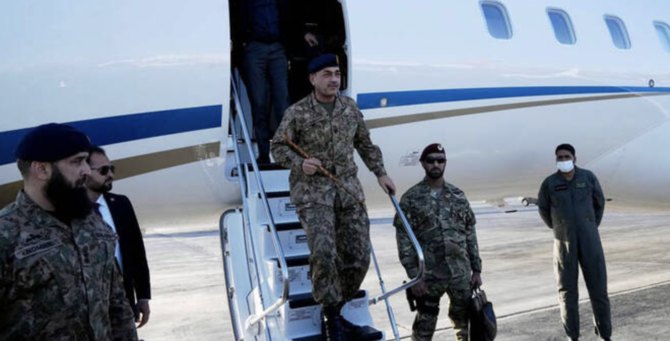
Islamabad-Pakistan Army Chief Field Marshal Asim Munir traveled to Tehran on Friday for talks with senior Iranian officials as Pakistan intensified diplomatic efforts to support negotiations aimed at ending the months-long conflict between Iran and the United States, while Qatari mediators also arrived in the Iranian capital to help advance a potential settlement.
The visit comes as Islamabad has taken on an increasingly active diplomatic role since the outbreak of hostilities in late February following joint U.S.-Israeli strikes on Iran. Pakistan has maintained contacts with both Tehran and Washington in an effort to prevent broader regional escalation and support negotiations toward a lasting ceasefire.
Iran’s state news agency IRNA, citing a diplomatic source in Islamabad, reported earlier that Munir had departed for Tehran and was expected to hold meetings with senior Iranian officials. A Pakistani security source separately confirmed the army chief’s visit to Arab News on condition of anonymity.
Munir is expected to be joined by Pakistan’s Interior Minister Mohsin Naqvi, who has already held meetings with Iranian leaders twice this week as part of Islamabad’s diplomatic outreach.
Separately, a Qatari negotiating delegation arrived in Tehran on Friday in coordination with the United States to help secure an agreement aimed at ending the conflict and resolving outstanding disputes, according to a source familiar with the discussions cited by Reuters.
Qatar has played a prominent mediation role in several regional conflicts, including negotiations related to the Gaza war. However, Doha had largely avoided direct involvement in efforts surrounding the Iran conflict after coming under Iranian missile and drone attacks during the recent hostilities.
The renewed diplomatic activity follows comments by U.S. Secretary of State Marco Rubio, who said on Friday that talks with Iran had shown “slight progress,” while cautioning against overstating the advances made so far.
Speaking ahead of a meeting of NATO foreign ministers in Helsingborg, Sweden, Rubio said there had been “a little bit of movement” in negotiations and described continued dialogue as a positive development. His remarks came days after U.S. President Donald Trump said he had delayed a military strike against Iran because “serious negotiations” were underway.
Trump has repeatedly warned that the ceasefire established in mid-April could collapse if negotiations fail to produce an agreement, while discussions have continued amid shifting expectations over the terms of a potential deal.
NATO foreign ministers are also expected to discuss possible alliance involvement in helping secure maritime traffic through the Strait of Hormuz after the conflict, underscoring the broader strategic implications of any settlement reached between Washington and Tehran.