Hannah Murray Details Psychosis and Hospitalisation in New Memoir
“I believed I was the saviour of the planet and that reality itself had been transformed.”
Actor Hannah Murray has offered a deeply personal account of psychosis, involuntary psychiatric treatment and the breakdown of her sense of reality in a forthcoming memoir, describing a period in which she believed she possessed supernatural abilities and played a central role in humanity’s salvation.
In an extract from her memoir, The Make-Believe: A Memoir of Magic and Madness, Murray recounts her experiences while undergoing a severe mental health crisis that ultimately led to her being detained under the UK’s Mental Health Act.
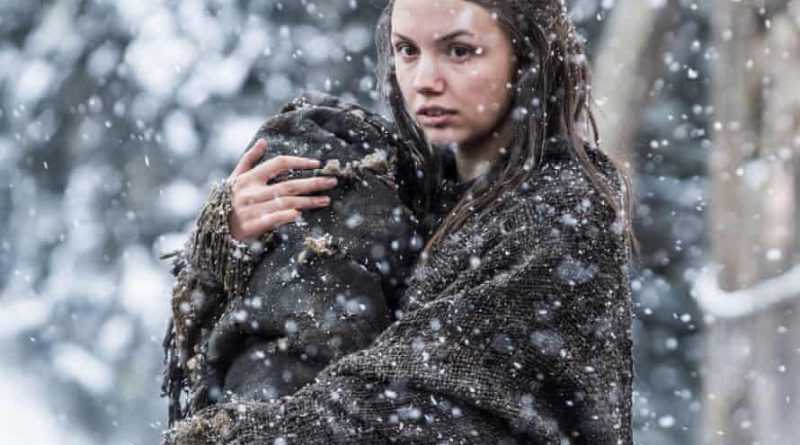
The actor, widely known for portraying Gilly in the television series Game of Thrones, describes a state in which ordinary events were interpreted through an elaborate belief system involving magic, destiny and spiritual transformation.
According to the memoir extract, Murray believed she had become a “Ritual Master” and viewed routine interactions within a hospital setting as part of a larger supernatural narrative. Medical staff, patients and family members were assigned symbolic roles within a reality she perceived as fundamentally altered.
She recounts being brought food and drink by a healthcare worker but refusing to eat, believing instead that she no longer required conventional nourishment. During this period, she writes that she considered herself entirely self-sufficient and capable of surviving through spiritual energy rather than physical needs.
As her condition intensified, Murray describes wandering hospital corridors while waiting for what she believed would be the arrival of an important figure connected to her perceived mission. She interpreted events around her through the lens of a complex belief system that blended personal experiences, spirituality, popular culture and fantasy.
One of the most emotionally significant moments in the account involves a phone call from her mother. Murray writes that when she first heard her mother’s distressed voice, she viewed the conversation not as a family member trying to reach her, but as part of a test designed to pull her back into ordinary reality.
She recalls ending the first call before answering again when her mother phoned back. During the second conversation, Murray attempted to reassure her that she was safe and believed she was in a positive place despite the growing concerns of those around her.
The memoir describes how medical professionals informed her that she was being sectioned under the Mental Health Act, a legal process that allows individuals experiencing severe mental illness to be detained and assessed when they may pose risks to themselves or are unable to recognise their condition.
At the time, however, Murray writes that the information had little impact because it did not fit within the reality she believed she was experiencing. References to legal procedures, assessment periods and patient rights appeared disconnected from the worldview that had taken hold during her psychosis.
Instead, she says she remained focused on what she perceived as powerful energies moving through her body and voices that reinforced her convictions. Throughout the episode, Murray believed she possessed extraordinary abilities and unlimited creative powers.
The actor describes pacing hospital corridors while delivering what she considered a profound performance, convinced she was simultaneously a magician, actor, writer and spiritual guide.
She believed she could perform any conceivable action and viewed herself as possessing superhuman capabilities.The memoir further details grandiose beliefs commonly associated with psychotic episodes. Murray writes that she became convinced she had prevented an apocalypse and served as a central figure in humanity’s future.
She interpreted cultural references, films and professional experiences as evidence supporting those conclusions.Among those interpretations was her belief that a 2016 film, The Girl with All the Gifts, contained messages connected to her perceived role in world events.
She viewed the title itself as a reflection of her identity during the episode.Murray also writes that her acting career took on symbolic significance within the delusional framework. Professional collaborations and casting decisions were reimagined as part of a larger cosmic narrative.
She came to believe that her work in television and film had been preparing her for a destiny connected to the survival and transformation of the world.The account illustrates how psychosis can fundamentally alter a person’s perception of reality, leading ordinary experiences to acquire extraordinary meanings.
Mental health specialists often describe psychosis as a condition in which individuals may experience delusions, hallucinations or disordered thinking that make it difficult to distinguish between subjective beliefs and external reality.Murray’s memoir presents those experiences from her own perspective, allowing readers to follow the internal logic that shaped her thinking during the crisis.
Rather than reflecting on the events solely through hindsight, the narrative recreates the certainty with which she held those beliefs at the time.The extract forms part of a broader memoir examining Murray’s experiences with mental illness, recovery and identity.
By documenting her psychotic episode in detail, she offers an account of how severe mental health conditions can affect perception, relationships and decision-making.The book is scheduled for publication by Cornerstone and explores both the onset of Murray’s illness and the process of understanding what happened after the crisis ended.
The actor is also due to discuss the memoir publicly during an event in London alongside Jessie Cave.For Murray, the memoir represents an effort to chronicle a period in which reality itself became unstable, transforming familiar people, places and experiences into elements of a narrative that felt entirely real at the time but was ultimately shaped by psychosis.