Israeli Far-Right Ministers Press for Lebanon Offensive as Border War Intensifies
Jerusalem-Two senior far-right ministers in Israel’s governing coalition on Monday called for a major escalation of military operations in Lebanon, including strikes on Beirut, as fighting with Hezbollah continued despite a ceasefire and diplomatic efforts aimed at reducing tensions along the border.
National Security Minister Itamar Ben Gvir urged Prime Minister Benjamin Netanyahu to resume full-scale military operations in Lebanon, arguing that current measures were insufficient to counter Hezbollah attacks.
“It is time for the prime minister to take a firm stand with Donald Trump and tell him that Israel is returning to war in Lebanon,” Ben Gvir wrote on social media, calling for expanded military action and tougher economic measures against Lebanon.
Finance Minister Bezalel Smotrich also advocated a stronger response, specifically urging strikes on Beirut following Hezbollah drone attacks targeting Israeli troops and positions near the border.
“There is an urgent need to put an end to the threat posed by Hezbollah’s explosive drones,” Smotrich said on Telegram, proposing a significantly more forceful military response against targets in the Lebanese capital
Smotrich added that he had approved a special defense allocation of approximately 2 billion shekels ($692 million) to support the development of counter-drone capabilities for Israel’s security establishment.
The comments from the two ministers came after the Israeli military announced the death of another soldier in southern Lebanon, bringing the number of Israeli military fatalities since the conflict began to 23. One civilian contractor has also been killed, according to Israeli authorities.
The current round of fighting began on March 2 when Hezbollah entered the broader regional conflict following the killing of Iran’s supreme leader in joint U.S.-Israeli strikes, according to the report.
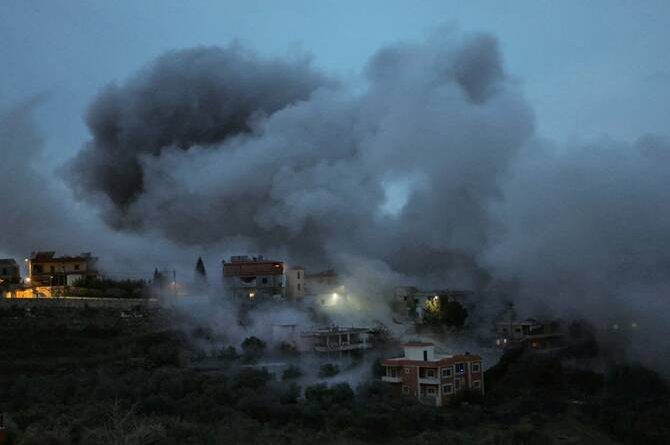
Hezbollah subsequently launched rocket attacks into Israel, prompting Israeli retaliatory operations that later expanded into a ground offensive in southern Lebanon.
Israeli forces are currently operating within a self-declared security zone extending roughly 10 kilometers inside Lebanese territory along parts of the southern border. At the same time, Israel has continued conducting airstrikes deeper inside Lebanon despite a ceasefire agreement that took effect on April 17.
Lebanon’s Health Ministry says the conflict has killed at least 3,123 people in the country since March, although official figures do not distinguish between civilians and combatants.
The growing pressure from coalition hardliners reflects increasing frustration within Israeli political circles over the effectiveness of the ceasefire. Opposition leader Yair Lapid described the truce as ineffective, arguing that continued attacks on northern Israel undermine its credibility.
“Either there is a ceasefire or we respond with disproportionate force to every attack against us,” Lapid told reporters.
The calls for escalation come as Israel and Lebanon continue participating in U.S.-mediated negotiations aimed at reducing hostilities and addressing longstanding security disputes. The two sides are expected to hold a fourth round of talks in early June.
However, prospects for a durable settlement remain uncertain. Hezbollah leader Naim Qassem has opposed the negotiations and rejected calls to disarm the group, while Hezbollah continues attacks on Israeli military targets in southern Lebanon and across the border.
The ministers’ statements underscore the growing tensions within Israel over how to handle the conflict, as military operations, diplomatic initiatives and domestic political pressures increasingly intersect in one of the region’s most volatile confrontations.