US Strikes Iranian Targets as Fragile Diplomacy Struggles to Contain Gulf Crisis
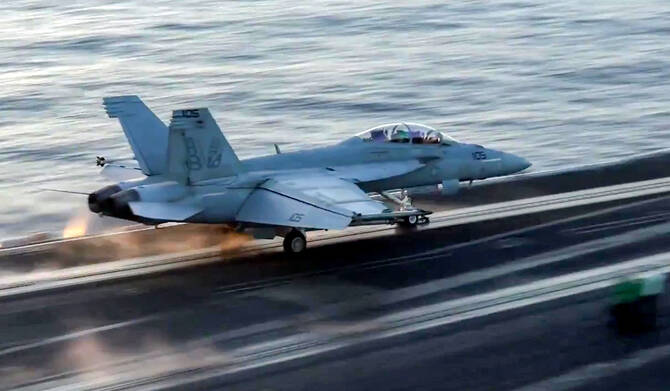
Dubai-U.S. forces carried out fresh strikes against targets in southern Iran on Monday, including boats allegedly attempting to deploy naval mines and missile launch sites, even as American and Iranian officials pursued diplomatic efforts aimed at ending a three-month conflict that has disrupted global energy markets and heightened regional instability.
The operation, announced by the U.S. military, targeted what officials described as immediate threats to American personnel and maritime security. The strikes occurred while senior Iranian negotiators, including Foreign Minister Abbas Araghchi and other officials, were in Doha for talks with Qatari mediators seeking a framework agreement to halt hostilities.
The latest military action underscored the delicate balance between diplomacy and confrontation as Washington and Tehran attempt to negotiate an end to a conflict that has centered on Iran’s nuclear program and the closure of the strategically vital Strait of Hormuz.
In a statement, the U.S. Central Command said the attacks were defensive measures intended to protect American forces from threats posed by Iranian military assets.
“U.S. Central Command continues to defend our forces while using restraint during the ongoing ceasefire,” said Navy Captain Tim Hawkins, a military spokesperson.
Earlier in India, U.S. Secretary of State Marco Rubio said Washington remained committed to diplomacy and believed a negotiated settlement remained achievable.
Rubio said discussions were focused on reopening the Strait of Hormuz and launching a structured, time-limited negotiation over Iran’s nuclear activities. He indicated the United States would continue to pursue diplomatic options before considering alternative measures.
President Donald Trump echoed that message in a social media post, describing negotiations as progressing positively while warning that further military action could follow if talks failed to produce results.
At the center of the negotiations is the Strait of Hormuz, through which roughly one-fifth of global oil and liquefied natural gas shipments typically pass. Since the conflict began in late February, commercial traffic through the waterway has fallen sharply as Iran imposed restrictions and security concerns mounted.
A source familiar with the Doha discussions said negotiators were focusing on two key issues: restoring unrestricted navigation through the strait and addressing Iran’s stockpile of highly enriched uranium. Iranian financial officials were also participating in discussions involving the possible release of frozen Iranian assets as part of a broader settlement.
Iranian Foreign Ministry spokesperson Esmaeil Baghaei said detailed nuclear negotiations would only begin after a broader framework agreement had been reached.
Tehran maintains that its nuclear program is peaceful and has repeatedly denied seeking nuclear weapons. Washington, meanwhile, insists that preventing Iran from acquiring a nuclear weapon remains a central objective of any agreement.
In a separate development, Iranian state media reported that the country had used a newly deployed air-defense system to shoot down what officials described as a hostile stealth drone operating near the Arabian Gulf. Iranian authorities did not specify the drone’s origin.
Regional tensions were further heightened by developments in neighboring Lebanon. Israeli Prime Minister Benjamin Netanyahu said Israel would intensify military operations against the Iran-backed Hezbollah movement despite a ceasefire agreement reached earlier this year. The Israeli military later reported strikes against Hezbollah infrastructure in the Bekaa Valley and other areas.
Diplomatic efforts have also become intertwined with broader regional initiatives. Trump used his latest public comments to urge additional Arab and Muslim-majority nations to join the Abraham Accords, the U.S.-brokered framework that normalized relations between Israel and several Arab countries during his first term.
The proposal drew skepticism from regional observers and diplomats, some of whom argued that negotiations over Iran and broader normalization efforts should remain separate tracks.
Analysts said the administration appeared to be attempting to frame a prospective Iran agreement as part of a larger regional security architecture that could benefit Israel, Gulf states and the United States simultaneously.
Despite ongoing military exchanges, markets reacted positively to signs that diplomacy was continuing. Oil prices fell more than 4 percent on Monday, reaching their lowest levels in two weeks amid expectations that a breakthrough could restore shipping through the Strait of Hormuz and ease pressure on global energy supplies.
Iranian officials said 32 commercial vessels and five oil tankers transited the strait during the previous 24 hours under authorization from Iran’s naval forces, a fraction of the volume typically seen before the conflict began.
Negotiators in Doha are expected to continue discussions in the coming days as both sides seek agreement on the terms of a ceasefire, maritime security arrangements and a framework for addressing longstanding disputes over Iran’s nuclear activities.