Rubio Sees Narrow Window for Iran Accord Despite Renewed US Military Strikes
Jaipur-U.S. Secretary of State Marco Rubio said on Tuesday that a diplomatic agreement with Iran could still be reached within days despite fresh U.S. military strikes that have cast uncertainty over a fragile ceasefire and ongoing negotiations aimed at ending months of conflict.
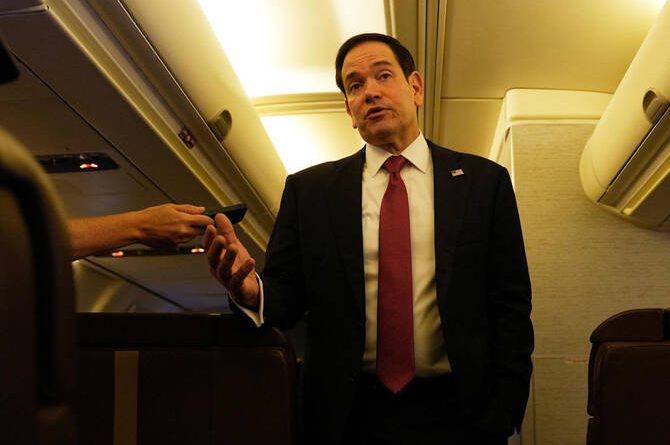
Speaking to reporters during a visit to Jaipur, Rubio said discussions involving Iranian representatives were continuing in Qatar and suggested that negotiations had entered a detailed phase focused on the wording of a potential agreement.
“There were some talks going on in Qatar today, so we’ll see if we can make progress,” Rubio said, adding that discussions were centered on specific language in an initial draft document and could require several more days to conclude.
Rubio said President Donald Trump remained committed to securing an agreement but would only support terms acceptable to Washington.
“The president’s expressed his desire to make it. He’s either going to make a good deal or no deal,” Rubio said.
The comments came after new U.S. strikes on Iranian-linked targets raised questions about the durability of efforts to halt hostilities. The military action coincided with the arrival of senior Iranian negotiators in Doha for another round of talks intended to end the conflict that has destabilized the region and disrupted global energy markets.
A central issue in the negotiations remains the status of the Strait of Hormuz, one of the world’s most important maritime energy corridors. The waterway handles a significant share of global oil and liquefied natural gas shipments and has become a focal point of the crisis after Iran moved to block transit through the strait.
Rubio said reopening the route was essential for international commerce and global economic stability.
“The straits have to be open,” he said.
He described the disruption of shipping through the Strait of Hormuz as unlawful and unsustainable, arguing that freedom of navigation must be restored regardless of the outcome of the negotiations.
“They’re going to be open one way or the other,” Rubio said. “What’s happening there is unlawful, it’s illegal, it’s unsustainable for the world, it’s unacceptable.”
The latest remarks underscore Washington’s attempt to balance military pressure with diplomatic engagement as negotiators seek a framework that could end the conflict while addressing concerns over maritime security and regional stability.
The talks in Qatar are being closely watched by energy markets and regional governments, given the strategic importance of the Strait of Hormuz and its role in global oil and gas supplies.