Senegal Taps Veteran Economist to Lead Government Amid Deepening Political Rift
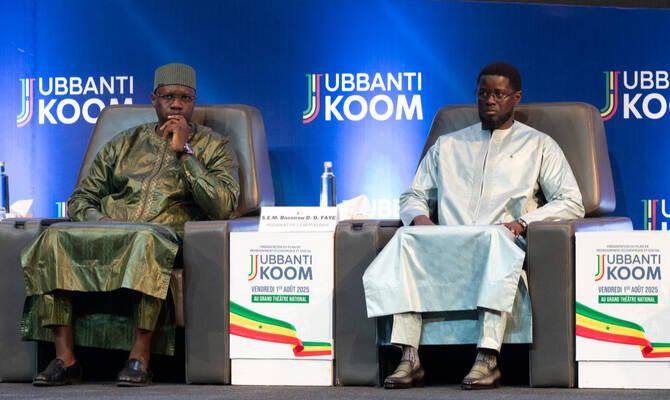
Dakar-Senegalese President Bassirou Diomaye Faye appointed veteran economist Ahmadou Al Aminou Lo as prime minister on Monday, days after dismissing former ally Ousmane Sonko and dissolving the government, a move that has plunged the West African nation into its most significant political crisis since the ruling coalition came to power in 2024.
The appointment came as tensions between Faye and Sonko, once close political partners, escalated over economic policy, governance and the future direction of the country. In a decree announcing the nomination, the presidency cited Lo’s experience in finance and monetary policy, emphasizing his background at the Central Bank of West African States and his expertise in managing economic challenges.
Senegal is facing mounting fiscal pressures, with public debt estimated at 132 percent of gross domestic product, one of the highest levels in the region. The government is seeking to reassure investors and international partners amid growing concerns over the country’s financial outlook.
In his first public remarks after being appointed, Lo sought to project stability, stating that Senegal remained a secure and viable destination despite ongoing political uncertainty.
The appointment follows Faye’s decision on Friday to remove Sonko from office after months of disagreements between the two leaders. Their split marks a dramatic reversal in fortunes for a political alliance that swept to power promising anti-corruption reforms, institutional change and economic renewal.
Faye’s rise to the presidency was closely linked to Sonko, whose legal troubles prevented him from contesting the 2024 presidential election. Sonko instead backed Faye, helping propel him to victory and ultimately securing his appointment as prime minister after the election.
The relationship has since deteriorated as the government grappled with economic challenges. Faye has favored engagement with the International Monetary Fund on a potential financial support program, while Sonko has advocated a more sovereign and domestically driven economic strategy.
The political confrontation is now shifting to parliament, where lawmakers are expected to vote on Tuesday on Sonko’s reinstatement as a member of the National Assembly and on the election of a new parliamentary speaker.
The move follows the resignation of National Assembly Speaker El Malick Ndiaye, a close Sonko ally, creating an opening for Sonko to assume one of the country’s most influential political positions.
Sonko’s political party, Pastef, holds a commanding majority in parliament with 130 of 165 seats, giving him a strong platform from which to challenge Faye’s authority despite no longer serving as prime minister.
Opposition leaders have sharply criticized the process. Aissata Tall Sall, head of the main opposition coalition, described the developments as an “institutional coup” and argued that Sonko should have formally resigned and resumed his legislative mandate before seeking the parliamentary leadership.
She called on Senegal’s Constitutional Council to review the matter, warning against what she described as an attempt by the parliamentary majority to impose an unlawful political outcome.
Under Senegalese law, parliament must approve the president’s nominee for prime minister within three months. Faye is also restricted from dissolving parliament until November, limiting his ability to seek a fresh legislative mandate during the current standoff.
Recent electoral reforms have further altered the political landscape by making Sonko eligible to run for the presidency in the future. The change raises the prospect that the two former allies, once united in opposition politics, could eventually face each other in a presidential contest.
The developments have introduced fresh uncertainty into Senegalese politics at a time when the government is attempting to address economic strains, restore fiscal credibility and maintain investor confidence.