Inside Spain’s Ancient Cave Sanctuaries, Researchers Seek New Clues to Humanity’s Earliest Art
“The paintings survived for tens of thousands of years in darkness and isolation, offering rare insight into the creativity, beliefs and technical abilities of early Homo sapiens.”
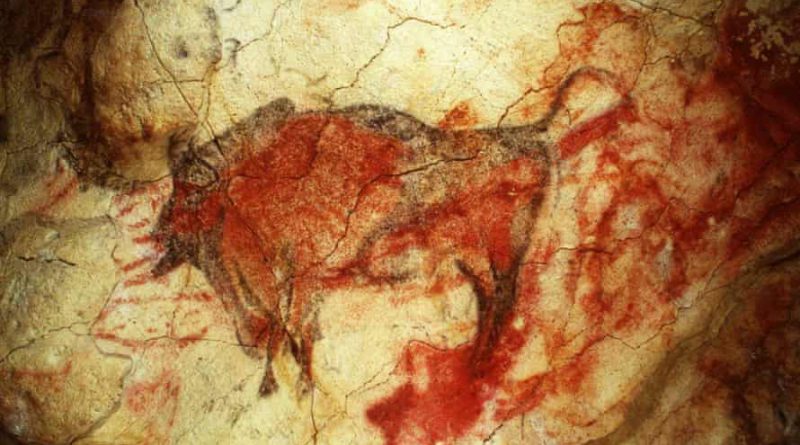
Deep beneath the landscapes of northern Spain, some of humanity’s oldest surviving artworks continue to challenge modern understanding of prehistoric life.Among the most celebrated examples is the cave of Altamira in the region of Cantabria, where vivid depictions of bison, deer and other Ice Age animals remain preserved on walls and ceilings more than 30,000 years after they were created.
The site is widely regarded as one of the most significant achievements of Paleolithic art and has played a central role in shaping archaeological understanding of early human creativity.Today, access to the original cave is highly restricted.
Only a small number of researchers are permitted to enter in order to protect the paintings from damage caused by changes in humidity, carbon dioxide and other environmental factors associated with human visitation.
One of those researchers is Diego Garate Maidagan, a professor of prehistory and Paleolithic art at the University of Cantabria. Garate has spent much of his career studying prehistoric artistic techniques and documenting cave art sites across northern Spain.
According to Garate, the paintings at Altamira remain remarkable not only because of their age but also because of their technical sophistication. Early Homo sapiens artists used charcoal and mineral pigments to create detailed animal figures, often incorporating natural contours in the rock to produce depth and three-dimensional effects.
The cave remained sealed for thousands of years after a rockfall blocked its entrance. Its rediscovery in the nineteenth century transformed archaeological debates about the capabilities of prehistoric humans. At the time, many scholars doubted that people living during the Paleolithic period possessed the artistic skills necessary to create such complex works.
Those doubts faded as similar cave art sites were discovered across western Europe, confirming that artistic expression was widespread among Ice Age communities.Because Altamira’s pigments were protected by unusually stable environmental conditions, the site preserves colors and details that have disappeared from many other caves.
In numerous locations across Spain and France, moisture, calcite deposits, bacterial growth and natural erosion have damaged or erased painted surfaces, leaving only faint engravings and traces of original compositions.
Garate and fellow researchers have spent years searching for these nearly invisible remnants. Their work has led to the identification of previously overlooked images throughout the Basque region, helping expand understanding of the scale and distribution of prehistoric artistic activity.
The discoveries have been aided by collaboration between archaeologists and caving specialists. Researchers trained experienced speleologists to recognize subtle markings and patterns that can indicate the presence of ancient engravings or faded pigment traces.
The approach has resulted in the identification of numerous animal figures, including horses and bison, preserved in caves where no significant artwork had previously been documented.To better understand how prehistoric artists created their images, researchers have also established experimental programs inside natural cave environments.
One such site is Isuntza Cave near the coastal town of Lekeitio. Discovered during construction work and found to contain no archaeological material, the cave now serves as a controlled laboratory where scientists can test theories about prehistoric artistic methods.
Researchers monitor temperature, humidity and pigment changes while recreating techniques believed to have been used thousands of years ago. Experimental projects include studies of lighting conditions produced by animal fat lamps and wooden torches, as well as investigations into how pigments behave over long periods under cave conditions.
Scientists have also recreated hand stencils, one of the most recognizable forms of Paleolithic art. The technique involves spraying pigment around a hand placed against a rock surface, creating a negative image that functions as a lasting human signature.
The experiments aim to provide insight into the practical decisions made by prehistoric artists, including how they illuminated underground spaces, prepared pigments and selected locations for their work.While advances in technology have expanded researchers’ ability to analyze cave environments, questions surrounding the purpose and meaning of the artwork remain subjects of debate.
Many scholars believe the images had religious or spiritual significance. Others argue that the paintings may have served social, educational or symbolic functions within Ice Age communities.The challenge of interpreting such ancient works has led researchers to explore a wide range of possibilities.
Some theories emphasize ritual practices and altered states of consciousness, while others focus on hunting traditions, cultural memory or communal identity.Despite decades of research, no single explanation has achieved universal acceptance.
For archaeologists working in the caves, however, the experience itself often provides valuable perspective.Researchers describe underground environments as spaces that alter perceptions of time and place.
Total darkness, physical isolation and the demands of navigating complex cave systems create conditions that differ dramatically from everyday life.Those conditions may help explain why prehistoric communities repeatedly traveled deep underground to create art far from their living areas.
Another important site in the region is Atxurra Cave in the Basque Country, where Garate helped identify engravings now considered among the most significant examples of Paleolithic art in Spain.The discoveries have strengthened the view that northern Spain contains one of the richest concentrations of prehistoric artistic heritage in Europe.
As new technologies reveal previously hidden details and additional sites continue to be documented, researchers are gaining a clearer picture of the artistic achievements of early Homo sapiens. Yet the deeper questions why people ventured into darkness to create these images and what meanings they attached to them—remain unresolved.
For many archaeologists, that uncertainty is part of the enduring appeal. Tens of thousands of years after the artists left their marks, the caves continue to offer evidence of human imagination while preserving mysteries that modern science has yet to fully explain.