Pezeshkian Arrives in Pakistan as US-Iran Negotiators Race to Cement Postwar Accord
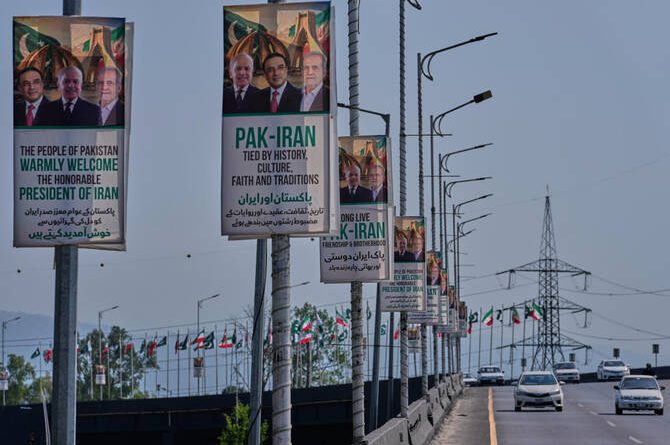
Islamabad- Iranian President Masoud Pezeshkian arrived in Pakistan on Tuesday for talks with leaders involved in mediating negotiations between Tehran and Washington, as technical teams worked to finalize a broader agreement aimed at ending months of regional conflict and establishing a framework for long-term stability.
Pezeshkian’s visit comes a day after senior U.S. and Iranian officials held negotiations in Switzerland, where Vice President JD Vance and Iranian parliamentary speaker Mohammad Bagher Qalibaf launched a 60-day diplomatic process intended to produce a permanent settlement following the recent war involving Iran, the United States and Israel.
The talks have exposed differences over key implementation details. Vance said discussions in Switzerland included an understanding that inspectors from the International Atomic Energy Agency (IAEA) would be allowed to visit Iranian nuclear facilities. However, Iranian Foreign Ministry spokesperson Esmail Baghaei said on Tuesday that no inspections had been scheduled for sites previously damaged in U.S. strikes.
The IAEA has maintained a presence in Iran since the 2025 conflict between Israel and Iran, but inspectors have not been granted access to several enrichment facilities targeted during the hostilities.
Security was heightened across parts of Islamabad as Pezeshkian met Pakistani President Asif Ali Zardari and Prime Minister Shehbaz Sharif. The visit marks the Iranian leader’s first trip to Pakistan since the conflict that began with U.S. and Israeli military action against Iran on Feb. 28.
Ahead of the meetings, Pezeshkian stressed that progress in the negotiations would depend on all parties fulfilling their commitments.
“The effectiveness of the talks depends on full commitment to the agreed obligations and their precise implementation,” Pezeshkian wrote on the social media platform X. “Progress on this path will be measured by practical adherence to accepted responsibilities.”
Iranian officials said the ongoing technical discussions in Switzerland have established several working groups focused on sanctions relief, nuclear issues, postwar reconstruction and verification mechanisms.
According to Iran’s state-run IRNA news agency, Deputy Foreign Minister Kazem Gharibabadi said negotiators had also created coordination mechanisms related to shipping through the Strait of Hormuz and efforts to reduce tensions along the Israel-Lebanon frontier.
One of the key outcomes of the initial negotiations was an agreement to establish a “de-confliction cell” intended to address hostilities between Israel and the Iran-backed Hezbollah movement in Lebanon. Mediators from Pakistan and Qatar said the mechanism would involve the Lebanese government and seek to uphold the cessation of military operations.
Questions remain, however, about the effectiveness of the arrangement. Israeli Prime Minister Benjamin Netanyahu said on Monday that Israeli forces would retain full operational freedom to respond to perceived threats, while Hezbollah has maintained that it will not halt attacks permanently unless Israel withdraws from contested areas in southern Lebanon.
Neither Israel nor Hezbollah is a formal participant in the U.S.-Iran negotiating framework, complicating efforts to translate diplomatic understandings into durable security arrangements on the ground.
U.S. President Donald Trump, when asked about Netanyahu’s remarks, said Washington would monitor developments closely and expressed confidence that outstanding issues could be resolved.
A ceasefire in Lebanon brokered over the weekend appeared to be holding on Tuesday, with no immediate reports of renewed strikes by either side.
Lebanese and Israeli officials were expected to hold another round of direct talks in Washington later on Tuesday, with discussions focused on potential arrangements for an Israeli military withdrawal and broader security guarantees along the border.
The negotiations represent one of the most significant diplomatic efforts in the region since the end of the Iran conflict and are being closely watched by governments concerned about nuclear oversight, maritime security and the risk of renewed hostilities across the Middle East.