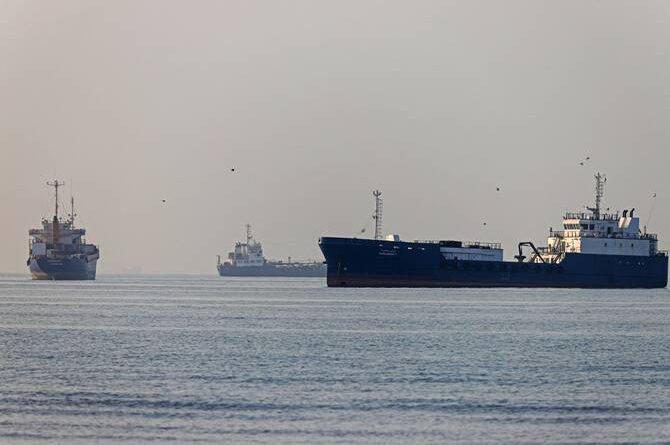
Iran Reasserts Hormuz Shipping Authority After Vessel Strike Raises Maritime Tensions
Tehran– Iran reaffirmed on Friday that it has the right to regulate shipping through the Strait of Hormuz and warned Gulf states against supporting U.S. efforts to challenge its position, a day after a commercial vessel was struck near Oman in an incident that underscored continuing security risks despite an interim agreement aimed at ending the Iran war.
Tehran’s response followed a joint statement issued by the United States and the six-member Gulf Cooperation Council (GCC), which rejected Iran’s insistence that it could levy tolls on vessels transiting the strategic waterway and called for free, unconditional and unrestricted navigation.
Deputy Foreign Minister Kazem Gharibabadi said safe passage through the Strait of Hormuz could not be guaranteed under arrangements that failed to recognize Iran’s role as a coastal state. Iran’s foreign ministry described the joint U.S.-GCC position as “interventionist, irresponsible and provocative” and argued that the strait should be administered by Iran and Oman in accordance with the interim agreement.
U.S. Secretary of State Marco Rubio, concluding a visit to Gulf allies, warned on Thursday that any Iranian move to threaten or obstruct commercial shipping would trigger a strong U.S. response. The joint U.S.-GCC statement also called for a lasting regional settlement that addresses Iran’s ballistic missile program, drone capabilities and support for proxy groups.
The diplomatic dispute unfolded as oil prices edged lower despite slower traffic through the Strait of Hormuz, a vital maritime corridor that normally carries about one-fifth of global oil and liquefied natural gas supplies. Markets continued to assess the implications of the interim U.S.-Iran agreement alongside persistent uncertainty over maritime security.
Taiwan’s Evergreen Marine said its Singapore-flagged container ship Ever Lovely was struck on Thursday near the coast of Oman by an unidentified object while sailing along a route recommended by the United Kingdom Maritime Trade Operations (UKMTO). The company said no crew members were injured and the vessel later resumed its voyage.
Two U.S. officials told Reuters they believed Iranian forces had fired on the vessel. Iran’s Arabian Gulf Strait Authority said ships using routes not authorized by Tehran would do so at the responsibility of shipowners, operators and captains. Iranian authorities did not directly comment on the U.S. allegation.
U.S. President Donald Trump has previously warned that Washington could resume military action if Iran failed to comply with the interim agreement, including commitments related to reopening the Strait of Hormuz.
Beyond navigation rights, negotiators remain divided over key elements of the 60-day diplomatic framework, including nuclear inspections, financial incentives for Iran and the parallel conflict involving Israel and Lebanon.
The International Maritime Organization temporarily suspended its ship escort operations through the Strait of Hormuz following the Oman incident. Earlier this week, the IMO and Oman announced a southern transit route to help hundreds of vessels stranded during the conflict, a move that drew criticism from Tehran.
South Korean President Lee Jae Myung said three South Korean vessels would depart the Strait of Hormuz over the weekend after the country’s Oceans Ministry reported that eight additional South Korean ships had already exited the waterway.