Iran Warns Tankers Over Strait of Hormuz Navigation Rules
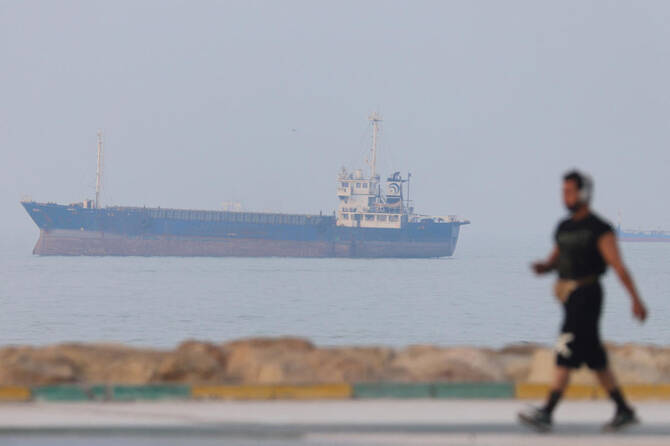
DUBAI-Iran’s joint military command warned on Thursday that oil tankers transiting the Strait of Hormuz must follow navigation routes approved by Tehran or face a “forceful response,” adding fresh uncertainty to one of the world’s most critical energy corridors as negotiations continue over a broader settlement to the recent conflict involving Iran.
The warning, issued by the Khatam Al-Anbiya military command and carried by Iranian state television, came a day after U.S. and Iranian representatives held indirect talks in Qatar through mediators aimed at advancing implementation of a preliminary agreement reached last month.
The Strait of Hormuz, through which a significant share of the world’s seaborne oil and liquefied natural gas exports passes, has become a central issue in negotiations seeking a permanent end to the conflict and the restoration of regional maritime security.
In its statement, the Iranian military said all commercial tankers must adhere to navigation protocols established by the Islamic Republic while passing through the strategic waterway.
“Any failure to comply, deviation from the designated route, or disregard for the navigation protocols of the Islamic Republic of Iran in the Strait of Hormuz will be met with an immediate and forceful response from the armed forces,” the statement said, warning that vessels violating the rules would place their own security at risk.
Iran also criticized the continued presence of U.S. military aircraft operating over the strait, saying such activity undermines regional security and contributes to instability in the waterway.
The statement further warned that any U.S. attempt to intervene in security matters in the Strait of Hormuz would be regarded as a threat to Iran’s national sovereignty and would prompt what it described as a rapid and decisive response.
The warning followed a statement issued by the U.S. military’s Central Command after a meeting with officials from Middle Eastern countries in Bahrain. According to the U.S. statement, participants reaffirmed their shared commitment to maintaining the free flow of international commerce through the Strait of Hormuz.
Under an interim agreement reached between Washington and Tehran, commercial vessels have been allowed to transit the strait for a 60-day period without paying passage fees.
Iran has since insisted that while vessels may continue using the waterway, they must travel along routes designated by Tehran and eventually be subject to transit charges, marking a significant departure from longstanding navigation practices in the strait.
The United States and several Gulf Arab states have rejected the proposed fees, maintaining that international shipping should continue without additional charges.
Efforts by Oman and a United Nations agency to establish an alternative shipping corridor closer to Oman’s coastline triggered attacks across parts of the Middle East last weekend, underscoring the continuing sensitivity of maritime security despite recent diplomatic engagement between Washington and Tehran.
The Strait of Hormuz remains one of the world’s most strategically important maritime chokepoints, and developments affecting navigation through the waterway are closely watched by global energy markets because of their potential impact on oil exports, shipping costs and international trade.