Mexico Rallies Around Azteca as World Cup Run Fuels Belief Ahead of England Clash
“On the day of the game, we are all family.”
Mexico City’s streets, cafés and public squares have become focal points of national attention as supporters prepare for the country’s World Cup meeting with England, with growing confidence surrounding the national team’s campaign transforming the atmosphere across the capital.
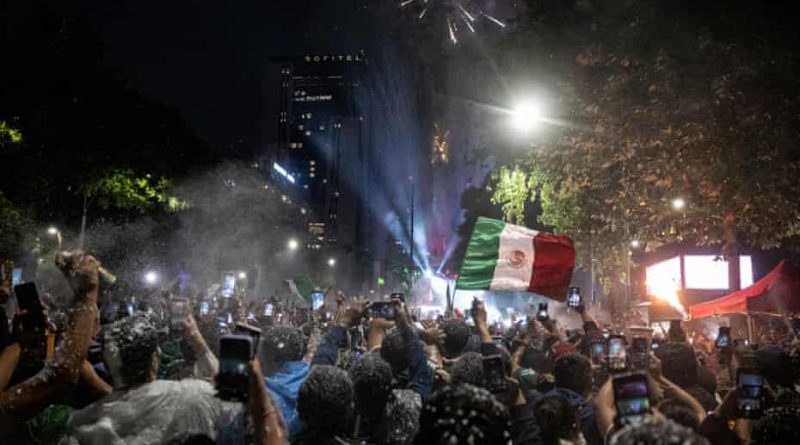
In the historic Zócalo, one of the country’s largest public gathering places, thousands of supporters have assembled throughout the tournament to watch Mexico’s matches on giant screens. The square has emerged as a symbol of the collective enthusiasm accompanying the national team’s progress, with fans describing a sense of unity that extends beyond families and local communities.
Angie, who planned to watch the match alongside other supporters, said the tournament had reinforced a longstanding sense of national solidarity among Mexicans. “Wherever we watch, the great thing about Mexicans is that it seems we all know each other,” she said. “On the day of the game, we are all family.”
The buildup to the England fixture has spread beyond traditional football venues. In La Roma, a neighborhood known for its cafés, restaurants and cultural spaces, conversations have increasingly centered on the national team’s performances. Residents and visitors described a noticeable shift in public sentiment as Mexico advanced through the knockout rounds.
Pablo, speaking outside a café in La Roma, recalled the celebrations that followed Mexico’s victory over Ecuador. He said major avenues including Paseo de la Reforma remained crowded late into the night as supporters celebrated with vehicle horns, musical instruments and spontaneous street gatherings.
“It was quite incredible to experience,” he said, describing thousands of supporters filling the city’s main boulevard following the victory.
According to Pablo, celebrations have intensified as Mexico has continued progressing in the tournament. He said previous national teams often entered decisive matches with widespread public skepticism, but the current squad has gradually generated stronger public confidence through its performances.
“I think the more we’ve been winning games, through the group stage onwards, people have been believing more,” he said. “With previous Mexican teams there was a little bit of doubt but we’ve been able to have more faith in the team.”
That growing optimism has been reflected in the widespread popularity of the phrase “¿Y Si Sí?”—translated as “What if they can?”—which has become increasingly associated with Mexico’s unexpected tournament run. The expression captures cautious optimism rather than certainty, reflecting supporters’ awareness of the challenges posed by England while acknowledging the team’s recent performances.
Attention has also focused on 17-year-old midfielder Gilberto Mora, whose display against Ecuador attracted significant praise from supporters. Pablo described Mora’s composure as exceptional for a player of his age and expressed hope that the teenager would eventually move to a European club, arguing that greater international exposure could benefit both the player’s development and Mexico’s national team.
“It’s just incredible what he is doing,” Pablo said. “I hope he gets a move abroad soon. Mexican players tend to stay in the local league but it would only help him and the national team.”
Mexico’s football culture has long been closely connected with family traditions and community gatherings, and supporters interviewed across the capital repeatedly linked the tournament to personal experiences extending beyond the sport itself.
Principia said this year’s World Cup coincided with a significant moment for her family after her grandmother died in Guadalajara on the day Mexico played South Africa. Following the family’s traditional nine-day mourning period, she proposed that relatives travel together to Mexico City to experience the tournament among other supporters.
“I just said, ‘Why don’t we go?'” she recalled.
She said the gathering became an opportunity for relatives who had not spent meaningful time together in more than a decade. For her family, she said, attending public celebrations in the capital transformed a period of grief into one of reunion.
“We took all the tears and emotion from grandma, who we felt was uniting us from beyond,” she said. “None of us had spent time together as a family in over a decade and here we were enjoying the World Cup.”
While enthusiasm has dominated much of the city, not every resident has embraced the football frenzy with the same intensity. Marco, a taxi driver, said he followed the sport only occasionally and viewed Sunday’s result without strong personal preference.
“I don’t watch a lot of football,” he said. “It will be about luck. If Mexico wins, fine; if England wins, OK. I think they’re both playing very well.”
Even so, Marco acknowledged that Mexico’s home environment could influence the contest. He pointed to the atmosphere expected inside the Azteca Stadium, where large crowds have historically created one of international football’s most recognizable home advantages.
“You’re going to have a stadium entirely full of Mexicans going crazy for their national team,” he said. “It’s very difficult to play against a whole nation.”
The Azteca Stadium occupies a unique place in football history, having hosted two FIFA World Cup finals and numerous landmark international matches. The venue has frequently been regarded as one of the sport’s most demanding away fixtures because of its capacity, altitude and consistently intense support for the Mexican national team.
England’s visit also revives memories of previous meetings between the two football nations, including matches that have carried historical significance within the wider narrative of international football. Although supporters remain conscious of Mexico’s strong record at the Azteca, many also recognize the challenge posed by an England side entering the match after its own successful tournament campaign.
Outside the Zócalo fan festival, Alejandra said supporters were balancing confidence with caution as kickoff approached.
“We are very anxious,” she said. “We know England will come here very strong. But obviously we all trust Mexico.”
Across Mexico City, that combination of expectation and restraint has shaped the atmosphere before the match. Public viewing areas, cafés and major thoroughfares have become gathering points where conversations reflect both confidence in the national team’s recent performances and recognition of the significance of facing one of the tournament’s strongest opponents. As supporters prepare to fill the Azteca Stadium and public squares across the capital, anticipation continues to build around a fixture viewed by many as one of the defining moments of Mexico’s World Cup campaign.