Settlers Seize West Bank Home Before Palestinian Family Can Move In
JALUD-A group of Israeli settlers has taken over a partially built Palestinian home in the occupied West Bank village of Jalud, according to the property’s owner and local residents, in an incident they describe as a significant escalation in tensions surrounding Israeli settlement expansion in the territory.
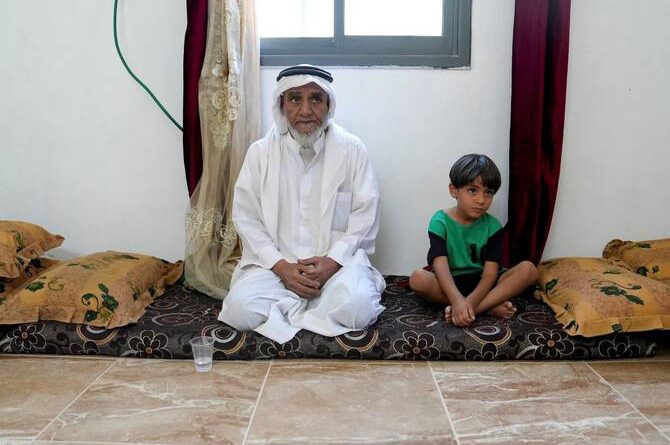
The unfinished two-story house belongs to Palestinian Mohammad Salameh, who said it was being built for his family and intended to become the home of his recently engaged son after marriage. Video recorded earlier this week and verified by Reuters showed at least six settlers on the roof of the building, which stands below a nearby hill.
Salameh said he sought assistance from the Israeli military and police after settlers entered the property, but no action was taken to remove them. As of Thursday, Reuters observed one of the settlers walking on the roof of the house.
“Only God knows, if there is law and order then they will leave,” Salameh told Reuters. “If they succeeded with taking one, then the rest will follow.”
Reuters was unable to reach the settlers for comment. The Israeli military said it was checking Reuters’ request for comment but had not provided a response by Friday. Israeli police also did not immediately respond to requests for comment.
Residents of Jalud said the incident differs from previous settler activity because the property itself, still under construction, has been occupied rather than farmland or agricultural areas being targeted.
Raed Al-Hajj Mohammad, head of the Jalud village council, said settlers had now advanced to within about 100 meters of the village’s last residential buildings. He said another nearby house under construction could face a similar fate if authorities fail to intervene.
According to Al-Hajj Mohammad, Jalud has experienced five major settler attacks, including incidents involving homes being set on fire, vehicles being damaged and trees being uprooted.
The West Bank is home to roughly 500,000 Israeli settlers living among about 3 million Palestinians. Settlement expansion and violence involving settlers have remained longstanding sources of friction and are widely regarded as major obstacles to efforts aimed at resolving the Israeli-Palestinian conflict.
A United Nations inquiry reported last month that attacks by Israeli settlers against Palestinian villages and agricultural land have risen sharply since 2023, increasing by 130 percent. The report identified continued violence and land seizures as growing concerns across parts of the occupied territory.
Most countries and the United Nations consider Israeli settlements in the West Bank to be illegal under international law, citing the Fourth Geneva Convention’s prohibition on transferring a civilian population into occupied territory. Israel disputes that interpretation, arguing that the West Bank is disputed territory with a longstanding Jewish historical presence.
Palestinians view the West Bank, together with Gaza and East Jerusalem, as integral parts of a future independent Palestinian state. The differing legal and political positions over the territory have remained central to decades of failed peace negotiations.
The issue has also drawn criticism from several of Israel’s allies, including the United States, which has repeatedly condemned violent actions by Israeli settlers. At the same time, settlement construction has accelerated under Prime Minister Benjamin Netanyahu’s government, whose parliamentary majority depends on hard-line pro-settlement parties.
For Salameh, the dispute extends beyond legal and political arguments. Construction of the family’s home stalled after the Gaza war began in 2023, when his son lost employment opportunities and the family’s financial situation deteriorated.
“The neighbor close by has built a two-story house, which they will probably take too. If we lose this house, they will lose theirs,” Salameh said, expressing concern that similar incidents could spread to other homes under construction in the village.