“The White Jersey Is My Destination”: Kashmir’s Moonis Balances Education and an Ambition to Play Test Cricket for India
“Every morning I wake up with one purpose—to move one step closer to wearing India’s white Test jersey.”
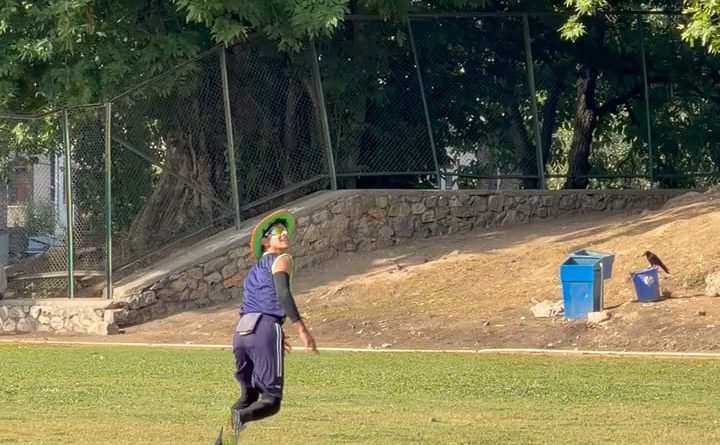
At an age when many children are still discovering their interests, 13-year-old Moonis Showkat has already defined the direction he wants his life to take. Born on August 4, 2012, the young cricketer from Kashmir says his ultimate ambition is to represent India in Test cricket, a format he regards as the highest measure of technical ability, patience and character. While he considers education essential for personal growth and long-term stability, he views cricket as the profession he hopes to pursue.
In a conversation with this correspondent, Moonis described how he has attempted to balance academics with an increasingly demanding cricket schedule, while acknowledging the challenges faced by young athletes seeking opportunities from regions with comparatively limited sporting infrastructure.
Q. You often describe education and cricket differently. How do you balance the two?
Education is extremely important because it builds knowledge, discipline and prepares us for life. My family has always reminded me that studies should never be neglected. At the same time, cricket is the career I want to pursue. I believe education is the foundation that supports every individual, but cricket is the dream I want to dedicate my life to. I try to give both equal respect, even though my long-term goal is to become a professional cricketer.
Q. When did you realise cricket was more than just a hobby?
My journey started when I was eight years old. Like many children, I began by playing cricket casually, but after some time I realised my attachment to the game was different. Holding a cricket bat never felt like ordinary play. I often tell myself that I saw a fire in my eyes for that piece of wood. From then onwards, I knew I wanted cricket to become my identity rather than simply a pastime.
Q. Who has influenced your cricketing journey the most?
Sachin Tendulkar has always been my biggest inspiration. I admire his discipline, humility and commitment to the game over such a long career. I also look up to Virat Kohli because of his work ethic, physical fitness and determination to improve continuously. Their careers show that talent alone is never enough. Consistency, discipline and sacrifice are equally important.
Q. Tell us about your training and your coach.
I currently train at AK Cricket Academy under coach Ameek Khan, a former Ranji Trophy cricketer who represented Jammu and Kashmir. Having someone with first-class cricket experience guide my training has been valuable because he understands the technical aspects of batting and the demands of competitive cricket. Every training session becomes an opportunity to improve small areas of my game.
Q. What does a normal training day look like?
My day starts at around 4:40 in the morning. After breakfast, I travel nearly 15 kilometres from my home to the academy. Every day begins with the mindset that I should become a slightly better cricketer than I was yesterday. Improvement is gradual, so I try not to compare myself with others. I only focus on becoming better than my previous version.
Q. Is there a batting shot you enjoy the most?
My favourite shot is the on-drive. Timing the ball through the field gives me great satisfaction. It is one of those shots that requires balance, patience and correct technique, which is why I enjoy practising it repeatedly.
Q. What challenges did you face during your early years?
The beginning was difficult because I did not own a cricket bat or a complete cricket kit. During local matches, I borrowed equipment from friends because purchasing my own gear was not easy. Eventually I managed to get my own equipment, but financial and practical challenges remained. Those experiences taught me to value every opportunity and understand that nothing should be taken for granted.
Q. Was convincing your family another challenge?
Like many families, my parents wanted me to focus mainly on education because they believed it would provide a secure future. I understand their concerns because every parent wants stability for their children. Over time, I have tried to show them that my commitment to cricket is serious and not temporary. My hope is that one day they will watch me represent India and feel that their support and sacrifices were worthwhile.
Q. Do you remember your first academy match?
Yes, very clearly. I was extremely excited because it was my first opportunity to represent the academy in a match situation. At the same time, I was nervous. Unfortunately, I was dismissed without scoring. It was disappointing, but I decided not to let one innings define my confidence. Instead, I returned to practice with greater determination. Looking back, that innings taught me resilience more than success could have.
Q. What aspect of your game or personality are you still trying to improve?
I become emotional quite quickly, and I know that emotional reactions can affect performance in competitive sport. Mental strength is just as important as technical ability. Whenever things go wrong, I try not to complain. Instead, I return to the cricket ground and focus on practice. That is how I deal with disappointment.
Q. Who has supported you throughout this journey?
Apart from my family, my coach and senior players at the academy have encouraged me continuously. Their guidance has helped me remain disciplined and focused. Young players need experienced people around them because cricket is a long journey with many setbacks.
Q. What is the biggest dream you carry with you?
My dream is to walk onto the field at Lord’s wearing India’s white Test jersey and hear the national anthem before the start of a Test match. That image motivates me every day. Test cricket represents the highest standard of the game, and playing for India in that format is the goal I continue working towards.
Q. What message would you like to give to other young cricketers, particularly those from Kashmir?
Anyone who wants to build a career in cricket should understand that success requires discipline, patience and sacrifice over many years. Competition exists everywhere because thousands of players share the same ambition. Hard work eventually separates players who remain committed from those who give up. Every established cricketer was once a child practising with a bat and dreaming of playing for the country.
I also think there is a misconception among some parents that success in cricket only means playing for India or in the Indian Premier League. Cricket provides opportunities at different competitive levels, and every professional journey begins with consistent effort at the grassroots. Young players should continue working hard while also keeping an alternative career option.
Q. What is your own alternative career plan?
If cricket does not work out the way I hope, I would like to join the Armed Forces through the National Defence Academy. Serving the country in uniform would also be an honour. Having a backup plan is important because sport is competitive, and every athlete should prepare for different possibilities.
Although still at the beginning of his sporting journey, Moonis says his focus remains unchanged. He continues to balance school with daily training while working towards gradual improvement under structured coaching. For him, progress is measured through discipline, consistency and long-term commitment rather than immediate results.
His ambition remains specific and unchanged: to earn an opportunity to represent India in Test cricket, a goal he says requires years of sustained effort, technical development and mental resilience. Until then, his daily routine continues to revolve around early mornings, regular practice sessions and the belief that incremental progress offers the strongest path toward a long-term sporting career.