Afghanistan vs Pakistan: The Deepening Conflict Over an Unfinished Border

Afghanistan also believes that peace cannot emerge while questions of sovereignty are treated as secondary to Pakistan’s security concerns.
The latest round of fighting between Afghanistan and Pakistan has once again exposed one of South Asia’s most volatile and unresolved rivalries. Pakistani airstrikes inside Afghan territory, justified by Islamabad as operations against militant sanctuaries, have resulted in civilian casualties according to Afghan authorities and international reporting, further inflaming public anger across Afghanistan.
Kabul has condemned the strikes as a violation of its sovereignty and warned that repeated military incursions risk turning a long-simmering dispute into a broader regional crisis. Although Pakistan argues that cross-border militant groups, particularly the Tehrik-i-Taliban Pakistan (TTP), operate from Afghan territory, Afghanistan maintains that Pakistan cannot use security concerns as a license to violate another country’s borders.
From the Afghan perspective, repeated airstrikes reinforce a pattern in which Islamabad seeks military solutions to political problems while disregarding Afghan lives and territorial integrity.
The roots of this confrontation stretch back well before the creation of modern Afghanistan and Pakistan as neighboring states. At the heart of the dispute lies the Durand Line, drawn by the British in 1893 to separate British India from Afghanistan. Successive Afghan governments have questioned the legitimacy of this colonial boundary, arguing that it divided Pashtun tribal communities without their consent.
Pakistan, inheriting the frontier after independence in 1947, considers the Durand Line its internationally recognized border. This disagreement has remained unresolved for decades and continues to shape security calculations on both sides. Afghanistan was also the only country to oppose Pakistan’s admission to the United Nations in 1947, reflecting its refusal to accept the border settlement inherited from British rule.
Since then, relations have oscillated between uneasy cooperation and outright hostility. Every major political transformation in Afghanistan—from the Soviet invasion to the civil war, the rise of the Taliban, the American intervention after 2001, and the Taliban’s return to power in 2021—has influenced bilateral relations.
For many Afghans, Pakistan has long been viewed not merely as a neighbor but as a state deeply involved in Afghan domestic affairs. Afghan political leaders across ideological lines have frequently accused Islamabad of supporting armed groups to secure strategic influence in Afghanistan. During the anti-Soviet jihad, Pakistan became the principal staging ground for the Mujahideen.
Later, the Taliban movement emerged largely from religious seminaries in Pakistan and received varying degrees of support from Pakistani institutions during the Afghan civil war. These historical experiences have fostered deep mistrust among ordinary Afghans, many of whom believe Pakistan has consistently sought a weak and dependent Afghanistan rather than a stable and sovereign neighbor.
Pakistan rejects these accusations and argues that it has paid an enormous price for decades of instability spilling over from Afghanistan. Millions of Afghan refugees have lived in Pakistan since the Soviet invasion, while terrorist attacks inside Pakistan have claimed thousands of civilian and military lives. Islamabad insists that militant organizations exploiting Afghan territory present an existential threat to Pakistan’s security and therefore require decisive action. This narrative has gained renewed prominence following an increase in attacks attributed to the TTP.
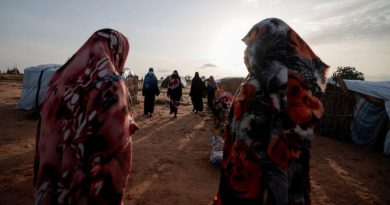
Yet Pakistan’s military responses have increasingly drawn criticism. Airstrikes inside Afghanistan have repeatedly been accompanied by reports of civilian casualties, including women and children. Afghan authorities argue that these operations neither eliminate militancy nor promote stability. Instead, they fuel resentment, strengthen anti-Pakistan sentiment, and undermine any possibility of meaningful bilateral cooperation. International observers have also expressed concern over the humanitarian impact of repeated cross-border military operations.
Another major fault line is the differing understanding of militancy itself. Pakistan distinguishes between the Afghan Taliban, with whom it once enjoyed close relations, and the Pakistani Taliban, which seeks to overthrow the Pakistani state. Islamabad accuses Kabul of allowing the TTP to find sanctuary inside Afghanistan. The Afghan authorities deny these allegations, insisting that Pakistan’s insurgency is rooted in its own internal political and security challenges rather than Afghan policy.
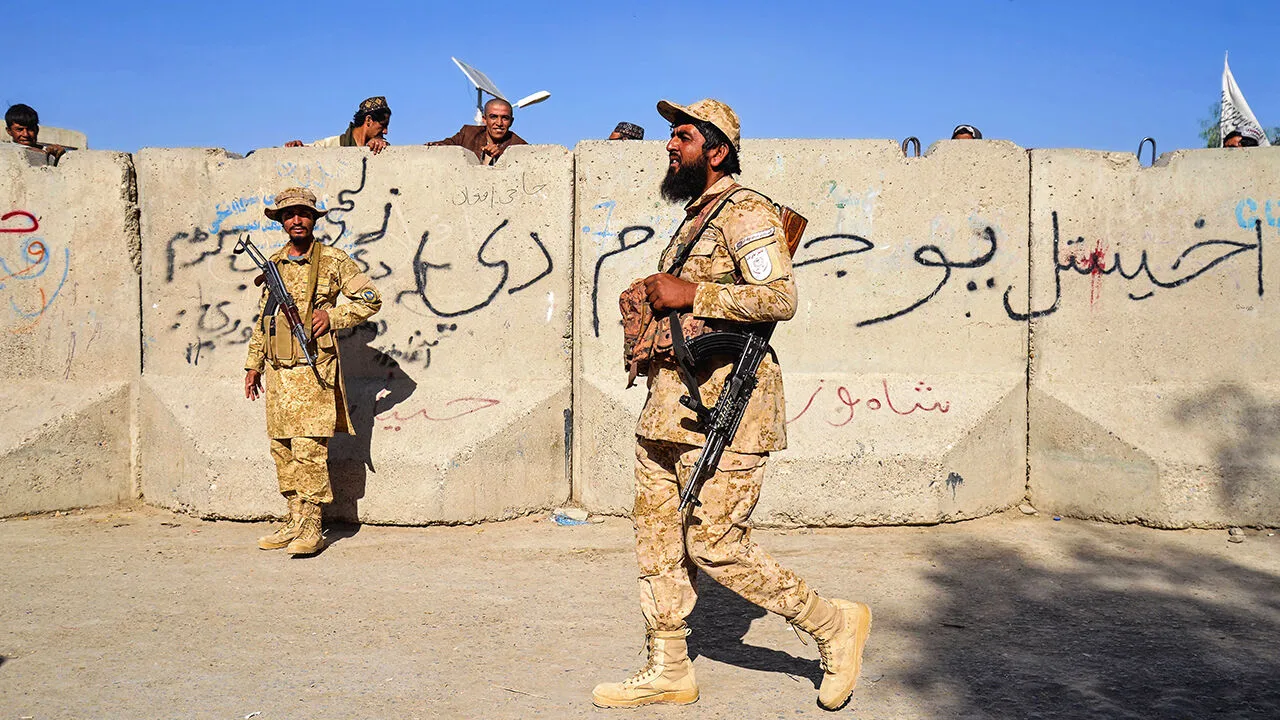
The border region has therefore become a theatre where historical grievances, competing national narratives, ethnic identities, and contemporary security concerns overlap. Tribal communities divided by the Durand Line often maintain family, commercial, and cultural ties across both sides of the frontier, making rigid border enforcement extremely difficult. Military operations inevitably affect civilians who have little connection to armed groups but bear the greatest costs of conflict.
Afghanistan also believes that peace cannot emerge while questions of sovereignty are treated as secondary to Pakistan’s security concerns. From Kabul’s viewpoint, repeated violations of Afghan airspace undermine international norms and create an atmosphere in which diplomacy becomes increasingly difficult. Every cross-border strike strengthens nationalist sentiment and reduces political space for compromise.
Pakistan, meanwhile, argues that diplomacy has repeatedly failed to curb attacks launched against its territory. It maintains that no sovereign state can indefinitely tolerate armed groups crossing its borders to carry out deadly attacks. This fundamental disagreement has produced a cycle of accusation, retaliation, and renewed violence that neither side has been able to escape.
The tragedy is that both countries share profound historical, cultural, religious, and economic connections. Millions of families have lived across both sides of the border for generations. Trade routes, linguistic ties, and shared traditions could serve as foundations for cooperation rather than conflict. Instead, decades of suspicion have transformed the frontier into one of Asia’s most militarized and unstable regions.
The recent escalation demonstrates that military force alone cannot resolve disputes rooted in history, identity, and competing national narratives. Pakistan may succeed in carrying out tactical operations, but repeated incursions into Afghanistan risk alienating the Afghan population while failing to address the deeper causes of regional instability.
Likewise, Afghanistan faces the challenge of ensuring that its territory is not perceived as a launching pad for attacks against its neighbors. Ultimately, the Afghanistan-Pakistan conflict is not simply a border dispute. It is the product of colonial legacies, geopolitical rivalries, mutual mistrust, and decades of war.
Any lasting peace will require respect for sovereignty, sustained diplomatic engagement, credible counterterrorism cooperation, and a willingness by both states to confront the historical grievances that continue to divide them.Until those fault lines are addressed, every ceasefire is likely to remain temporary, and every military exchange will merely reinforce a conflict that has already endured for generations.
Disclaimer: Views expressed by writers in this section are their own and do not reflect Milli Chronicle’s point-of-view.