
Archaeologist Recreates Homer’s Odyssey by Bicycle as Interest in Ancient Epic Returns
“Blending archaeology, cycling and classical literature, the journey traces the landscapes linked to Homer’s epic while acknowledging the enduring debate over its historical geography.”
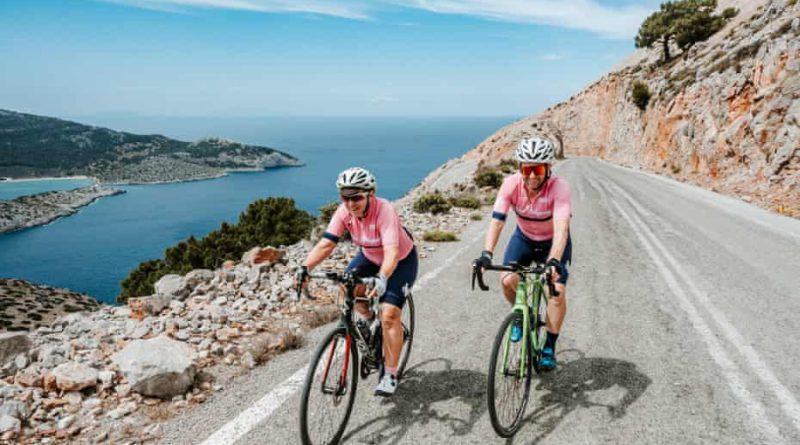
Renewed global interest in Homer’s Odyssey, coinciding with the release of a major cinematic adaptation, has drawn attention to an Australian archaeologist who has recreated the legendary journey of Odysseus by bicycle, combining classical scholarship with archaeological exploration across the eastern Mediterranean.
Sam Wood, an Australian archaeologist, cyclist and founder of the historical cycling company Bike Odyssey, has spent years developing routes inspired by significant events and figures from ancient history. His latest itinerary follows locations associated with Homer’s Odyssey, connecting archaeological sites in modern-day Türkiye and Greece while recognising that many destinations described in the ancient epic remain the subject of scholarly debate.
Wood’s interest in historical cycling began during a backpacking trip through Europe with his brothers in 2009. Rather than following a conventional travel itinerary, the group chose to retrace the route taken by the Carthaginian military commander Hannibal during his 218 BC campaign across the Alps with war elephants.
Beginning in southern Spain, the brothers cycled through France before crossing the Alps into Italy. The expedition was later documented in a BBC production, encouraging Wood to explore the possibility of combining archaeology, history and long-distance cycling as a permanent venture.
Although trained primarily in Roman archaeology, including studies at the University of Sydney and three years working at the British Museum, Wood expanded his focus to include cycling expeditions based on major historical journeys. Over time, he developed routes following the campaigns of Alexander the Great, the path of Richard the Lionheart during the Third Crusade and the territorial expansion of the Venetian Republic.
Among those projects, Homer’s Odyssey remained the route Wood had long hoped to recreate. He says his university studies introduced him to the epic, whose themes of endurance, travel and homecoming closely matched the philosophy behind his company. The business was ultimately named Bike Odyssey, while its logo depicts Argos, the faithful dog that recognises Odysseus upon his return to Ithaca in the ancient narrative.
Transforming Homer’s story into a practical cycling itinerary required substantial adaptation. The original Odyssey, traditionally attributed to Homer, recounts the decade-long journey undertaken by Odysseus following the Trojan War as he attempts to return to his kingdom of Ithaca. The poem combines historical settings with mythology, making it one of the foundational works of classical literature while also presenting considerable geographical uncertainty.
Wood condensed the journey into a 27-day cycling expedition designed for modern participants. In doing so, he acknowledged that many locations described in the poem have never been conclusively identified by historians or archaeologists.
While Troy and Ithaca are generally accepted as identifiable locations within the narrative, the intervening destinations remain widely disputed. Over centuries, scholars have proposed multiple locations for places described in the epic, including the island of Aeaea, home of the sorceress Circe. Suggested sites have ranged from Sardinia in the western Mediterranean to regions near modern-day Georgia on the eastern Black Sea.
The blending of mythology with geography has contributed to continuing academic debate over whether many locations should be interpreted literally, symbolically or as combinations of multiple traditions. Tourism authorities in various Mediterranean regions have also promoted local associations with episodes from the Odyssey, further complicating efforts to establish definitive routes.
Wood chose to address those uncertainties by concentrating on locations with both archaeological significance and literary connections to the poem. Rather than attempting to recreate every mythical episode, his itinerary focuses primarily on sites across Türkiye and Greece that are referenced in the epic or hold established importance within the ancient Greek world.
The journey begins at the archaeological site of Troy in northwestern Türkiye, one of the best-known locations associated with the Trojan War tradition. Archaeological excavations at Troy have revealed multiple occupation layers, including evidence of destruction by fire during certain periods, findings that continue to inform scholarly discussion regarding possible historical events underlying later literary traditions.
From Troy, the route proceeds through several locations linked directly or indirectly to the Odyssey. Stops include the island of Lesbos and Mount Parnassus, both connected with the broader landscape of ancient Greek literature, alongside major archaeological centres such as Ephesus, Delphi and Mycenae.
These locations represent some of the most significant surviving sites of the ancient Greek world. Ephesus became one of antiquity’s principal urban centres, Delphi served as the sanctuary of the Oracle of Apollo, and Mycenae formed one of the leading political and cultural centres of the Mycenaean civilisation associated with the Late Bronze Age.
The renewed attention surrounding Homer’s epic also coincides with the release of filmmaker Christopher Nolan’s adaptation of The Odyssey. According to publicly reported production details, filming took place across multiple international locations, including Iceland, with additional landscapes in Scotland and Western Sahara representing settings inspired by the Mediterranean world described in the ancient poem.
Wood notes that the geographical complexity of Homer’s narrative makes any modern reconstruction necessarily selective. Rather than presenting a definitive map of Odysseus’ voyage, his cycling expedition reflects one interpretation grounded in archaeological evidence, literary references and practical travel considerations.
By linking classical scholarship with active exploration, the project offers participants an opportunity to experience landscapes connected with one of history’s most influential literary works while engaging with archaeological sites that continue to shape understanding of the ancient Mediterranean world.