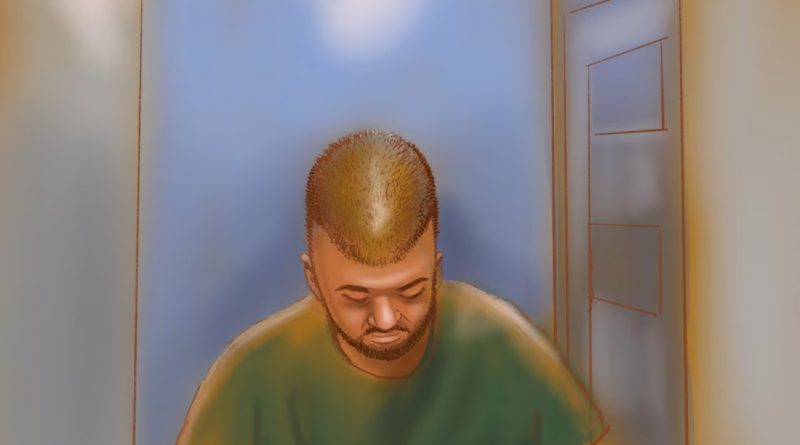
Sydney court rejects anonymity bid by accused Bondi gunman
Sydney — An Australian court on Thursday rejected a request by Naveed Akram, accused of carrying out a mass shooting in Sydney, to prevent media from identifying his family, citing the principle of open justice.
Akram, 24, is charged with opening fire at a Jewish Hanukkah gathering at Bondi Beach in December, killing 15 people in what police have described as one of the country’s worst mass shootings and an attack inspired by Islamic State.
The accused had sought a 40-year suppression order to block publication of the names, images and identifying details of his mother, brother and sister, arguing that publicity could endanger their safety.
Several Australian media organizations opposed the application, saying it would unduly restrict reporting in a case of significant public interest.Judge Hugh Donnelly ruled against the request, stating that suppression orders should be granted only in exceptional circumstances and that transparency in judicial proceedings was fundamental.
He noted the case had generated “unprecedented public interest, anger, outrage and grief.”The court heard that personal details of Akram’s family had already circulated widely online, while his mother had spoken to local media shortly after the attack.
Donnelly added that any order limited to Australian jurisdiction would be ineffective given the reach of social media and international publications.Akram appeared via video link from a maximum-security prison and did not contest the ruling further.
His lawyer, Richard Wilson, told the court there were no plans to appeal the decision.The December attack shocked Australia, a country with strict gun control laws, and has prompted renewed debate over firearm regulation and rising antisemitism.
The government has since launched a national inquiry into antisemitism and social cohesion, with findings expected later this year, alongside measures to strengthen hate speech legislation.