Starmer Defends NATO as Strategic Pillar for U.S. Amid Gulf Tensions
Doha— British Prime Minister Keir Starmer said on Friday that NATO remains firmly in the strategic interests of the United States, as he concluded a three-day Gulf tour focused on stabilizing a fragile Middle East ceasefire and ensuring the reopening of the Strait of Hormuz.
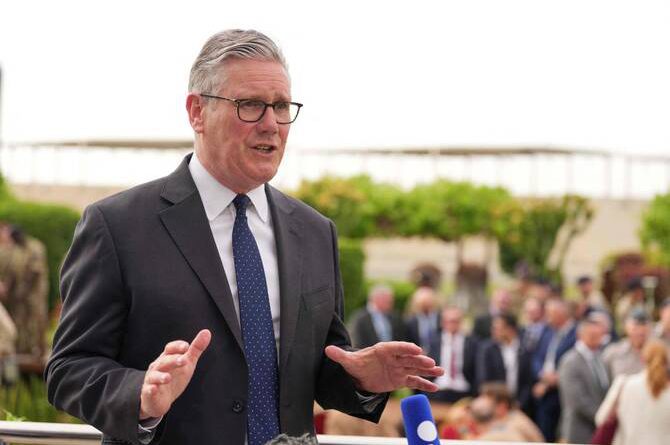
Speaking to UK broadcasters before departing Qatar, Starmer described NATO as a longstanding defensive alliance that has underpinned transatlantic security for decades, while acknowledging that European members must increase their financial contributions.
His remarks came in response to renewed criticism from U.S. President Donald Trump, who has threatened to withdraw from the alliance following disagreements with NATO partners over participation in the U.S.-Israel war against Iran.“It is in America’s interests. It’s in European interests,” Starmer said, emphasizing the alliance’s role in maintaining collective security.
The British leader’s visit included stops in Saudi Arabia, the United Arab Emirates, and Bahrain, where discussions centered on sustaining a temporary ceasefire between the United States and Iran and addressing disruptions in the Strait of Hormuz, a critical maritime corridor for global energy supplies.
Starmer said he held a phone call with Trump late on Thursday, during which he conveyed regional concerns, particularly regarding the continued closure of the strait. Although the waterway was expected to reopen under the ceasefire agreement announced earlier this week, recent Israeli strikes on Lebanon and disputes over compliance have delayed progress.
He added that the United Kingdom is working to assemble a coalition of more than 30 countries to coordinate diplomatic and military efforts aimed at restoring safe navigation through the chokepoint.
In a separate interview, Starmer expressed frustration over the economic impact of geopolitical tensions, citing volatility in energy prices. He drew comparisons between the influence of Trump and Russian President Vladimir Putin on global markets, stating that fluctuations in energy costs were placing pressure on households and businesses.
The Strait of Hormuz handles a significant share of the world’s oil shipments, and prolonged disruption has raised concerns among governments and markets about supply stability and price volatility.