Mob Torches Ebola Center as Congo Outbreak Sparks Fear and Fury
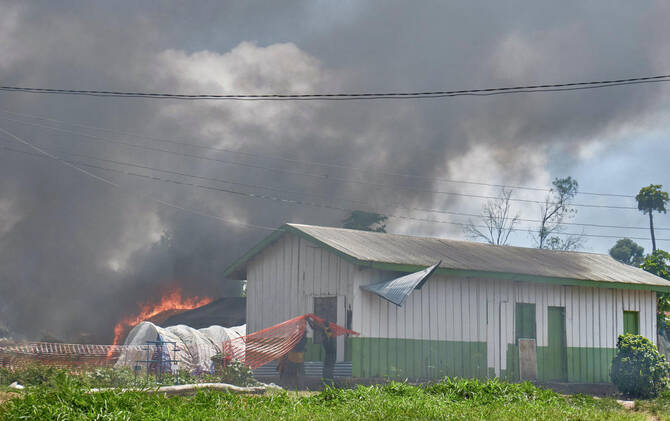
Bunia— Residents set fire to an Ebola treatment center in eastern Democratic Republic of the Congo on Thursday after authorities prevented them from retrieving the body of a suspected victim, underscoring mounting tensions as health workers struggle to contain a fast-growing outbreak of a rare Ebola strain.
The attack occurred in Rwampara, near the epicenter of the outbreak in Ituri Province, where local youths stormed and burned parts of a treatment facility after a man believed to have died from Ebola was denied a traditional funeral, according to witnesses and police officials.
Authorities said the confrontation stemmed from public resistance to emergency burial protocols designed to prevent transmission of the highly contagious virus.
Under outbreak regulations, suspected Ebola victims must be buried by trained teams because bodies can remain infectious and contribute to further spread.Deputy Senior Commissioner Jean Claude Mukendi, head of public security in Ituri Province, said relatives and friends of the deceased attempted to take the body home despite official restrictions. Police intervened but were unable to prevent the unrest.
Witnesses reported that aid workers evacuated the facility as protesters entered the center and set fire to equipment and structures. Humanitarian organization ALIMA, which operates at the site, later said calm had been restored and medical teams had resumed their work.
The incident highlights the growing challenges facing Congolese authorities and international aid agencies as they confront an outbreak that the World Health Organization has designated a public health emergency of international concern.Health officials reported 671 suspected cases and 160 suspected deaths across two provinces as of Thursday.
The outbreak has also crossed borders, with neighboring Uganda reporting cases, including at least one death.The WHO and regional health authorities have warned that the true scale of the outbreak is likely significantly larger than official figures indicate. Surveillance efforts are continuing as investigators seek to identify additional infections and trace transmission chains.
The outbreak is centered in Ituri Province, a region affected by chronic insecurity, weak healthcare infrastructure and large-scale population displacement. More than 920,000 internally displaced people are living in the province, according to United Nations estimates, complicating disease surveillance and response efforts.
Health experts say the Bundibugyo strain responsible for the outbreak presents additional challenges because no approved vaccine or specific treatment is currently available. Officials estimate it could take at least six to nine months before a vaccine becomes available.The virus has now spread beyond Ituri and North Kivu provinces.
On Thursday, authorities reported the first confirmed cases in South Kivu Province, including a death near the city of Bukavu, approximately 500 kilometers south of the outbreak’s center.The disease circulated undetected for weeks after the first known fatality in late April, partly because initial investigations focused on more common Ebola strains previously seen in the country.
Health authorities have yet to identify the outbreak’s first infected patient.The escalating crisis has begun to affect international travel and regional events. India and the African Union announced the postponement of the India-Africa Forum Summit scheduled for next week in New Delhi, citing the evolving health situation in parts of Africa.
The United States has also imposed screening measures and travel restrictions for individuals recently arriving from affected countries.
Ebola spreads through direct contact with bodily fluids and can cause fever, vomiting, diarrhea, muscle pain and severe hemorrhagic symptoms.
Public health officials say rapid detection, isolation and community cooperation remain critical to containing the outbreak.