Death toll climbs in Libya migrant shipwreck as more bodies wash ashore
Libya-Eleven additional bodies believed to be those of migrants have washed ashore along Libya’s eastern coastline following a boat capsize last week, raising the confirmed death toll to 26 and intensifying concerns that dozens more people may have perished in the Mediterranean crossing, medical and security officials said on Tuesday.
The latest recoveries occurred near the coastal city of Tobruk, close to Libya’s border with Egypt, where search teams have been conducting operations since the vessel sank.
According to security and medical sources, the newly recovered bodies were found over recent days after the body of a woman was discovered on Sunday. Authorities said all of the remains were in an advanced state of decomposition.
Last week, rescue and recovery teams retrieved 15 bodies, including that of a young girl, from several locations along the Tobruk coastline. Ten survivors were rescued from the incident and later told authorities that the boat had been carrying approximately 61 people when it capsized, according to a Libyan navy source.
Based on survivor accounts, dozens of passengers remain unaccounted for and are feared lost at sea.
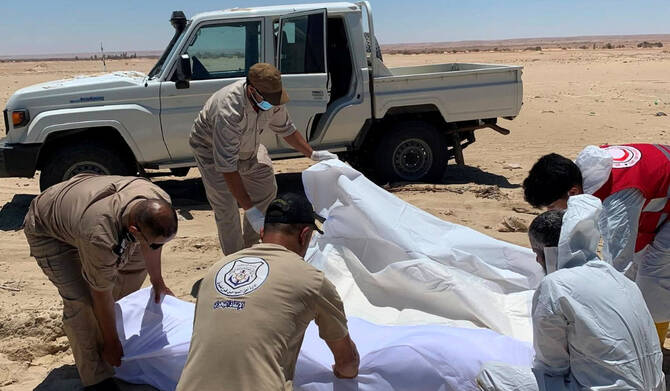
Photographs released by the Tobruk Coast Guard showed members of the search and rescue department working alongside volunteers from the Libyan Red Crescent to recover bodies from the shoreline. The images depicted rescue workers wrapping the remains in white cloth before transporting them for burial.
Medical officials said the condition of the bodies has complicated identification efforts. One source said many victims are being buried shortly after recovery because decomposition has rendered identification increasingly difficult.
Security patrols continue to monitor beaches and coastal areas around Tobruk amid expectations that additional bodies may be carried ashore by currents in the coming days.
Libya remains one of the principal departure points for migrants and asylum seekers attempting to reach Europe across the Mediterranean Sea. Many originate from sub-Saharan African countries and undertake dangerous journeys through Libya in search of safety, employment opportunities or escape from conflict and economic hardship.
The country’s prolonged instability since 2011 has enabled extensive migrant-smuggling networks to operate along its coastline, making the central Mediterranean route one of the world’s deadliest migration corridors.
Humanitarian organizations have repeatedly warned that overcrowded vessels, poor weather conditions and limited rescue capacity continue to contribute to recurring maritime tragedies in the region.
Authorities have not yet released details regarding the nationality of the victims or the circumstances that led to the sinking.