Iran Warns Against Alternative Hormuz Routes as Fragile Truce Faces New Strains
Baghdad— Iran’s Foreign Minister Abbas Araghchi warned on Sunday that any attempt to bypass shipping routes through the Strait of Hormuz approved by Tehran would heighten regional tensions, as Iran and the United States exchanged fresh accusations of violating a fragile ceasefire following recent military clashes.
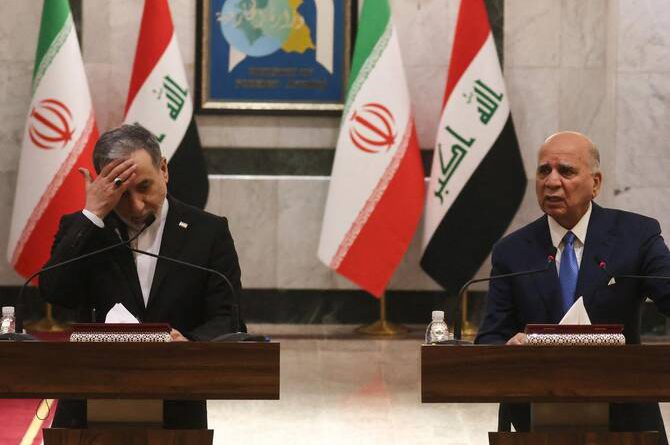
Speaking during a visit to Baghdad, Araghchi said efforts to establish alternative maritime arrangements outside those accepted by Iran would complicate the reopening of the strategically vital waterway and risk further instability in the Gulf.
“Any attempt to adopt new or separate arrangements compared to what is underway by the Islamic Republic of Iran will only lead to more complicated situations and delays in the reopening of the Strait of Hormuz, and will increase tensions,” Araghchi told a joint press conference.
His remarks followed reports that commercial vessels continued using a shipping corridor not approved by Iran. The Islamic Revolutionary Guard Corps (IRGC) said on Friday that Oman and the International Maritime Organization had announced the route without consulting Tehran and warned ships against using it.
The warning came after the U.S. military said it carried out strikes on multiple targets in Iran on Saturday in response to what it described as a fresh attack on a vessel transiting the Strait of Hormuz. Iranian authorities subsequently launched strikes against U.S. military bases in the Gulf.
The latest exchanges have placed additional pressure on a diplomatic process intended to preserve a ceasefire following the conflict that began on Feb. 28 between Iran, Israel and the United States.
Araghchi urged all parties to comply with the existing memorandum of understanding governing the truce and avoid actions that could undermine the agreement.
He also called for the creation of a regional security framework involving Iran, Iraq and the Gulf states without the participation of outside powers, arguing that regional countries should take primary responsibility for maintaining stability.
The Iranian foreign minister welcomed Iraq’s proposal to host a meeting involving Gulf states, Iran and Iraq to discuss regional security cooperation.
Iraq is expected to hold funeral processions on July 8 for Iran’s late Supreme Leader Ayatollah Ali Khamenei, who Iranian authorities say was killed during U.S. and Israeli strikes on the opening day of the conflict.