Iran Warns US of Retaliation as Hormuz Blockade Threat Escalates
Islamabad — Abbas Araqchi warned that Iran would respond forcefully to a U.S. plan to blockade maritime traffic to its ports, as tensions surged following the collapse of talks between Washington and Tehran over the weekend.
Araqchi said negotiations in Islamabad had been conducted in good faith but were undermined by what he described as “maximalism” and shifting U.S. demands, adding that the talks came close to producing an agreement before breaking down.
The remarks followed an announcement by Donald Trump that U.S. naval forces would begin blockading vessels entering or leaving Iranian ports, a move that risks destabilizing a fragile ceasefire reached after weeks of conflict.
US Central Command said the blockade would take effect at 10 a.m. ET (1400 GMT) and would apply to all maritime traffic linked to Iranian ports across the Arabian Gulf and Gulf of Oman, while maintaining freedom of navigation through the Strait of Hormuz for vessels not bound for Iran.
Trump said the United States would act against ships paying what he described as “illegal tolls” to Iran and warned that any attack on U.S. or commercial vessels would trigger a strong military response.
Iran’s Islamic Revolutionary Guard Corps said any approach by foreign military vessels to the strait would be treated as a violation of the ceasefire and met with a “decisive” response.
Parliamentary Speaker Mohammad Baqer Qalibaf dismissed the U.S. position, saying Tehran would respond in kind. “If you fight, we will fight, and if you come forward with logic, we will deal with logic,” he said, according to state media.
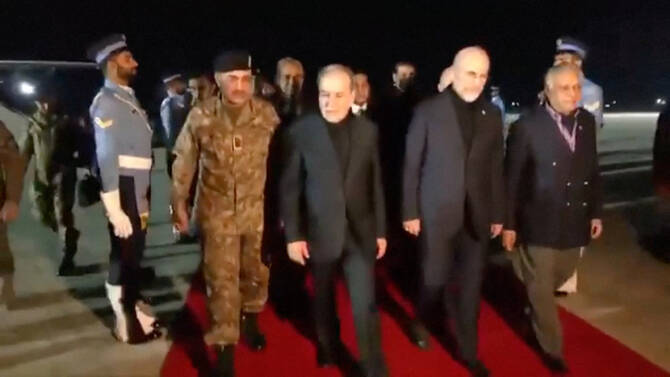
The talks in Islamabad marked the first direct engagement between the United States and Iran in more than a decade and followed a ceasefire announced earlier in the week after six weeks of conflict that has disrupted global energy markets and pushed oil prices above $100 per barrel.
JD Vance, who led the U.S. delegation, said no agreement had been reached, while signaling that diplomacy could continue. Trump also described the talks as “very friendly” and expressed confidence that Iran might return to negotiations.
A U.S. official said key sticking points included demands for Iran to halt uranium enrichment, dismantle enrichment facilities, transfer highly enriched material and end support for regional groups, alongside ensuring open access to the strait.
Iranian officials, including President Masoud Pezeshkian, said Tehran remained open to a “balanced and fair agreement,” blaming Washington for the breakdown and urging a return to international legal frameworks.
Shipping data showed that three fully laden supertankers transited the strait on Saturday, suggesting that maritime flows had not yet been fully disrupted despite the looming blockade.