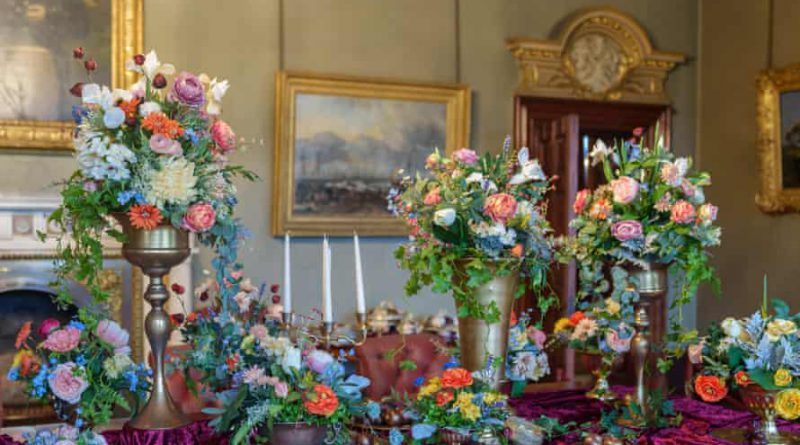
Exhibition at Brodsworth Hall Explores Life and Legacy of Custodian Who Preserved Victorian Interiors
“She never did modernise, thank goodness … it is one of the reasons the house was saved for the nation.”
An exhibition opening this weekend at Brodsworth Hall examines the life and influence of Sylvia Grant-Dalton, whose long residence at the Victorian property helped preserve it in an unusually unaltered state.
Located near Doncaster in South Yorkshire, the house is now managed by English Heritage, which attributes its survival in part to Grant-Dalton’s decision not to modernise the building during her lifetime.Grant-Dalton lived at Brodsworth Hall from 1931 until her death in 1988, a period spanning more than five decades.
Despite her personal dislike of Victorian architecture, she did not undertake major renovations, leaving original features such as wallpaper, carpets and fixtures largely intact, even as they deteriorated.
According to Eleanor Matthews, a curator at the site, this lack of intervention ultimately contributed to the building’s historical value, preserving it as a “time capsule” of Victorian domestic life.The exhibition focuses on Grant-Dalton’s personal interests rather than the structural condition of the house, with particular emphasis on her engagement with gardening and floral design.
Curators have drawn on her collection of decorative objects, horticultural materials and artworks to present a narrative centred on her creative pursuits. Matthews said the exhibition aims to highlight an aspect of Grant-Dalton’s life that contrasts with the physical decline of the house, offering visitors a more personal perspective.
Grant-Dalton’s association with the property stemmed from her marriage to Charles Grant-Dalton, who inherited the estate. While she reportedly preferred Georgian interiors, she remained committed to maintaining the house after her husband’s death in 1952.
The estate was later held in trust for their daughter, Pamela, and Grant-Dalton viewed its upkeep as a long-term responsibility despite the financial and practical challenges associated with managing a large historic property.Curators describe her as an independent and unconventional figure.
Accounts included in the exhibition depict a household that, while constrained by the building’s condition, retained an informal atmosphere. Family members visiting the house reportedly engaged freely with the space, and Grant-Dalton herself remained active within it into later life, using a mobility scooter to navigate its corridors.
Her primary focus, however, was the estate’s gardens. The exhibition documents her sustained interest in horticulture, including painting flowers, maintaining plant records and creating floral arrangements throughout the house.
This activity extended to improvised displays in various rooms, reflecting a continuous engagement with the natural environment surrounding the property.Among the items on display are restored decorative pieces such as gilt jardinières and 19th-century candelabras, alongside artworks linked to her interest in floral composition.
A reproduction of Flowers in a Terracotta Vase, originally held at the National Gallery, has been installed in the dining room, accompanied by a contemporary floral installation created by students from Doncaster College.
The exhibition also includes a reconstructed version of Grant-Dalton’s potting and preparation room, designed to evoke her daily routines. Sensory elements, including recorded garden sounds and floral scents, have been incorporated to provide context for her working environment.
Additional materials include archival photographs, recorded interviews and documentation of staff associated with the house during her residence.Following Grant-Dalton’s death, the property was transferred to public ownership by her daughter, subject to the condition that its contents be preserved. English Heritage assumed responsibility for the site in 1990, recognising the significance of its largely unaltered condition.
At a time when many Victorian houses in England were demolished or extensively redeveloped, Brodsworth Hall remained intact, in part due to the absence of modernisation during Grant-Dalton’s tenure.
The current exhibition situates her role within this broader context of heritage preservation, presenting her decisions whether intentional or circumstantial as central to the building’s survival.
By focusing on her personal interests and daily life, curators aim to connect the physical fabric of the house with the individual who maintained it over an extended period.
The exhibition will run as part of the site’s public programme, contributing to ongoing efforts to interpret the historical and cultural significance of Brodsworth Hall within the wider framework of Britain’s preserved Victorian estates.