OPINION: Nancy Grewal said she was unsafe in Canada. Then Canada failed her

Nancy Grewal’s family is demanding justice. Justice now means more than solving a murder.
Western democracies like to sermonize about rights, pluralism, and the protection of dissent. Their real test is simpler: what do they do when an ordinary immigrant woman says she is afraid and asks for help?
Nancy Grewal asked for help.
She was a 45-year-old Sikh woman who moved to Canada in 2018, settled in Windsor, Ontario, and worked as a personal support worker. Her union later described her as a steward and a committed worker. She was not a celebrity activist insulated by institutions. She was a frontline worker, often alone, who also became known online for criticizing the violent Khalistan movement and the people she believed used intimidation, influence, and religious spaces to dominate parts of her community.
On the night of 3 March 2026, after finishing work at a client’s home on Todd Lane in LaSalle, she was stabbed multiple times and later succumbed to her injuries. Police were unusually clear from the beginning: this was “not a random act of violence” but “an intentional act against her.” The Ontario Provincial Police later joined the probe. Nancy Grewal was not caught in random chaos—she was targeted.
What makes the case darker is that she appears to have predicted it.
CityNews reported on 5 March that Nancy’s sister, Alisha, said she had been receiving threats, believed she was being followed, and had already gone to police with the names of the people she feared. Alisha called the murder “pre-planned” and “revenge” for Nancy’s videos. Later, speaking to AM800, she asked the question that now sits at the centre of the case: if her sister was “giving names, giving everything,” why was she not taken seriously?
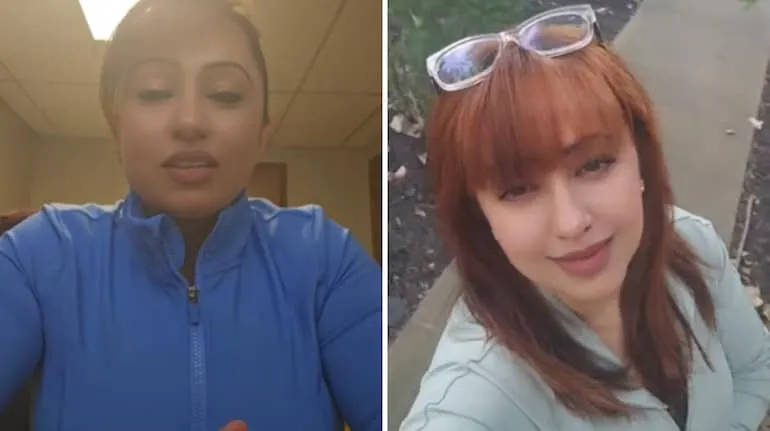
Nancy’s own words make that question impossible to ignore. In a video recorded after someone tried to burn her house in November 2025, she said: “I’m a Canadian citizen, but I don’t feel safe in this country right now.” She also pointed toward Gurdwara Khalsa Parkash in Maidstone, alleging that the intimidation came from men linked to that gurdwara. This matters because it places the story not simply in the realm of a private feud, but in a charged religious ecosystem where community power, diaspora radicalism, and fear can overlap.
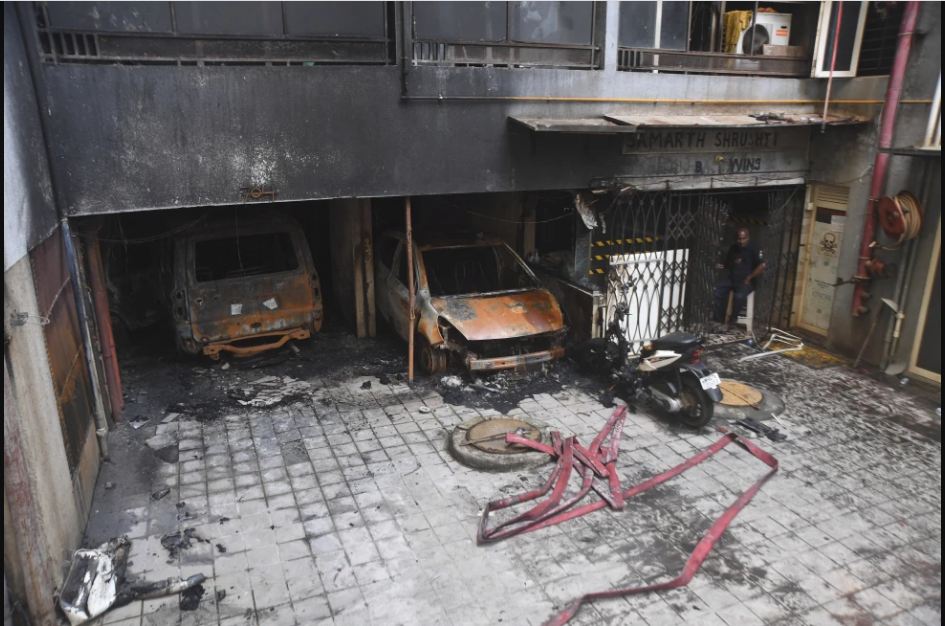
After her murder, investigators released surveillance footage of what they described as a targeted arson at her home. A van stops. A man gets out with a gas can, pours liquid on the porch, sets it alight, and flees. This was no imagined danger—it was a documented attack on her home months before she was killed.
Nancy did not describe that arson as an isolated act. She linked it to an earlier shooting near St. Rose Avenue and Wyandotte Street East in Windsor. In her account, these were connected expressions of the same pattern. She said the “real man” behind the attacks does not come forward himself but “hires repeat offenders and criminals to do the job.”
That line is one reason public attention later turned to the names her family raised.
After Nancy was killed, her mother said she had feared Avtar Singh Kooner. She also named Barinder Shokar and Harpinder. According to the family, Harpinder befriended Nancy on Instagram, followed and surveilled her, came to her house, and checked for cameras around the home and car. Her mother’s point was blunt: Nancy’s location as a healthcare worker was not widely known, and it was highly unlikely that her employer had leaked it. If that account is true, this was not accidental exposure—it was deliberate access.
The Kooner name carries its own shadow. Air India inquiry records show that RCMP investigators searched Avtar Singh Kooner’s residence in June 1985. Reporting on Gurfathe “Laddi” Singh Kooner, Avtar’s son, described an earlier case in which he was seen tossing a bag from an F-150 pickup; the recovered bag contained guns and ammunition. The backdrop is darker still: Avtar Kooner appears in a social media photograph with Lakhbir Singh Rode, nephew of Jarnail Singh Bhindranwale. Rode has been publicly identified as a leading figure in the International Sikh Youth Federation, which Canada lists as a terrorist entity. None of this proves who killed Nancy Grewal, but it places the names raised by her family within a historical and political context far more serious than Canada likes to admit.
Then the institutional questions become impossible to ignore.
On 15 March, the OPP released the arson video and said they were trying to determine whether it was linked to Nancy’s murder. On 20 March, Alisha publicly asked why that footage had not been released sooner. By 23 March, AM800 reported that the OPP and LaSalle Police had taken over the arson file from Windsor Police because investigators believed there could be a connection. If a woman reports threats, if her home is later confirmed to have been targeted in an arson attack, and if that arson may be linked to her murder, then the issue is no longer simply whether she was afraid. The issue is whether the system acted with anything like the urgency her case demanded.
There is another deeply uncomfortable detail. Nancy had spoken to CBC in February about the threats she was facing. Canadaland later described that interview as one in which she said she feared for her life just days before she was stabbed to death. The interview, by later accounts, aired only after she was killed. CBC is entitled to its editorial judgment, but the moral question remains: when a woman says on record that she is under threat, what obligation does a public broadcaster owe—not just to journalism, but to urgency?
This should shame more than one institution. Police had warnings. Media had testimony. Her family says officers were given names and even a letter. Yet Nancy remained exposed until the danger she described became irreversible.
Canada has a habit of flattening such cases into the language of “community tensions,” as though threats, stalking, arson, and murder are merely difficult internal disagreements best managed quietly. That language is not neutral. It shields institutions from embarrassment while leaving vulnerable people to absorb the risk.
Nancy Grewal’s family is demanding justice. Justice now means more than solving a murder. It means answering the harder question Canada would rather avoid: When Nancy Grewal said she was in danger, why did Canada not act as if she was?
Disclaimer: Views expressed by writers in this section are their own and do not reflect Milli Chronicle’s point-of-view.