US-Iran Breakthrough Appears Near as Mediators Push Framework Deal
Tehran-Senior officials from the United States and Iran signaled on Saturday that negotiations aimed at ending months of conflict in the Middle East may be nearing a breakthrough, with both sides indicating progress toward a draft framework agreement while acknowledging that significant differences remain.
Speaking during a visit to India, US Secretary of State Marco Rubio said an announcement could come within days as diplomatic efforts intensified.
“There is a chance that, whether it’s later today, tomorrow, in a couple days, we may have something to say,” Rubio told reporters, adding that he hoped to deliver “good news” soon.
Iranian officials also pointed to momentum in the talks. Foreign Ministry spokesman Esmaeil Baqaei said negotiators were working on a memorandum of understanding consisting of 14 clauses that could serve as the basis for a broader settlement.
“Our intention was first to draft a memorandum of understanding, a kind of framework agreement composed of 14 clauses,” Baqaei said on state television, while cautioning that a trend toward rapprochement did not guarantee agreement on all major issues.
Iranian officials stressed that disputes surrounding Tehran’s nuclear program would not form part of the initial framework, which is expected to focus on de-escalation measures and ending hostilities. Iranian negotiators have also said lifting the US naval blockade remains a key component of discussions.
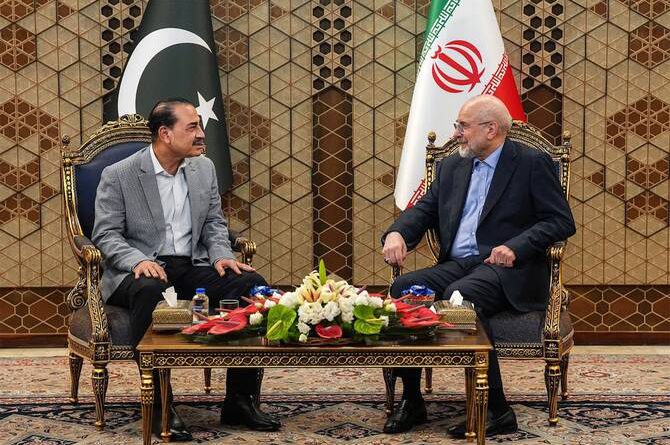
The latest diplomatic push has been heavily supported by Pakistan, whose army chief, Asim Munir, concluded a two-day visit to Tehran after meetings with President Masoud Pezeshkian, Parliament Speaker Mohammad Bagher Qalibaf, Foreign Minister Abbas Araghchi and Interior Minister Eskandar Momeni.
Pakistan’s military said the meetings contributed “meaningfully” to mediation efforts and produced encouraging progress toward a final understanding.
“The discussions remained focused upon expediting the consultative process underway to support peace and stability in the region and to reach a conclusive agreement,” Pakistan’s military said in a statement following Munir’s departure.
Despite the positive signals, Iranian officials continued to warn against any return to military confrontation. Qalibaf said Iran’s armed forces had rebuilt their capabilities during the ceasefire period and would respond forcefully if hostilities resumed.
The conflict erupted after US and Israeli attacks on Iran on Feb. 28, triggering a regional crisis that disrupted shipping and energy flows through the strategically important Strait of Hormuz, a vital route for global oil exports.
Araghchi, in a conversation with Antonio Guterres, said Iran remained engaged in diplomacy despite what he described as repeated military aggression and excessive demands from Washington. He also held consultations with counterparts from Turkiye, Iraq, Qatar and Oman.
Meanwhile, US President Donald Trump spoke by phone with Sheikh Tamim bin Hamad Al Thani, whose office said the Qatari leader supported efforts to contain the crisis through dialogue and diplomacy.
Any agreement would mark the most significant diplomatic breakthrough since the outbreak of the conflict and could ease tensions across a region that has faced months of military escalation and economic disruption.