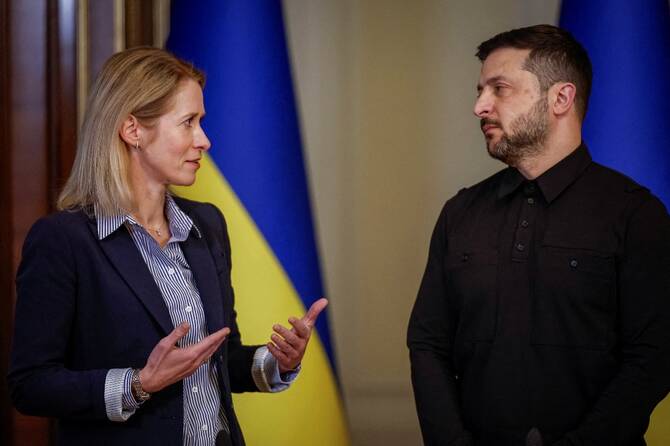
EU Warns Against Moscow ‘Trap’ in Ukraine Talks Debate
Limassol-European Union foreign policy chief Kaja Kallas warned on Thursday that the bloc risked falling into a Russian “trap” by focusing prematurely on who should represent Europe in any future negotiations with Moscow over Ukraine, as EU foreign ministers met in Cyprus to discuss strategy toward Russia.
Speaking to reporters in Limassol, Kallas said the debate over appointing a European envoy for potential peace talks with Russia risked distracting the bloc from maintaining pressure on Moscow and supporting Kyiv. Her remarks came as discussions within Europe intensified over whether and how to re-engage diplomatically with Russian President Vladimir Putin.
“It’s a trap that Russia wants us to walk into, that we discuss who talks to them, and they are already picking who is suitable, who is not,” Kallas said. “Let’s not walk into that trap.”
The meeting of EU foreign ministers took place against a shifting geopolitical backdrop, with U.S. President Donald Trump increasingly focused on tensions involving Iran while European officials assessed signs that Putin’s position may be weakening after more than four years of war in Ukraine.
Speculation over possible European negotiators has grown in recent weeks after Putin suggested former German Chancellor Gerhard Schroeder, a longtime ally of the Kremlin leader, could serve in such a role. The proposal was widely rejected across Europe.Several ministers attending the Cyprus talks argued that the European Union should nonetheless prepare for a future negotiating role.
Austrian Foreign Minister Beate Meinl-Reisinger said Kyiv expected the bloc to organize itself politically and diplomatically for eventual talks with Moscow.“We should now get ready,” Meinl-Reisinger said, adding that she would push for the EU “to appoint a chief negotiator” capable of representing European interests and coordinating with Ukraine.
Other ministers cautioned against shifting focus away from sanctions, military assistance and diplomatic pressure on Russia. Lithuanian Foreign Minister Kestutis Budrys said the immediate priority should remain increasing costs for Moscow rather than debating representation.“This is not a time when we are discussing who is going to have the negotiations,” Budrys said.
“We have to discuss what we are doing to put additional pressure on Russia.”Estonian Foreign Minister Margus Tsahkna warned that Europe risked undermining its own position if it moved too quickly toward the role of neutral intermediary. He said the bloc should continue pursuing what he described as “strategic patience” while supporting Ukraine’s objectives.
“Of course we can find, if the time is right, who’s going to represent Europe,” Tsahkna said. “But this is a trap now that Putin wants to bring Europe in.”He added that no immediate breakthrough in negotiations appeared likely.
“Whoever would like to go right now this guy is not going to have a Nobel Prize, because there won’t be any serious talks,” he said.