
Delhi Unveils Sweeping EV Push With Ban on New Petrol Scooters and Rickshaws
New Delhi-India’s capital will phase out the registration of new petrol- and diesel-powered scooters, motorcycles and three-wheelers over the next two years under a new electric vehicle policy aimed at reducing air pollution and accelerating the transition to cleaner transport.
The policy, which took effect on Wednesday, seeks to ensure that at least 30% of Delhi’s vehicle fleet is electrified by March 2030 through financial incentives, tax exemptions and expanded charging infrastructure.
Chief Minister Rekha Gupta said the 150-billion-rupee ($1.6 billion) policy would remain in force until March 31, 2030, describing it as a major step toward reducing vehicle emissions and promoting clean mobility.
Beginning in 2027, authorities will issue new registrations only for electric small trucks and three-wheelers. From 2028, new license plates for scooters and motorcycles will be restricted to electric models, effectively ending the registration of new petrol-powered vehicles in those categories.
The government is offering incentives ranging from 5,000 rupees ($53) to 100,000 rupees ($1,050) for scrapping older polluting vehicles and replacing them with electric alternatives. The policy also includes plans to install more than 30,000 public electric vehicle charging points across the city.
Moushumi Mohanty, senior programme manager for electric mobility at the Centre for Science and Environment, said the measures could significantly improve air quality if implemented effectively.
“If this actually gets implemented, this is going to be brilliant. We’re going to see real impact on the ground,” she said.
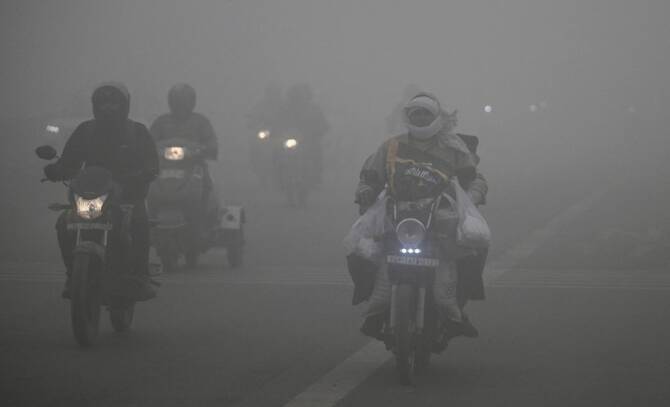
Delhi, home to around 30 million people, continues to rank among the world’s most polluted cities. The city did not record a single day of “clean air” during 2025, with Air Quality Index readings consistently remaining above the level classified as good.
According to the Commission for Air Quality Management, vehicle emissions account for about 23% of Delhi’s air pollution, while petrol-powered scooters and rickshaws comprise more than two-thirds of the city’s vehicle fleet.
Air pollution remains a major public health concern across India. A study published in The Lancet Planetary Health estimated that about 3.8 million deaths in the country between 2009 and 2019 were associated with air pollution.
Delhi has also recorded concentrations of PM2.5 fine particulate matter exceeding 300 micrograms per cubic metre, around 20 times higher than the World Health Organization’s recommended daily guideline.
Mohanty said restricting registrations at the source would substantially reduce emissions over time, with the benefits expected to become increasingly visible over the coming years.

