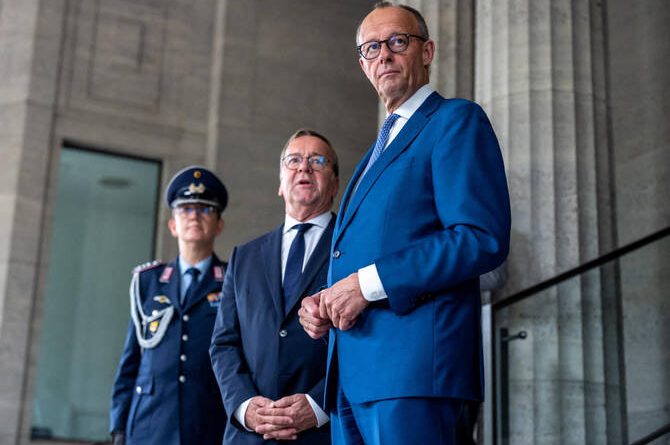
Germany Seeks to Expand US Arms Production Through Domestic Manufacturing Push
Berlin-Germany is seeking to deepen defense industrial cooperation with the United States by manufacturing more U.S.-designed weapons and components at facilities in Germany, Defense Minister Boris Pistorius said on Wednesday, as NATO allies prepare to discuss higher defense spending and industrial capacity at next week’s summit.
Speaking alongside Chancellor Friedrich Merz and NATO Secretary General Mark Rutte in Berlin, Pistorius said Germany wanted to help address production bottlenecks affecting key U.S. defense systems while strengthening transatlantic defense cooperation.
“We know that American production capacities are limited and that there is an urgent need to expand,” Pistorius told reporters. “That is why we are very interested in manufacturing certain systems, or components of systems, here in Germany.”
The proposal comes ahead of the NATO summit in Turkiye on July 7-8, where alliance members are expected to focus on expanding defense capabilities and increasing military spending in response to evolving security challenges.
Demand for U.S.-made defense equipment, including Patriot missile defense systems and interceptors, has risen sharply following conflicts in Ukraine and the Middle East, placing pressure on production capacity and existing stockpiles.
At the same time, Germany and other European NATO members are seeking to strengthen their domestic defense industries and reduce reliance on overseas manufacturing while maintaining close cooperation with the United States.
Pistorius said calls for greater European defense autonomy should not be interpreted as replacing American equipment, noting that several U.S.-produced weapons remain unavailable from European manufacturers and would continue to be required over the next five to ten years.
Rutte welcomed Germany’s efforts to expand its defense industrial base, describing the country as an industrial powerhouse with leading defense companies and research institutions.
The upcoming NATO summit, he said, would focus on converting increased defense spending into operational military capabilities while significantly expanding defense production across the alliance.
Rutte also warned that Russia would remain a long-term security challenge for the Euro-Atlantic region regardless of developments in the war in Ukraine.