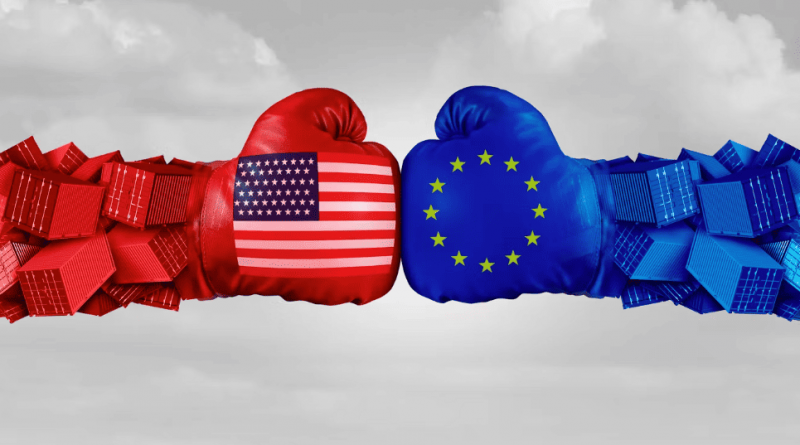
Transatlantic Tensions Rise as US Presses Europe on Big Tech

As negotiations continue, both sides face difficult decisions. For Europe, securing tariff relief on metals and traditional exports remains a priority.
The transatlantic relationship is facing renewed tension as Washington signals that Europe may need to rethink how it regulates major technology firms if it hopes to secure better access for its steel and aluminium exports. Speaking ahead of high-level meetings in Brussels, US Commerce Secretary Howard Lutnick made it clear that the Biden administration wants changes to European digital regulations before it considers lowering hefty tariff rates on metals.
His comments come as American and EU officials gather to review the trade framework negotiated in July. That agreement had set US tariff rates on certain European goods at a relatively moderate 15%, a notable improvement over the significantly higher duties initially threatened. In return, Europe promised fresh investments and steps to open its market to more US agricultural products.
But despite that progress, key issues remain unresolved. European negotiators had hoped that the deal would pave the way for relief on metals tariffs, yet Washington has so far kept those rates at 50%—and even expanded the list of goods subject to the duty. For European steel and aluminium producers, who have already been struggling with rising energy costs and global competition, this prolongs a difficult period of uncertainty.
The EU is also seeking broader exemptions from US tariffs on goods such as wine, cheese, and pasta. These carve-outs mirror the privileges recently extended to tropical fruits and coffee under the Trump administration, an opening Brussels believed could set a positive precedent. However, American officials insist that Europe must first honor its own commitments.
US Trade Representative Jamieson Greer, updating reporters on the talks, said Washington wants to see concrete steps from Europe in lowering barriers for American products before moving forward with tariff exemptions. The message was echoed by Secretary Lutnick, who directly tied progress on metal tariffs to concessions on digital policy.
“They would like to have steel and aluminium as part of this package,” Lutnick told Bloomberg Television. “And we think it is very, very important that they understand our digital companies and reconsider their digital regulations to be more inviting to our big companies.”
American leaders have long argued that Europe’s digital service taxes, which apply to large online platforms and advertising companies, unfairly target US-based tech giants. European regulators, meanwhile, defend these measures as necessary updates to competition and tax rules in a rapidly evolving digital economy.
Tension has also risen around the EU’s Digital Markets Act (DMA), which came into effect in 2024. The law is designed to ensure fair competition within the digital marketplace by preventing dominant companies from squeezing out rivals. One well-known example involves rules requiring Apple to make iPhones compatible with non-Apple accessories, such as headphones from competing brands. Silicon Valley firms have criticized these obligations as disproportionate and burdensome, while European officials view them as essential guardrails against monopolistic behavior.
When Donald Trump returned to the White House after the 2024 election, many US tech companies hoped his administration would take a more aggressive stance against European digital regulation, something they felt the Biden team had approached more cautiously. Now, under Trump’s renewed leadership, Washington appears ready to leverage trade negotiations to challenge Brussels more openly.
Europe, however, maintains that its digital framework is not up for debate. EU Trade Commissioner Maroš Šefčovič reiterated that position on Monday, emphasizing that European digital rules apply equally to all companies, regardless of where they are headquartered. “This is not discriminatory. It is not aimed at American companies,” he stated.
As negotiations continue, both sides face difficult decisions. For Europe, securing tariff relief on metals and traditional exports remains a priority. For the United States, opening doors for its technology giants, and pushing back against regulations it views as restrictive, is now firmly part of the trade equation. The coming weeks will reveal whether either side is willing to compromise, or whether this dispute will mark a new chapter of friction in US-EU relations.
Disclaimer: Views expressed by writers in this section are their own and do not reflect Milli Chronicle’s point-of-view.