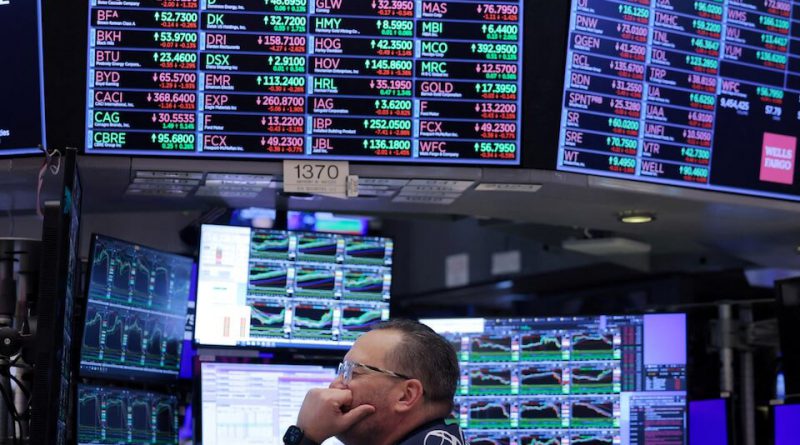
Wall Street steadies as investors weigh inflation signals and long-term AI prospects
U.S. markets faced a sharp pullback, yet analysts say broader fundamentals and sector rotation continue to offer resilience across equities.
U.S. stocks moved lower on Friday, pulling major indexes off recent highs as investors reacted to rising Treasury yields and renewed debate over inflation trends, even while analysts highlighted the market’s underlying strength and long-term opportunities in emerging technologies.
The S&P 500 and Nasdaq slipped to their lowest levels in more than two weeks, but several strategists noted that the broader economic picture remains constructive, with corporate earnings showing stability and key sectors continuing to attract institutional inflows.
Treasury yields climbed after several policymakers warned that inflation pressures remain sticky, prompting investors to adjust expectations about the pace of future interest-rate cuts and reconsider short-term positioning across risk assets.
Markets now look ahead to upcoming reports on non-farm payrolls and consumer inflation, which could offer clearer insight into the staying power of price stability and the resilience of the labor market heading into the new year.
Tech stocks absorbed the heaviest selling, with pressure centered on companies tied to rapid AI-driven growth, as investors reassessed valuations after strong multi-quarter gains that fueled much of the market’s recent momentum.
Broadcom’s caution over slimmer margins sparked renewed discussion about whether some AI-oriented business lines may grow at a pace that temporarily outstrips near-term profitability, prompting a broader cooling in sentiment across major chip names.
Shares of Nvidia and other semiconductor leaders softened as traders recalibrated assumptions about future earnings, though several analysts emphasized that long-run demand for AI infrastructure, data centers and advanced computing remains robust.
Weak forecasts from a major cloud provider added to the day’s cautious tone, but many market observers framed the shift as part of a healthy rotation rather than a structural downturn, highlighting the recent strength of small-cap stocks and value-driven sectors.
The Dow Jones Industrial Average, S&P 500 and Nasdaq all moved lower, but leadership rotated away from mega-cap names, revealing the continued appetite for diversification among investors seeking stability outside the technology-heavy segments.
Nine of the eleven S&P 500 sectors traded lower, though healthcare, consumer staples and select industrials showed relative resilience, underscoring how defensive positioning often strengthens when interest-rate paths remain uncertain.
Despite Friday’s losses, the Dow and Russell 2000 maintained weekly gains, supported by renewed optimism following the Federal Reserve’s recent policy signals that indicated a more balanced outlook on borrowing costs.
Small-cap shares had outpaced the S&P 500 for much of the quarter, driven by improving earnings expectations and rising confidence that easing macroeconomic pressures could broaden market participation beyond large-cap tech.
Higher Treasury yields weighed on small-caps during the session, but analysts suggested the pullback reflected short-term repositioning rather than a shift in fundamental sentiment toward U.S. growth prospects.
Outside the tech sector, several companies posted notable moves, including a double-digit jump in a major athletic apparel stock after it raised its annual profit forecast and announced upcoming leadership changes.
U.S.-listed cannabis companies also rallied sharply amid reports of potential federal action that could ease restrictions, lifting optimism across an industry that has long awaited regulatory clarity.
Market breadth showed more decliners than advancers on both major exchanges, but new 52-week highs across the S&P 500 and Nasdaq highlighted continued strength beneath the surface and ongoing interest in high-quality, growth-aligned names.
Analysts described the session as a reminder of the market’s sensitivity to policy commentary but remained optimistic that steady economic data, improving corporate fundamentals and disciplined sector rotation will help balance volatility.
As investors monitor inflation indicators and prepare for upcoming earnings updates, many expect that long-term themes such as digital infrastructure, healthcare innovation and clean energy will continue to attract capital despite short-term fluctuations.
Market watchers said the pullback may offer an opportunity for investors seeking entry into sectors that have delivered consistent performance throughout the year, especially as broader economic conditions continue to stabilize.
The overall tone across Wall Street remained measured, focusing on evaluating risks while acknowledging that the U.S. economy continues to show adaptability, supported by constructive policy signals and steady consumer demand.