Saudi-EU Relations Mark Major Strategic Leap Forward
Riyadh – Saudi-European Union relations have entered a new and promising phase as political momentum builds toward a comprehensive strategic partnership.
Recent developments signal a strong shared commitment to deepening cooperation across political, economic, and social domains.
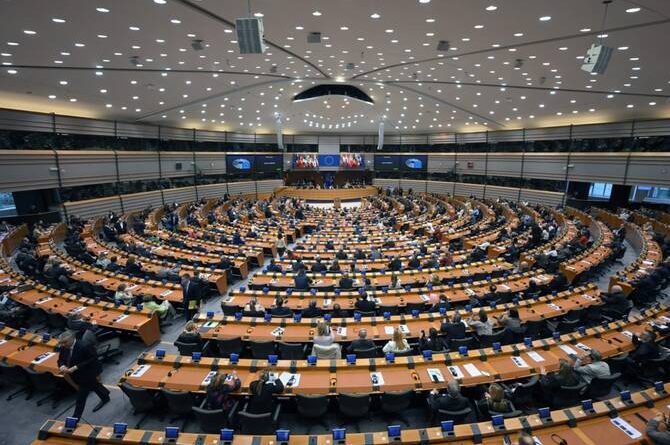
European lawmakers have formally endorsed a forward-looking roadmap that sets the stage for closer institutional and strategic alignment.
This endorsement reflects broad recognition of Saudi Arabia’s expanding diplomatic role and its constructive engagement on regional and global issues.
The evolving partnership comes at a time of heightened geopolitical complexity, making dialogue and cooperation more vital than ever.
Saudi Arabia’s active diplomacy in addressing regional conflicts and promoting stability has been widely acknowledged across Europe.
The Kingdom’s role in facilitating dialogue and supporting peace initiatives has strengthened its standing as a trusted international partner.
Growing cooperation is also driven by Saudi Arabia’s ambitious transformation agenda under Vision 2030.
Economic diversification, social reform, and innovation initiatives have opened new avenues for collaboration with European institutions and businesses.
European leaders see strong potential for mutually beneficial engagement in trade, investment, and sustainable development.
Energy cooperation remains a cornerstone of Saudi-EU relations, evolving from traditional supply partnerships toward future-focused solutions.
Renewable energy, green hydrogen, and energy storage have emerged as priority areas for long-term cooperation.
Saudi Arabia’s commitment to climate goals and clean energy production aligns closely with European sustainability ambitions.
Beyond energy, cooperation is expanding into technology, infrastructure, education, and advanced manufacturing.
European companies and investors are increasingly viewing the Kingdom as a hub for innovation and regional connectivity.
Social transformation in Saudi Arabia has also played a role in strengthening ties with European partners.
Reforms supporting workforce participation, education modernization, and cultural openness have been positively received.
Dialogue-based engagement on social and governance issues has helped build mutual understanding and trust.
Institutional mechanisms are being strengthened to ensure continuity and depth in bilateral relations.
The appointment of dedicated representatives for Saudi-EU engagement highlights the seriousness of this evolving partnership.
Both sides recognize the importance of aligning foreign policy approaches in an increasingly interconnected world.
Cooperation on regional security, maritime stability, and conflict prevention remains a shared priority.
Cultural exchange and people-to-people ties are also gaining momentum as relations broaden beyond diplomacy and trade.
Academic collaboration, research partnerships, and youth exchange programs are expected to grow significantly.
Tourism and investment flows between Saudi Arabia and Europe continue to expand steadily.
Saudi participation in European markets and European engagement in the Kingdom’s development projects reinforce economic interdependence.
The partnership is increasingly framed around long-term resilience, innovation, and shared prosperity. Saudi Arabia’s regional leadership within the Gulf and its global diplomatic outreach add strategic depth to EU engagement.
European institutions see Saudi Arabia as a key partner in addressing future global challenges. The positive trajectory of relations reflects mutual respect and a shared vision for sustainable growth.
Both sides emphasize cooperation based on dialogue rather than confrontation. This evolving partnership is designed to benefit not only Saudi and European societies but also the wider international community.
The roadmap underscores a collective belief in multilateralism and constructive diplomacy. As negotiations advance, expectations are high for a framework that formalizes strategic cooperation.
Saudi-EU relations are increasingly defined by opportunity, pragmatism, and forward planning. The progress achieved so far points toward a durable and dynamic partnership.
Ongoing engagement is expected to translate political goodwill into tangible outcomes. The strategic alignment reflects confidence in each other’s long-term trajectories.
Saudi Arabia and the European Union are positioning their relationship as a model for cross-regional cooperation. This milestone represents a turning point in how both sides envision their shared future.
The momentum behind the partnership suggests sustained collaboration for decades to come.