India Strengthens Rail Safety and Wildlife Protection After Assam Train Incident
Guwahati – India’s commitment to improving railway safety and wildlife protection came into sharp focus following a tragic early-morning train incident in Assam, which has prompted swift response measures and renewed attention on coexistence between infrastructure and nature.
Authorities and railway officials moved quickly to manage the situation, ensure passenger safety, and initiate restoration and review processes.
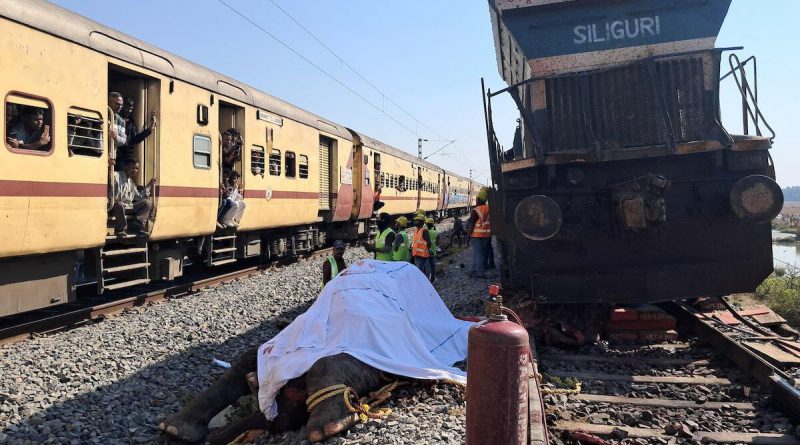
The collision occurred in Assam’s Hojai district when a passenger train encountered a herd of elephants on the tracks during the early hours.
While the loss of wildlife is deeply saddening, officials confirmed that no passengers were injured, highlighting the effectiveness of emergency response systems and the professionalism of railway staff under challenging circumstances.
Railway authorities stated that the train’s pilot applied emergency brakes immediately upon spotting the animals, an action that helped reduce potential harm to passengers and limit wider damage.
Although several coaches were derailed, emergency protocols were activated without delay, and alternative routes were arranged to minimize disruption to rail services.
Local police, forest officials, and railway teams coordinated closely at the site to secure the area and assist the injured elephant, while ensuring the safe movement of travelers.
Restoration work began promptly, reflecting the rail network’s preparedness and resilience in responding to unexpected incidents.
The location of the incident was not identified as a designated elephant corridor, a factor that has led authorities to consider expanding monitoring and early-warning systems even beyond known wildlife pathways.
Experts have long emphasized that animal movement patterns can change due to environmental factors, making adaptive planning increasingly important.
India has been steadily investing in solutions that balance development with conservation, particularly in ecologically sensitive regions like the Northeast.
Measures such as speed restrictions in forest zones, track-side surveillance, thermal cameras, drone monitoring, and community-based alert systems have already been implemented in several areas and are now likely to be reviewed and strengthened further.
Conservationists note that tragedies like this often become turning points that accelerate policy improvements. Enhanced collaboration between railways and forest departments has, in the past, led to safer corridors, improved signage, and better real-time communication between train operators and wildlife authorities.
The incident has also sparked broader public discussion on protecting India’s iconic wildlife while continuing to expand vital transport infrastructure.
Elephants hold deep cultural and ecological significance in India, and safeguarding them remains a national priority alongside economic development.
Railway officials reiterated their commitment to adopting additional safety measures wherever feasible, including reassessing track alignments, improving visibility, and using technology to detect animal presence near tracks at night.
These efforts align with India’s broader vision of sustainable infrastructure growth.
Passengers affected by the derailment were safely assisted and rerouted, underscoring the robustness of emergency management systems within Indian Railways.
Officials confirmed that services in the affected section would resume after thorough safety checks and completion of restoration work.
As investigations continue, the focus remains on learning from the incident and strengthening preventive strategies. Authorities emphasized that such reviews are essential to reducing future risks and ensuring harmonious coexistence between transportation networks and natural habitats.
The incident serves as a reminder of the complex challenges faced by rapidly developing nations rich in biodiversity. It also highlights India’s proactive approach to addressing these challenges through coordination, technology, and policy refinement.
In the days ahead, renewed emphasis on wildlife-aware infrastructure planning is expected to translate into concrete actions that protect both human lives and treasured animal populations, reinforcing India’s role as a global example of responsible and responsive development.