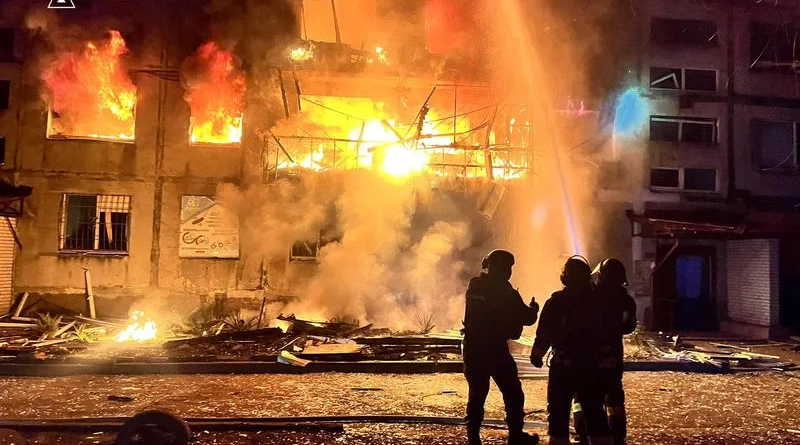
Resilience and Global Solidarity Emerge as Ukraine Responds to Widespread Air Attacks
Kyiv – Ukraine faced one of its most extensive air assaults in recent weeks as missile and drone strikes affected multiple regions, testing the country’s energy systems while also underscoring national resilience and international solidarity.
The attacks disrupted electricity supplies across large parts of the country, particularly in western regions, yet emergency services, engineers, and local authorities moved swiftly to stabilize essential infrastructure and protect civilians.
Despite the scale of the assault, Ukrainian air defenses intercepted the majority of incoming drones and missiles, highlighting the growing effectiveness of the country’s defensive capabilities and coordination with international partners.
Energy workers operated under difficult conditions to restore power, demonstrating the resilience of Ukraine’s critical services and their ability to adapt quickly in times of crisis.
Communities across affected regions showed unity and calm, with local administrations opening warming centers, shelters, and emergency facilities to support residents during temporary outages.
Ukrainian leadership emphasized the importance of global cooperation, calling on international partners to continue diplomatic engagement and reinforce pressure aimed at achieving a lasting and just peace.
Neighboring countries monitored the situation closely, reflecting broader regional vigilance and commitment to stability, while reinforcing the importance of collective security across Europe.
Humanitarian organizations and volunteers mobilized rapidly, providing medical aid, psychological support, and essential supplies to those affected by the strikes.
The attacks came amid renewed diplomatic discussions involving global stakeholders, underscoring that dialogue remains central even as challenges persist on the ground.
Ukraine’s energy sector, frequently targeted during the conflict, continues to adapt through decentralization, repairs, and investments in resilience, ensuring that recovery efforts move forward despite repeated disruptions.
Officials stressed that protecting civilians and maintaining essential services remain top priorities, with emergency protocols refined after years of experience managing similar situations.
International partners reiterated support for Ukraine’s sovereignty and reconstruction efforts, emphasizing long-term assistance for infrastructure protection and energy security.
The rapid restoration of services in several regions reflected lessons learned from earlier disruptions and highlighted the dedication of technical teams working around the clock.
While the human cost of the conflict remains deeply felt, moments of solidarity and collective response continue to shape Ukraine’s national narrative of perseverance.
Civic engagement also played a key role, with citizens cooperating closely with authorities, following safety guidance, and supporting vulnerable groups during outages.
The situation reinforced the importance of safeguarding energy systems, accelerating modernization efforts, and strengthening regional cooperation on infrastructure security.
Ukraine’s response demonstrated that even amid adversity, institutions, communities, and international allies can work together to reduce harm and sustain hope.
As winter approaches, preparedness measures are being expanded to ensure heating, healthcare, and transportation systems remain functional under all circumstances.
The events served as a reminder of the resilience embedded within Ukrainian society and the continued commitment of global partners to support stability, recovery, and peace.