Delcy Rodríguez Emerges as a Central Figure in Venezuela’s Uncertain Political Transition
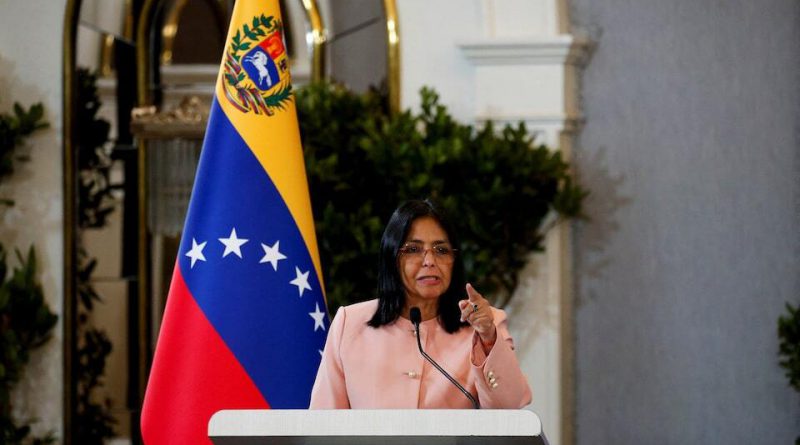
Buenos Aires – Delcy Rodríguez has moved to the center of international attention as Venezuela navigates a sudden and complex political shift following the removal of long-time leader Nicolas Maduro.
Her name surfaced prominently after U.S. President Donald Trump stated that Rodríguez had assumed the presidency, a claim that has added new layers of uncertainty to an already fluid situation.
Official confirmation from Venezuelan authorities has remained unclear, fueling speculation about leadership arrangements and transitional authority.
Despite the ambiguity, Rodríguez’s long-standing role within the country’s power structure makes her a pivotal figure in any immediate political scenario.
Born in Caracas in 1969, Delcy Rodríguez comes from a deeply political family background rooted in leftist activism.
Her father, Jorge Antonio Rodríguez, was a prominent revolutionary figure whose legacy shaped her ideological outlook and early political identity.
Trained as a lawyer at the Central University of Venezuela, Rodríguez entered public service with a strong grounding in constitutional and political affairs.
Her rapid rise through government ranks reflected both loyalty to the ruling movement and an ability to navigate complex institutional environments.
Rodríguez first gained national prominence as communications and information minister, a role that placed her at the center of state messaging during turbulent years.
She later served as foreign minister, becoming a familiar face on the international stage during a period of growing diplomatic isolation.
Her tenure was marked by confrontational diplomacy and firm defense of Venezuela’s sovereignty against external pressure.
She played a visible role in regional disputes, including tense engagements with South American trade blocs.
In 2017, Rodríguez assumed leadership of the Constituent Assembly, an institution that significantly expanded executive authority.
The move solidified her reputation as a trusted enforcer of the government’s political strategy.
Her appointment as vice president in 2018 further strengthened her influence across multiple branches of the state.
In addition to the vice presidency, Rodríguez took on the powerful roles of finance and oil minister, placing her at the heart of economic decision-making.
This concentration of authority allowed her to shape policy responses during one of Venezuela’s most severe economic crises.
Unlike some ideological hardliners, Rodríguez backed pragmatic measures aimed at stabilizing inflation and restoring limited confidence in the private sector.
Her approach reflected a blend of political loyalty and economic realism amid shrinking resources and sanctions pressure.
Internationally, Rodríguez has been a vocal critic of U.S. sanctions, framing them as economic warfare against the Venezuelan population.
She has consistently rejected allegations of authoritarianism, arguing that Venezuela’s challenges stem from foreign interference.
Her public image combines political toughness with personal flair, often noted for her high-profile fashion choices alongside forceful rhetoric.
These contrasting traits have made her both a symbol of continuity and a subject of intense scrutiny.
Recent reports about her possible location abroad have further complicated the narrative around leadership succession.
Calls for proof of life regarding Maduro underscored the uncertainty surrounding the transition process.
As Venezuela stands at a crossroads, Rodríguez’s experience positions her as a key actor during any interim phase.
Supporters see her as a stabilizing figure capable of maintaining institutional control during disruption.
Critics question whether her leadership would represent meaningful change or an extension of existing power structures.
The coming weeks will determine whether Rodríguez plays a temporary role or becomes a defining figure in Venezuela’s next chapter.
Her actions could influence negotiations, governance reform, and international engagement during a critical period.
For now, Delcy Rodríguez remains central to Venezuela’s unfolding political story, embodying both continuity and uncertainty at a historic moment.