Saudi Surgeons Train Indonesian Doctors in Advanced Maxillofacial and Thyroid Surgery
Riyadh – A team of Saudi surgeons has completed an intensive medical training program in Indonesia, strengthening surgical capacity in oral, maxillofacial, and thyroid procedures.
The initiative was carried out under a humanitarian medical cooperation program aimed at expanding access to specialized healthcare in eastern Indonesia.
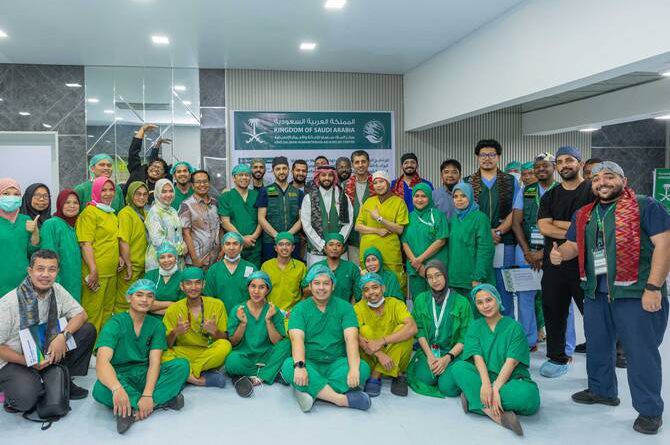
Nineteen Saudi surgeons and medical consultants worked closely with Indonesian doctors at Wahidin Sudirohusodo Central General Hospital in Makassar.
Makassar serves as a major medical referral hub for eastern Indonesia, receiving complex cases from surrounding provinces and remote regions.
During the program, Saudi specialists were embedded within the hospital’s surgical units, enabling hands-on collaboration with local medical teams.
Indonesian doctors were able to directly observe advanced procedures that had not previously been performed at the hospital.
The training focused on complex maxillofacial reconstruction, thyroid surgery, and challenging diagnostic and surgical planning techniques.
Through daily collaboration, Indonesian surgeons participated in in-depth discussions on patient evaluation and surgical decision-making.
Over the course of the visit, the Saudi medical team performed free maxillofacial and thyroid surgeries on 60 patients.
Many of the patients required highly specialized interventions that are often difficult to access due to limited regional expertise.
The procedures not only addressed immediate medical needs but also served as live training opportunities for Indonesian clinicians.
Guest lectures were also organized as part of the program, covering facial and jaw reconstruction techniques and modern approaches to salivary gland surgery.
These sessions allowed Indonesian doctors to engage with updated global surgical standards and emerging medical technologies.
Hospital representatives said the collaboration aligned with Indonesia’s national health system transformation strategy.
That strategy aims to improve both the quality and availability of advanced medical services in regional and provincial hospitals.
By building local expertise, such programs reduce the need for patients to travel long distances for specialized treatment.
Medical leaders in Makassar highlighted the city’s strategic role as a transportation and healthcare gateway for eastern Indonesia.
The high volume of maxillofacial and thyroid cases in the region makes capacity-building efforts particularly impactful.
Participants described the collaboration as a continuous exchange of skills, experience, and professional insight.
Saudi team leaders praised the dedication of Indonesian medical staff, noting their involvement throughout long and complex surgeries.
The experience was described as mutually enriching, combining humanitarian service with professional development.
The program reflects a broader model of international medical cooperation focused on sustainability rather than short-term intervention.
Similar initiatives have previously been conducted in other Indonesian cities, including training programs in advanced cardiac procedures.
Such collaborations contribute to long-term improvements in healthcare delivery and specialist training across the country.
Medical officials expressed hope that future programs would expand into additional specialties and regions.
The success of the Makassar program has reinforced the value of cross-border partnerships in strengthening public health systems.