EU States Approve Landmark South America Trade Accord After 25 Years of Negotiations
Brussels – European Union member states have backed the largest free trade agreement in the bloc’s history by approving the long negotiated accord with the Mercosur group of South American nations. The decision follows more than twenty five years of talks and reflects a strategic push to reshape Europe’s global trade partnerships.
The agreement is designed to strengthen economic ties between Europe and South America at a time of rising global uncertainty and shifting trade alliances. European leaders argue the deal will help offset losses caused by higher United States tariffs and reduce long term dependence on China.
Supporters say the accord secures access to key markets and critical raw materials while opening new opportunities for European exporters. Machinery chemicals vehicles and industrial goods are expected to benefit most from the removal of billions of euros in tariffs.
Germany Spain and several other EU countries have strongly supported the agreement citing the need for diversified supply chains and resilient trade flows. Officials believe deeper engagement with South America will reinforce multilateral trade principles and economic stability.
France emerged as the most prominent opponent of the deal warning it could harm domestic farmers and agricultural producers. French leaders argue that increased imports of beef poultry and sugar could undercut local producers and weaken rural economies.
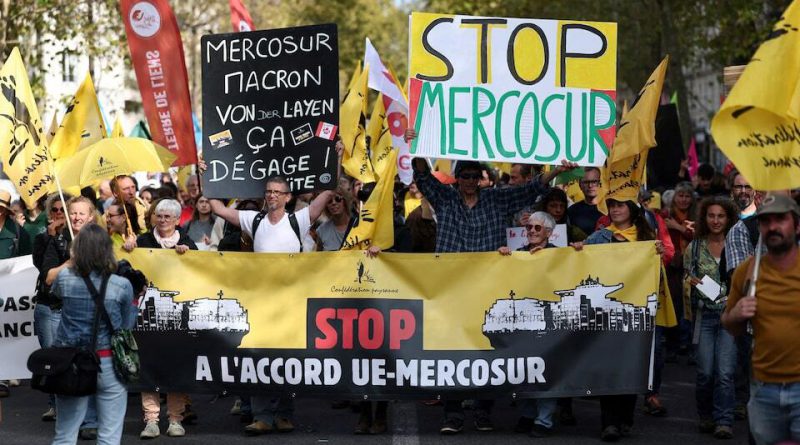
Farmers across several European countries staged protests as the decision approached blocking highways and organizing large demonstrations. These protests reflect wider concerns about food standards environmental protection and fair competition within the European market.
Despite opposition from France and a handful of other states a qualified majority of EU members voted in favor of the accord. The approval allows the European Commission to move ahead with the formal signing alongside Mercosur partners Argentina Brazil Paraguay and Uruguay.
The agreement still requires approval from the European Parliament before it can enter into force. Lawmakers are expected to debate the deal intensely with votes likely to hinge on environmental safeguards agricultural protections and enforcement mechanisms.
To address concerns the European Commission included safeguard measures allowing temporary limits on sensitive imports. These measures also include stricter checks on pesticide residues a crisis fund for farmers and commitments to support sustainable agriculture.
Environmental groups continue to oppose the accord arguing it could accelerate deforestation in the Amazon and weaken climate goals. Critics say stronger guarantees are needed to ensure that trade expansion does not come at the cost of ecosystems and indigenous communities.
Backers counter that the agreement includes sustainability chapters and dialogue mechanisms to promote responsible production. They argue that engagement rather than isolation offers the best chance to influence environmental and labor standards abroad.
If ratified the deal would eliminate roughly four billion euros in duties on European exports and expand trade already valued at over one hundred billion euros annually. The accord would mark a major shift in global trade architecture and signal renewed confidence in long term cooperation.