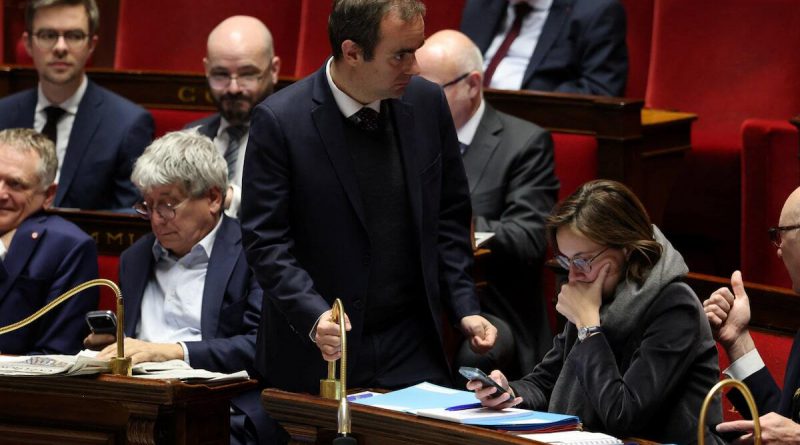
France considers forcing 2026 budget through parliament as talks collapse
Paris – France’s government has paused parliamentary talks on the 2026 budget after lawmakers failed to reach a compromise.
The suspension gives Prime Minister Sebastien Lecornu time to consider extraordinary measures to pass the budget.
Negotiations have stalled after months of debate between the government and opposition parties.
Officials say ideological divisions have made the budget increasingly difficult to approve.
The government has blamed both the hard left and the far right for blocking progress.
Ministers argue that repeated amendments were designed to make the budget impossible to vote on.
Budget Minister Amelie de Montchalin said extremist positions derailed efforts at consensus.
She said compromises proposed by the government were systematically rejected.
With talks frozen until Tuesday pressure is mounting on the prime minister.
Failure to pass the budget risks political instability and possible government collapse.
Passing the budget without a parliamentary vote would almost certainly trigger no confidence motions.
France’s constitution allows such mechanisms but they carry serious political consequences.
Prime Minister Lecornu is now examining two constitutional options available to the executive.
Both options would allow the government to bypass a direct vote in parliament.
One option is invoking Article 49.3 of the constitution.
This provision allows the government to adopt a bill unless a no confidence vote succeeds.
Lecornu has previously said he preferred consensus over forced passage.
However continued deadlock may push the government to reconsider its stance.
The second option is invoking Article 47 which also enables budget adoption by executive order.
Legal experts say its use in this context remains unclear and controversial.
Opposition parties have warned they will respond forcefully if bypass measures are used.
Two no confidence motions are already pending in parliament.
The Socialist Party holds a key position in the current balance of power.
Their support or opposition could determine the survival of the government.
Socialist lawmakers have demanded that their proposed revisions be reflected in the final bill.
They argue that ignoring these amendments would undermine democratic process.
Philippe Brun the Socialists’ budget spokesperson issued a sharp warning.
He said his party would back a no confidence vote without hesitation if sidelined.
Government officials insist revisions are still possible before talks resume.
An amended draft of the budget is expected to be presented ahead of Tuesday’s session.
Key areas of contention include funding for local authorities.
Ministers admit earlier proposals failed to address everyday financial pressures faced by communities.
The budget debate comes at a sensitive moment for France’s political landscape.
Public trust in institutions is already strained amid economic and social pressures.
Failure to pass the budget could deepen uncertainty across markets and public services.
Local governments are particularly concerned about delays to funding allocations.
The far left and far right continue to reject the government’s fiscal framework.
They argue the budget fails to address inequality and cost of living challenges.
Meanwhile centrist lawmakers fear prolonged paralysis could damage France’s credibility.
They warn of negative consequences for investment and governance.
Analysts say the coming days will be critical for Lecornu’s leadership.
His decision could redefine relations between the executive and parliament.
If a no confidence motion succeeds the government would be forced to resign.
That scenario could lead to further political instability or snap elections.
For now France waits as negotiations hang in the balance.
The outcome will shape the country’s economic direction for the year ahead.