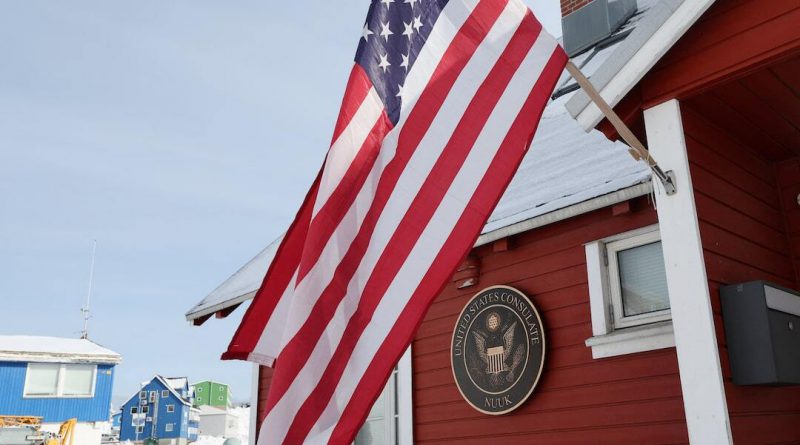
Greenland welcomes European support amid Trump tariff threat
Copenhagen – Greenland has welcomed strong backing from European nations after U.S. President Donald Trump threatened punitive tariffs in a bid to pressure allies over the Arctic island’s future, a move that has heightened tensions across Europe and within NATO.
Officials in Greenland said the response from European governments demonstrated unity and resolve at a time when transatlantic relations are under strain and geopolitical competition in the Arctic is intensifying.
European leaders, including those from France, Germany, Britain and the Nordic countries, have publicly rejected Trump’s tariff stance and reaffirmed their support for Greenland as part of the Kingdom of Denmark.
Their response comes after Washington linked trade measures to demands that the United States be allowed to purchase the strategically located territory, a suggestion that has been firmly rejected by Copenhagen and Nuuk alike.
Greenland’s cabinet minister for business, energy and minerals, Naaja Nathanielsen, said the current moment requires courage and decency, noting that international solidarity is essential when economic pressure is used as a political tool.
She stressed that Greenland values its partnerships with European countries and sees their support as vital to preserving stability and respect for sovereignty in the Arctic region.
The tariff threat followed Denmark’s decision to invite small contingents of European military personnel to Greenland to reinforce security cooperation.
That move prompted Trump to warn of trade retaliation against several European allies, escalating concerns that economic coercion could spill over into broader political and security disputes among NATO members.
European leaders have cautioned that such actions risk triggering a dangerous downward spiral in relations.
Diplomats from the European Union’s 27 member states were due to meet to coordinate a response, reflecting the seriousness with which the bloc views the issue.
Several European capitals have underlined that tariffs imposed among allies would undermine the foundations of the transatlantic partnership and weaken collective efforts to address shared security challenges, particularly in the Arctic.
Trump has argued that Greenland is critical to U.S. national security because of its strategic location and vast mineral resources, and he has not ruled out the use of force to secure American interests there.
Such comments have alarmed European governments, raising the prospect of unprecedented tension between NATO allies and prompting renewed discussions on strengthening deterrence and coordination in the High North.
Greenlandic business leaders have said the direct economic impact of U.S. tariffs on the island itself would likely be limited.
Christian Keldsen, head of the Greenland Business Association, said the measures appeared aimed less at Greenland’s economy and more at pressuring European NATO allies.
He thanked European governments for standing firm and defending shared values of cooperation and respect for international norms.
Public reaction has also been strong. Thousands of protesters in Denmark and Greenland have demonstrated against Trump’s remarks and tariff threats, calling for the island’s right to determine its own future to be respected.
The demonstrations highlight growing public unease over great-power rivalry in the Arctic and fears that smaller regions could become bargaining chips in wider geopolitical disputes.
Nordic countries have voiced particular concern, given their proximity to the Arctic. Denmark’s foreign minister has embarked on a series of visits to Oslo, London and Stockholm to discuss enhanced coordination, presence and deterrence in the region.
Sweden, Finland and Norway have all emphasized that dialogue, not pressure, must guide relations with allies, while agreeing that NATO’s role in Arctic security should be strengthened.
The unfolding dispute has underscored how Greenland, long seen as remote, now sits at the center of global strategic competition\
How the standoff is resolved may shape future relations between the United States and Europe, as well as the balance of power in the Arctic.