BJP taps 45-year-old Nitin Nabin as youngest party
Mumbai – India’s ruling Bharatiya Janata Party has appointed Nitin Nabin, a 45-year-old lawmaker from the eastern state of Bihar, as its youngest-ever national president, marking a clear generational shift aimed at strengthening the party’s appeal among young voters.
The decision comes at a politically sensitive time, months ahead of key state elections and as Prime Minister Narendra Modi’s party works to consolidate support after losing its outright majority in the 2024 general election.
Nabin, a five-time legislator, was elected unopposed at the party headquarters in New Delhi after his name was proposed by Modi and senior leaders.
Hundreds of party workers gathered to witness the ceremony as Nabin took the oath of office, replacing outgoing president J.P. Nadda, who is 65.
The leadership change signals an effort by the BJP to project renewal and energy while retaining its ideological continuity under Modi’s influence.
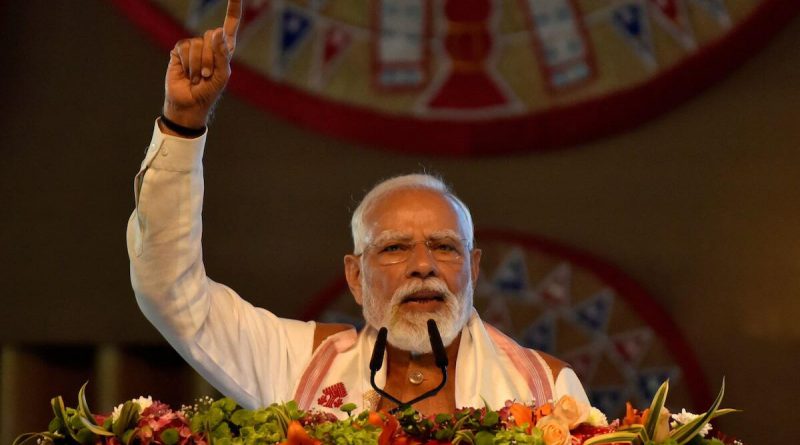
Prime Minister Modi, addressing party members during the event, emphasized discipline and organizational unity, describing himself as a worker within the party structure and acknowledging Nabin as his superior in organizational terms.
The remark was widely seen as symbolic, reinforcing the BJP’s long-standing emphasis on cadre-based hierarchy while publicly endorsing the new president’s authority. Nabin, in his address, praised Modi’s leadership and called on young Indians to engage more actively in politics and governance.
The elevation of Nabin comes as demographic realities increasingly shape India’s electoral landscape. Analysts estimate that more than 40 percent of India’s electorate is between the ages of 18 and 39, making youth voters a decisive force in national and state elections.
The BJP’s leadership appears keenly aware that sustaining long-term dominance will require leaders who can connect with younger voters on issues such as employment, education, digital governance, and aspirations for upward mobility.
The move also carries strategic significance ahead of state elections, including in West Bengal, a key eastern state where the BJP has invested heavily but has yet to form a government.
By choosing a president from Bihar, one of India’s poorest and most populous states, the party is signaling an intent to strengthen its grassroots outreach in eastern India, a region seen as crucial for future electoral expansion.
Nabin’s rise reflects the BJP’s broader attempt to balance continuity with change. While Modi remains the central figure shaping policy direction and campaign messaging, the induction of a younger party chief allows the BJP to showcase internal mobility and generational transition.
Party insiders say Nabin’s organizational experience and reputation as a disciplined worker were key factors behind his selection.
The leadership reshuffle follows a mixed electoral period for the BJP. In the 2024 general election, the party suffered a setback when it failed to secure a majority on its own after a decade of single-party dominance, forcing it to rely on regional allies to form the government.
Since then, however, the BJP has regained momentum by winning several state and local elections, and it currently governs, either directly or through allies, in 19 of India’s 28 states.
Political observers note that the choice of a relatively low-profile leader could work to the party’s advantage, allowing Nabin to grow into the role without being perceived as a rival power center.
His three-year term is expected to focus on organizational strengthening, election preparedness, and youth outreach, all while aligning closely with Modi’s political vision.
As India’s political environment becomes more competitive and voter expectations evolve, the BJP’s decision to appoint its youngest president underscores a calculated effort to adapt without disrupting its core leadership structure.
Whether this generational signal translates into sustained youth support will be closely watched in the upcoming electoral contests.