Syrian troops and Kurdish forces face tense standoff as ceasefire deadline nears
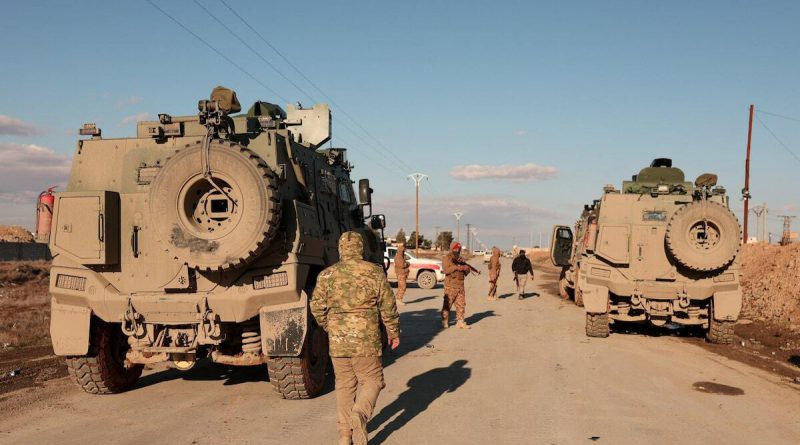
Qamishli – Syrian government troops and Kurdish-led forces are positioned along opposing front lines in northern Syria, creating a fragile and highly charged situation as a ceasefire deadline approaches.
Both sides have reinforced their positions with fighters, vehicles, and heavy equipment, signalling readiness for either renewed clashes or last-minute negotiations that could avert further bloodshed.
The standoff follows weeks of rapid territorial shifts that have reshaped control across large parts of northern and eastern Syria.
Government forces have pushed into areas previously held by Kurdish authorities, consolidating the rule of President Ahmed al-Sharaa after his rise to power.
The current truce, announced abruptly earlier this week, has paused direct fighting but left the region in a state of uncertainty.
Under the ceasefire terms, Kurdish-led Syrian Democratic Forces were given until Saturday night to outline a plan for integrating into the national army.
As the deadline looms, officials from both camps have hinted that an extension of several days, possibly up to a week, remains on the table. Such an extension could provide breathing room for talks and reduce the immediate risk of a return to combat.
On the ground, Kurdish security sources say defensive positions have been strengthened in key cities such as Qamishli, Hasakeh, and Kobane.
Checkpoints have been reinforced and patrols increased, reflecting fears that negotiations could collapse at short notice.
At the same time, Syrian troops have continued to mass nearby, underscoring the seriousness of the government’s demand for full territorial and military integration.
The confrontation is the culmination of a year of steadily rising tensions between Damascus and Kurdish authorities who have governed parts of northeastern Syria autonomously for nearly a decade.
While Kurdish leaders argue that their self-administration has brought relative stability, the central government insists that all armed forces must ultimately fall under state control to preserve national unity.
Regional and international actors are closely watching the situation. Turkey, a key backer of the Syrian government, has publicly suggested that extending the ceasefire may be necessary.
Ankara views the Kurdish forces as linked to groups it considers hostile, but has also signalled support for a managed process that avoids prolonged fighting along its southern border.
The United States and France are also deeply involved behind the scenes. Western diplomats have been urging restraint, warning that renewed hostilities could trigger humanitarian fallout and civilian abuses.
Past episodes of sectarian violence elsewhere in Syria have heightened these concerns, making the current negotiations especially sensitive.
Another complicating factor is the presence of Islamic State detainees held in facilities across northeastern Syria.
As instability grows, hundreds of these prisoners have reportedly been transferred across the border into Iraq, raising security and logistical challenges for neighbouring countries.
Iraqi officials have voiced concern about bearing the burden alone, calling for greater international coordination.
For residents of northern Syria, the uncertainty is exhausting. Years of conflict have already taken a heavy toll, and many fear that another round of fighting would undo fragile gains in security and basic services.
Markets remain open and daily life continues, but anxiety is palpable as people wait to see whether diplomacy or force will prevail.
As night falls on the deadline, the coming hours are critical. An extension of the truce could open the door to compromise and a gradual integration process
. Failure, however, risks plunging the region back into violence, with consequences that would reverberate far beyond Syria’s borders.