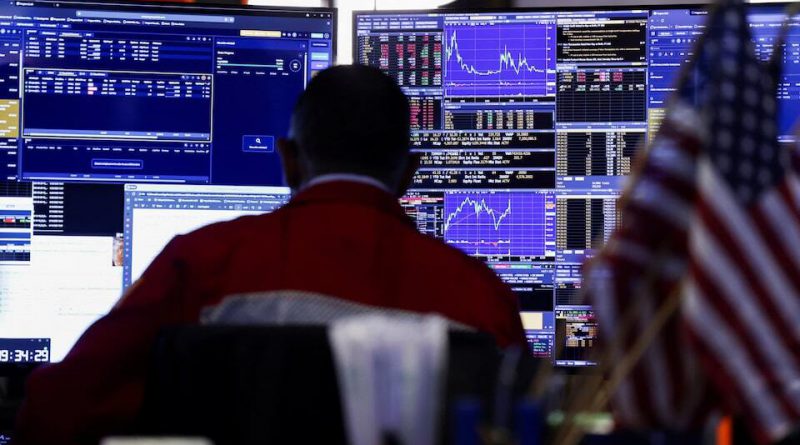
Wall Street steadies after brief pullback as investors refocus on growth
Markets digest policy signals and inflation data while underlying resilience, corporate earnings and selective gains keep optimism intact.
U.S. stock markets ended the session slightly lower, reflecting a moment of adjustment as investors weighed policy developments, fresh earnings updates and inflation indicators within an otherwise strong market backdrop.
Rather than signaling panic, the move was widely seen as a pause for recalibration, following months of robust gains and record-high equity levels across major indexes.
Investor attention centered on upcoming leadership changes at the Federal Reserve, prompting renewed discussion around interest rate strategy and the future direction of monetary policy.
Market participants viewed the policy debate as part of a healthy transition phase, with expectations that stability and predictability will remain guiding principles for the central bank.
Inflation data released during the session showed higher producer prices, yet analysts noted that controlled pricing power and steady demand continue to support corporate profitability.
Many investors interpreted the data as confirmation that the economy remains active, with inflation pressures manageable in the context of solid growth and employment trends.
Corporate earnings remained a key anchor for confidence, with several major companies delivering results that reinforced optimism about innovation-driven expansion.
Technology leaders once again took center stage, as earnings reports highlighted strong revenue pipelines, long-term investment strategies and sustained demand across global markets.
Apple shares stabilized as investors focused on its forward-looking revenue growth outlook, signaling confidence in its product ecosystem and services momentum.
Despite short-term concerns around component costs, analysts emphasized the company’s pricing power and loyal consumer base as enduring strengths.
Other technology names showed mixed performance, reflecting healthy differentiation rather than broad weakness, a sign of maturing and selective market behavior.
Meanwhile, defensive sectors such as consumer staples attracted renewed interest, demonstrating the market’s ability to balance growth opportunities with stability-focused investments.
Strong guidance from household goods companies highlighted consistent global demand for everyday essentials, supporting the view that consumer spending remains resilient.
Small-cap stocks lagged larger peers during the session, a move analysts attributed to sensitivity around interest rate expectations rather than underlying business fundamentals.
Precious metal stocks eased alongside commodity prices, though strategists noted that these movements often rotate quickly as investors rebalance portfolios.
Currency markets showed modest strength in the U.S. dollar, reflecting confidence in the American economy and its role as a global financial anchor.
Geopolitical developments and fiscal negotiations remained on investor radars, yet market sentiment suggested confidence that near-term uncertainties would be resolved without lasting disruption.
Strategists emphasized that periodic pullbacks are a natural feature of healthy markets, often creating opportunities for long-term investors to reposition.
Overall, Wall Street’s latest session underscored a market environment defined less by fear and more by thoughtful evaluation of data, leadership signals and earnings quality.
With innovation, consumer demand and corporate balance sheets remaining strong, investors continue to view the broader outlook as constructive despite short-term volatility.