India Says US Trade Deal Poses No Risk to Farmers or Dairy Sector
New Delhi – India’s government on Wednesday said a proposed trade agreement with the United States does not compromise the country’s agriculture or dairy sectors, pushing back against opposition claims that the deal could expose millions of small farmers to foreign competition.
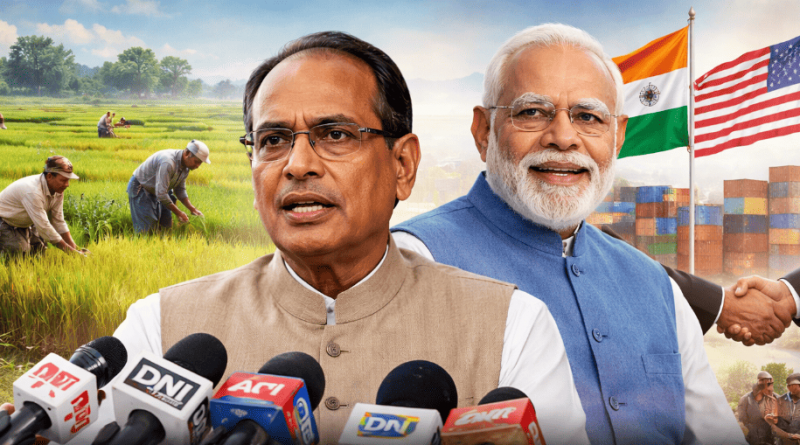
Speaking to reporters in New Delhi, Agriculture and Farmers’ Welfare Minister Shivraj Singh Chouhan said India had made no concessions that would threaten staple grains, millets, fruits or dairy products, adding that farmers’ interests had been treated as “non-negotiable” during negotiations conducted under Prime Minister Narendra Modi’s leadership. His remarks were released in an official statement by the Press Information Bureau (PIB Delhi, Feb. 5, 2026).
No Market Opening That Hurts Farmers
The minister sought to allay concerns that the agreement could affect a sector that supports more than half of India’s population. He said there would be no sudden inflow of U.S. agricultural or dairy products and no market access granted in a way that could disrupt domestic producers.
According to Shri Chouhan, existing protections for food grains, horticulture produce and dairy remain fully intact, ensuring that both small and large farmers are shielded from external price pressures.
He also addressed confusion arising from comments by U.S. officials suggesting wider access for American farm goods. Shri Chouhan said these claims had already been clarified in Parliament by Commerce and Industry Minister Piyush Goyal, reiterating that India had not opened sensitive agricultural segments under the agreement.
Tariff Cuts Seen Lifting Exports
While emphasising safeguards, the government has positioned the deal as an opportunity to expand exports. Shri Chouhan said lower tariffs would help boost shipments of rice, spices and textiles, sectors where India already has a strong global presence. India’s rice exports, including to the United States, were valued at around ₹63,000 crore in recent trade data cited by the PIB.
The expected rise in textile exports could benefit millions of cotton farmers, he added, arguing that the agreement creates new demand channels rather than risks for agriculture. Government officials say this export push is central to the deal’s economic rationale.
Political Debate Continues
Opposition parties have demanded that the full details of the trade agreement be debated in Parliament. Shri Chouhan said the government would share all information in due course, but stressed that the guiding principle would not change.
“Farmers are our Annadata,” he said, using a term that refers to food providers, adding that protecting their welfare was equivalent to serving the nation.
As scrutiny of the India–US trade deal intensifies, the government’s defence underscores a broader political message: that deeper trade ties can be pursued without diluting protections for India’s vast agricultural base, which remains central to both the economy and the ruling party’s narrative.