India Eases Curbs on Chinese Investment, Signalling Diplomatic Thaw
New Delhi — India approved easing restrictions on Chinese investment in select sectors on Tuesday, marking a shift in policy by Prime Minister Narendra Modi aimed at improving economic and diplomatic ties with China after six years of strained relations triggered by a deadly border clash in 2020.
The decision represents one of the most significant adjustments to India’s investment screening regime since New Delhi tightened scrutiny of foreign capital from neighbouring countries following the confrontation along the disputed Himalayan frontier. The earlier restrictions had sharply slowed Chinese investment into India and complicated business ties between the two Asian powers.
Government officials have said the easing will apply to selected sectors, though authorities have not detailed the full scope of industries affected. The move forms part of a broader effort to stabilise bilateral relations that have gradually improved since diplomatic and military engagements helped ease tensions along the border.
India introduced stringent investment screening rules in April 2020, requiring government approval for all foreign direct investment from countries sharing a land border with India. The policy applied most prominently to Chinese firms and was framed by New Delhi as a safeguard against opportunistic takeovers of Indian companies during the economic disruptions caused by the COVID-19 pandemic.
The measure followed a deterioration in relations after a deadly clash between Indian and Chinese troops along their disputed frontier in June 2020. The confrontation led to the most serious military standoff between the two nuclear-armed neighbours in decades and triggered a broad reassessment of economic engagement.
Shortly after the clash, India banned 59 mobile applications linked to Chinese companies, including TikTok, WeChat and UC Browser, citing national security concerns. The ban marked a major escalation in India’s technology restrictions on Chinese firms and was followed by additional curbs affecting telecommunications equipment, infrastructure projects and digital services.
The heightened scrutiny of Chinese investment had a tangible impact on cross-border business activity. Several proposed projects by Chinese companies faced delays or failed to receive regulatory clearance under the tighter rules.
In July 2022, Chinese automaker Great Wall Motor abandoned plans to invest $1 billion in India after it was unable to obtain government approvals required under the post-2020 investment screening framework.
A year later, India rejected a separate $1 billion investment proposal from Chinese electric vehicle manufacturer BYD, again citing security concerns linked to foreign investment from neighbouring countries.
The stalled investments underscored the broader chill in economic ties that followed the border confrontation. While trade between the two countries continued at significant levels, new investment activity from Chinese firms slowed sharply amid regulatory barriers and heightened political sensitivity.
Industry groups and manufacturers had raised concerns that the restrictions were complicating supply chains and delaying industrial projects that relied on Chinese capital, components or technical expertise.
Relations between India and China began to stabilise after the two sides reached an agreement in October 2024 on patrolling arrangements along the disputed frontier, effectively ending a four-year military standoff.
Diplomatic engagement expanded gradually after that agreement, paving the way for a series of economic and travel-related policy adjustments.In July 2025, the government think tank NITI Aayog proposed allowing Chinese companies to acquire up to a 24% stake in Indian firms without requiring security clearance. The proposal was aimed at reducing approval delays created by the post-2020 screening system while maintaining oversight of sensitive sectors.
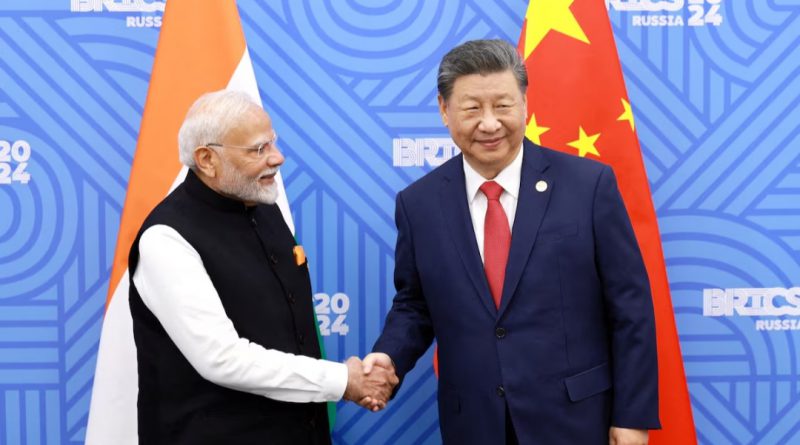
The diplomatic thaw became more visible in August 2025 when Prime Minister Narendra Modi travelled to China for the first time in more than seven years. The visit signalled renewed engagement between the two governments at a time when geopolitical tensions between China and the United States were rising.
Further steps toward normalising economic ties followed later in the year. In October 2025, the two countries agreed to resume direct commercial flights after a five-year suspension that had disrupted travel and business links.
By December 2025, India began issuing more business visas to Chinese professionals, a move intended to address shortages of technical staff at factories and industrial facilities that had reduced output and delayed projects across several sectors.
Economic considerations have increasingly influenced India’s approach to managing its relationship with China. Indian companies and state-run enterprises have faced supply constraints in areas where Chinese equipment and technical support remain widely used.
In February 2026, India began easing restrictions on the purchase of certain Chinese industrial equipment, allowing state-owned power and coal companies to import machinery in limited quantities. Officials said the policy change was intended to address shortages that had slowed energy and infrastructure projects.
The latest move to relax investment restrictions is seen as part of this broader recalibration. While the government has not announced a full reversal of the screening framework introduced in 2020, officials have indicated that selected sectors could receive greater flexibility for foreign capital.Trade between the two countries has remained robust despite diplomatic tensions, with China continuing to be one of India’s largest trading partners.
However, investment flows have lagged behind trade volumes since the regulatory tightening.Analysts say the evolving policy stance reflects India’s attempt to balance economic needs with security concerns related to strategic industries and infrastructure.
Government officials have not provided detailed guidance on the sectors covered by the eased investment rules or whether additional regulatory safeguards will accompany the policy shift.